Anyone who has travelled by air knows one of the most firmly enforced rules onboard: smoking is prohibited. Passengers are reminded through safety announcements and signs, and aircraft lavatories carry prominent no-smoking warnings.
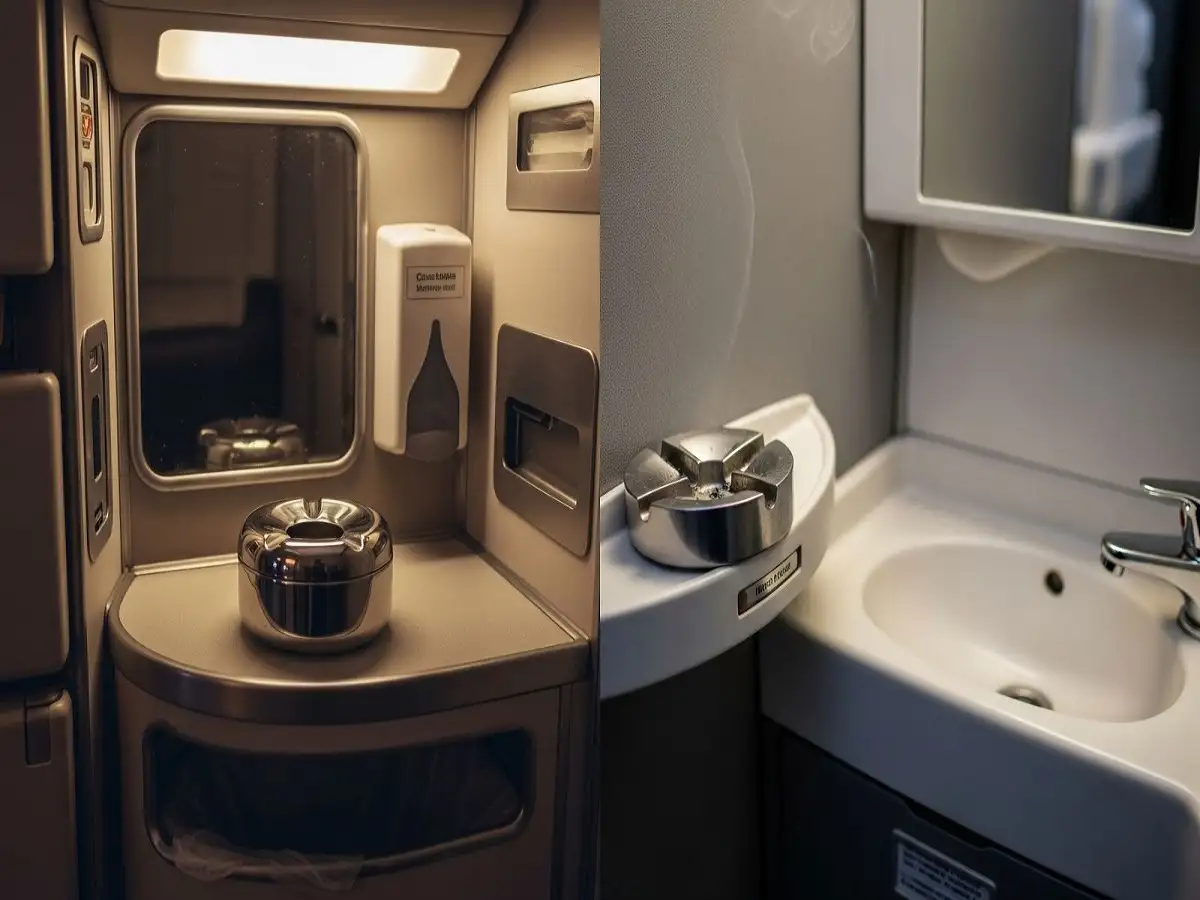
Yet observant passengers may notice something that appears contradictory. Many aircraft lavatories still have a small metal ashtray, often located near or on the lavatory door.
If nobody is allowed to smoke on an aircraft, why would an ashtray be necessary?
The explanation is not that airlines expect passengers to smoke. Instead, the ashtray serves as an additional fire-safety measure in case someone ignores the rules and lights a cigarette anyway.
An Ashtray Does Not Mean Smoking Is Allowed
The first point to understand is that the presence of an ashtray does not create an exception to an aircraft's smoking restrictions.
Passengers cannot use the lavatory as a smoking area simply because an ashtray is available.
Instead, aviation safety requirements are designed around the possibility of human error or deliberate rule-breaking. Even when an activity is prohibited, aircraft designers and regulators have to consider what could happen if someone does it anyway.
In such a situation, providing a designated place to extinguish and dispose of smoking material can reduce an additional fire hazard.
Why Throwing a Cigarette in the Bin Could Be Dangerous
The waste bin inside an aircraft lavatory can contain materials such as used tissues, paper towels and other rubbish.
If a person secretly smokes and throws a cigarette that has not been completely extinguished into the waste container, the remaining heat or burning material could potentially ignite the rubbish.
That is particularly concerning on an aircraft because even a relatively small fire can develop into a serious emergency.
A metal ashtray therefore provides a safer location for extinguishing and containing smoking material than a waste bin.
In other words, the ashtray exists because safety systems need to account for the possibility that someone may break the no-smoking rule.
Aircraft Ashtrays Are Part of a Wider Safety System
Aircraft lavatories contain several safety features intended to reduce and detect fire risks.
In the United States, for example, federal aviation regulations include requirements concerning ashtrays on passenger-carrying aircraft. Regulations require certain lavatory doors to have a self-contained, removable ashtray located near the entrance.
This requirement exists even though smoking is prohibited on passenger flights.
Aircraft lavatories are also equipped with other fire-safety measures, including smoke detection systems. Waste receptacles are subject to additional fire-protection requirements.
These different features work together rather than relying on a single safety measure.
Why Not Simply Remove the Ashtrays?
At first glance, removing every ashtray might seem like a logical way to reinforce the smoking ban.
But eliminating the ashtray would not guarantee that nobody would secretly smoke.
If someone violated the rule, they would still need somewhere to extinguish the cigarette. Without an appropriate receptacle, there could be a greater risk of the cigarette being thrown into a waste bin or left somewhere else inside the lavatory.
Aviation safety therefore takes a layered approach: prohibit smoking, warn passengers, detect smoke and provide safeguards against a fire if somebody nevertheless violates the restriction.
It is similar to many other safety systems where backup protection is maintained even though the event it is designed for should never normally occur.
Why Is Fire on an Aircraft Such a Serious Risk?
Fire is one of the hazards aviation safety systems are specifically designed to detect and control quickly.
Unlike a building on the ground, an aircraft cruising thousands of feet above the surface cannot simply be evacuated immediately. Smoke can also create serious problems in an enclosed cabin.
That makes early detection and containment particularly important.
For this reason, aircraft have multiple layers of fire protection in different areas, and lavatories receive particular attention because passengers can enter them privately, away from the direct view of cabin crew.
Smoke Detectors Are Another Important Safeguard
Aircraft lavatories are equipped with smoke detectors designed to alert the crew when smoke is detected.
Passengers should never attempt to disable or interfere with these systems. Tampering with aircraft safety equipment can itself have serious consequences.
The combination of a smoking ban, warning signs, smoke detection, protected waste receptacles and ashtrays illustrates how aviation safety is built around multiple safeguards.
What Happens If Someone Smokes on a Plane?
Smoking onboard an aircraft can lead to action against the passenger under the rules and laws applicable to the flight.
Airlines may also take their own action against passengers who violate onboard safety instructions. The exact consequences can depend on the country, airline and circumstances involved.
Passengers should therefore never interpret the presence of an ashtray as permission to smoke cigarettes or use other prohibited smoking products inside the aircraft or lavatory.
The Real Reason Behind That Tiny Ashtray
The explanation is ultimately straightforward: aircraft lavatory ashtrays are there for safety, not convenience.
Smoking remains prohibited, but aviation regulations and aircraft safety design take into account the possibility that someone could ignore that prohibition.
If that happens, providing a safer place to extinguish smoking material is preferable to having a burning cigarette discarded among paper and other potentially combustible waste.
So the next time you notice an ashtray inside an aircraft lavatory, remember that it is not a leftover invitation from the days when smoking on flights was permitted. It remains an intentional backup measure designed to reduce the risk of an onboard fire.