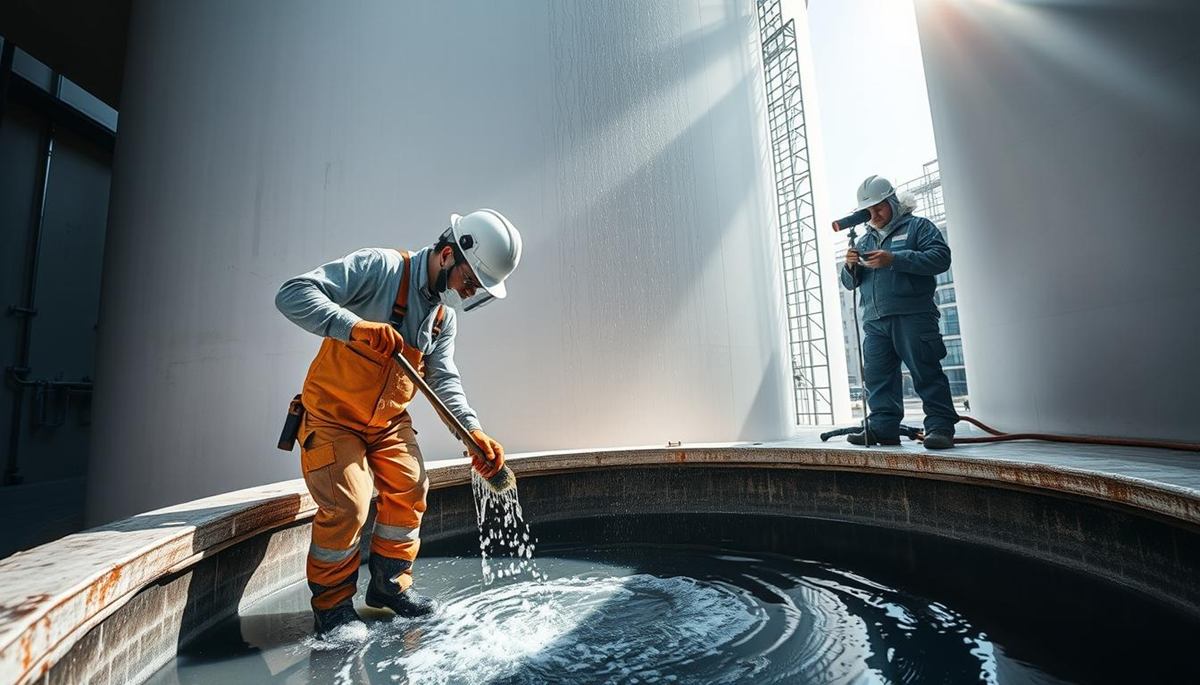
Water Tips: A bad smell in water can usually be caused by natural minerals and organic substances, certain water treatment agents, or bacteria growing in pipes and other equipment.
Why does the water tank smell after cleaning?
Why Tap Water Smells Bad After Tank Cleaning: After cleaning the household water tank, people often expect the water to be completely clean and odor-free. However, sometimes, despite cleaning the tank, a strange odor persists. In such a situation, simply cleaning the tank isn't enough. Besides the tank itself, the smell could also be caused by dirt accumulated in the pipes, hot water tank, filter, or plumbing.
Why does water smell like dampness?
If water remains stagnant in pipes or appliances for a long time, it may smell musty. Even after the tank is cleaned, if old water remains in the pipeline, the odor may persist. In such a situation, open all the taps in the house and let the water flow for a while. This can flush out the old water accumulated in the pipes. Afterward, check the smell of the fresh water that comes in.
In some cases, algae in surface water supplies or changes in weather can also cause water to smell or taste like mud. In such cases, the water supplier may modify the treatment process.
Does hot water smell like rotten eggs?
If the smell only occurs in hot water and smells like rotten eggs or sulfur, the cause may not be the water heater, but rather the water tank. Sulfur bacteria can grow in hot water tanks that haven't been properly cleaned or flushed for a long time, causing the water to develop a strong odor. Because the problem is in the hot water tank, cold water usually doesn't exhibit this odor. In this case, it's important to flush and clean the water heater according to the manufacturer's instructions. Regular tank maintenance can help reduce this problem.
Is the smell coming from the drain or from the water?
Sometimes, when you stand by the sink and smell the water, you might think the water itself smells bad. However, the actual problem could be clogged drains or pipes. The accumulation of organic matter inside dirty, damp pipes can lead to the growth of microorganisms like bacteria, fungus, and algae. This can create a musty or sewage-like odor.
An easy way to diagnose this is to fill a glass with water, take it away from the sink, and check the smell. If the water in the glass doesn't smell, the problem may be with the drain or plumbing rather than the water itself. However, if the water in the glass still smells like sewage, it may be necessary to have the water supply or home plumbing checked.
Cleaning the filter along with the tank is also necessary.
In many homes, the water tank is cleaned, but the filter used to purify the water is neglected. This mistake can cause odors in the water. It's important to replace the filter on a regular basis. If the filter isn't replaced for a long time, bacteria and organic matter can accumulate in it. The filter, which is supposed to remove dirt and odors from the water, can also become a source of problems if it's not cleaned or replaced in a timely manner. Therefore, schedule cleaning and replacement of any water filtration system according to the manufacturer's instructions.
Which method works to remove the smell?
The solution to the smell may vary depending on the cause of the water. In some cases, activated carbon filters can help remove organic matter that causes the odor. Reverse osmosis systems are also used to filter a variety of contaminants from water. If the smell is caused by hydrogen sulfide gas, options like a greensand filter or degasifier may be more useful. A greensand filter oxidizes hydrogen sulfide, converting it into solid sulfur particles that can then be filtered. A degasifier helps remove this gas from the water.