LIFESTYLE
Plague Bacteria: At what low temperatures does the plague bacterium survive, and how many times has it mutated?
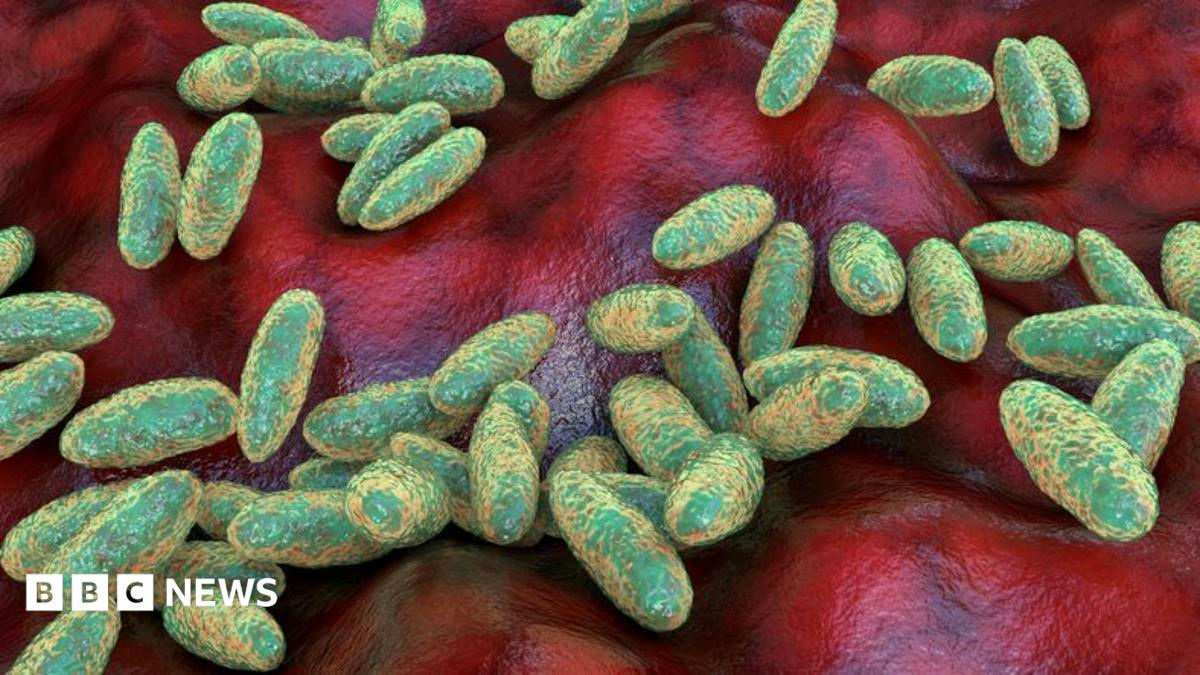
Plague History: The death of a 28-year-old woman who worked in an anti-plague lab has sparked a debate about the plague. The woman has been identified as Darya Shipilova.
Female scientist at Russia's anti-plague lab dies.
Russia Anti-Plague: The death of a 28-year-old woman who worked at an anti-plague lab in Russia has sparked a debate about the plague. The woman has been identified as Darya Shipilova. According to the World Health Organization, the woman died on Friday, but the cause of death has not been confirmed. A Russian official said she died from pneumonia, the cause of which is not yet clear.
Following this, the US Centers for Disease Control and Prevention (CDC) reported that it was monitoring a case of suspected pneumonic plague in the Irkutsk region of Russia. A woman has died in this case, but the CDC has not yet clarified the circumstances. This case in Russia raises questions about the extreme conditions in which the plague bacteria can survive. Can it persist for long periods in conditions such as extremely low temperatures, and how has it changed over time?
What is plague?
According to the health information website clevelandclinic, it's important to understand that plague is not a virus. It's a disease caused by a bacterium called Yersinia pestis. Over the past 1,400 years, plague has caused several major outbreaks and claimed millions of lives. Cases still occur in many parts of the world, although it's now a fairly rare disease.
A major question for scientists regarding plague has long been where the bacteria go after an outbreak ends. Yersinia pestis cannot survive in the environment for long without protection. Despite this, plague outbreaks have recurred in many places. This has led scientists to consider the possibility that the bacteria may persist in a protected location for a long time and become active again when the right conditions are met.
How do you stay alive?
A 2018 study at Colorado State University's Center for Infectious Disease Research provided important insights in this direction. The research revealed that amoebas found in soil and water may play a role in preserving plague bacteria between outbreaks. Amoebas typically feed on bacteria, but some bacteria can also survive within them.
Scientists sought to determine whether Yersinia pestis could survive within amoebas. To do this, soil samples were collected from prairie dog burrows in northeastern Colorado. They then studied the interaction between different amoeba species and plague bacteria. During their research, scientists discovered that plague bacteria can survive and possibly multiply within amoebas. Examination of infected amoebas revealed the bacteria to be alive. Comparing their numbers at different times indicated that they were not only present within the amoeba, but could also multiply there.
At what temperature can they survive?
The report does not provide a specific minimum temperature for Yersinia pestis. However, it does mention a form of amoeba called cysts. In this state, amoebas can remain dormant for long periods of time and can survive harsh conditions, including extreme temperatures and drought. Scientists are now trying to understand whether plague bacteria can also survive for years inside dormant amoeba cysts.
Regarding the evolution of plague, research suggests that Yersinia pestis evolved from its closest ancestor, Y. pseudotuberculosis, approximately 10,000 to 40,000 years ago. Scientists speculate that during this evolution, plague bacteria may have retained the ability to survive inside amoebas. However, the exact number of times plague has mutated is unknown.
There has been devastation many times.
History has recorded three major global outbreaks of plague. The Plague of Justinian wreaked havoc in the Byzantine Empire between 541 and 750. The Black Death then affected Asia and Europe between 1330 and 1480. Plague reappeared in China in 1855 and spread to many ports around the world over the next century. Today, plague is a rare disease, but it has not been completely eradicated. It is usually spread by the bite of an infected flea. Infection can also occur through contact with infected bacteria. Pneumonic plague affects the lungs and is considered the most dangerous form of plague.