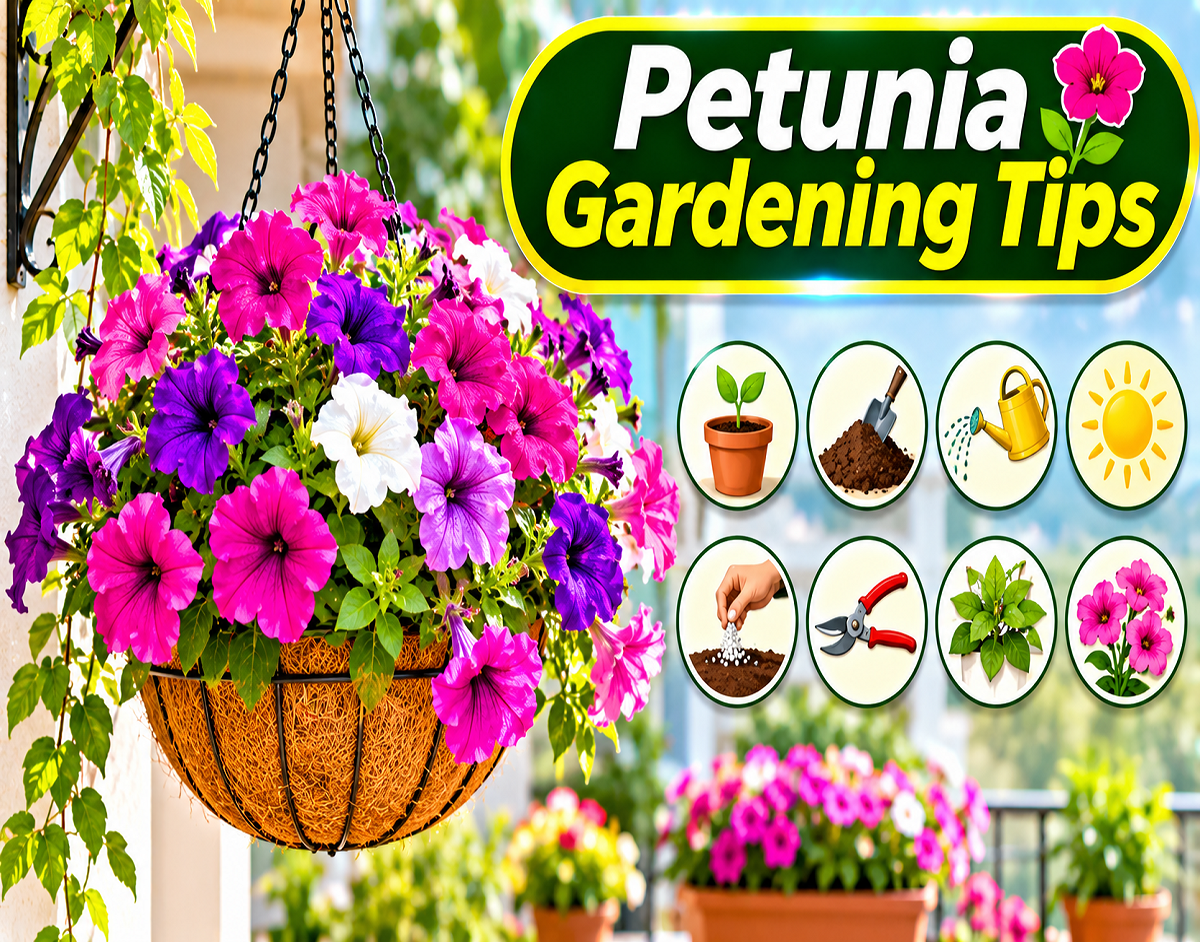
Petunia Growing Guide: If you want to transform your balcony, terrace or home garden into a colourful floral space, petunias are among the most attractive flowering plants to consider. Their beautiful trumpet-shaped flowers appear in shades of pink, purple, red, white, yellow and several striking colour combinations.
Petunias look particularly impressive in hanging baskets because certain varieties produce long, spreading branches that cascade over the edges of containers.
These flowering plants are popular among both experienced gardeners and beginners because they can produce abundant blooms with appropriate care.
However, successful petunia gardening requires the right combination of sunlight, soil, watering, fertilization and occasional pruning.
Here are eight practical steps to help you grow healthy petunias in hanging baskets and enjoy beautiful flowers throughout their suitable growing season.
1. Choose the Right Petunia Variety for Hanging Baskets
The first step is selecting a petunia variety that grows well in suspended containers.
Not all petunias have the same growth habit.
Some varieties grow in compact, upright shapes, while others spread outward and produce trailing branches.
For hanging baskets, trailing and spreading varieties are generally the most attractive options.
Popular varieties for hanging baskets include:
- Wave Petunias: Known for their spreading growth and abundant flowers.
- Supertunias: Popular ornamental petunias that can produce vigorous growth and colourful displays.
- Other trailing petunias: Suitable varieties that naturally cascade over container edges.
Trailing varieties create a fuller appearance as their branches extend beyond the basket.
When purchasing plants from a nursery, look for healthy foliage, strong stems and signs of active growth.
Avoid plants showing severe yellowing, damaged roots or obvious pest infestation.
2. Select a Suitable Hanging Basket With Proper Drainage
The size and design of the hanging basket can significantly influence plant growth.
A basket measuring approximately 25–30 centimetres, or 10–12 inches, in diameter can be suitable for one or two young plants, depending on their eventual size and growth habit.
Larger baskets generally provide more room for root development and can retain moisture for longer periods.
However, they also become heavier when filled with wet potting mix.
Important points to remember:
- Select a basket with adequate drainage holes.
- Ensure the hanging hooks and supporting structure can safely carry the weight.
- Use a coconut coir liner if growing petunias in a wire basket.
- Avoid overcrowding plants because roots need space to develop.
Good drainage is particularly important because petunias do not grow well when their roots remain waterlogged.
A properly selected basket can support healthier roots and more consistent flowering.
3. Prepare a Light and Nutrient-Rich Potting Mix
Petunias generally perform best in a lightweight potting medium that provides both drainage and sufficient moisture retention.
Heavy garden soil is often unsuitable for hanging baskets because it can become compacted and may add excessive weight.
A good potting mix should allow air to reach the roots while retaining enough moisture for healthy growth.
Gardeners may use a quality commercial potting mix and improve it with suitable organic material where necessary.
Useful ingredients include:
- Lightweight potting mix
- Cocopeat or coconut coir
- Well-decomposed compost
- Vermicompost in moderate quantities
- Perlite or another suitable drainage-improving material
Avoid using fresh manure or excessive amounts of fertilizer.
A balanced growing medium can help support root development and encourage healthy foliage and flowers.
4. Plant Petunias Carefully to Protect Their Roots
Once the basket and soil are ready, the next step is transplanting the petunia seedlings.
Young plants should be handled carefully because damaged roots can slow their establishment.
Begin by filling the hanging basket partially with potting mix.
Remove the petunia from its nursery container while supporting the root ball.
Create a small planting hole and place the plant at approximately the same depth at which it was growing in the original container.
Fill the surrounding space with potting mix and press gently to remove large air pockets.
Water thoroughly after planting, allowing excess water to drain through the bottom.
For the first few days, monitor the plant for signs of transplant stress.
Avoid placing newly transplanted petunias immediately in extremely harsh conditions.
5. Provide at Least Six Hours of Sunlight
Sunlight is one of the most important requirements for abundant petunia flowering.
Most petunias perform best when they receive approximately six hours or more of direct sunlight daily.
Insufficient light can result in weak growth and fewer flowers.
However, the ideal placement may depend on local climate conditions.
In areas experiencing intense summer heat, harsh afternoon sunlight can cause stress.
In such locations, morning sunlight combined with some afternoon protection may help maintain plant health.
Sunlight care tips:
- Place baskets in bright, sunny locations.
- Avoid keeping plants in deep shade.
- Rotate the basket occasionally for more even growth.
- Monitor plants during unusually hot weather.
A balcony that receives good morning sunlight can be suitable for petunias in many warm regions.
6. Water Regularly Without Making the Soil Waterlogged
Hanging baskets often dry out faster than plants growing directly in the ground.
Because the basket is exposed to air from several directions, moisture can evaporate relatively quickly.
Petunias need adequate water to support their foliage and flowers, particularly during active growth.
However, watering too frequently can create problems if the soil remains constantly wet.
The best approach is to check soil moisture before watering.
Insert a finger into the upper layer of the potting mix.
If the surface feels dry, check slightly deeper and water when the plant needs moisture.
Water thoroughly until excess moisture begins draining from the bottom.
Important watering tips:
- Check the soil regularly during warm weather.
- Avoid allowing the entire root ball to become severely dry.
- Do not leave the basket standing in collected water.
- Reduce watering frequency during cooler or rainy conditions.
Watering requirements vary according to basket size, temperature, wind exposure and plant growth.
7. Use Fertilizer to Encourage Healthy Flowering
Petunias are active flowering plants and may require regular feeding during their growing season.
Nutrients can gradually wash out of hanging baskets because water drains through the potting medium.
A suitable fertilizer can help maintain healthy growth and support flower production.
Gardeners may use a balanced liquid fertilizer or a product formulated for flowering plants.
The source article recommends feeding approximately every 15 days during the flowering period.
However, fertilizer concentration and application frequency should follow the product instructions.
Excessive fertilizer can damage roots or encourage unwanted growth.
Too much nitrogen may produce lush foliage while reducing the number of flowers.
For best results, use fertilizer carefully and avoid applying strong solutions to severely dry potting mix.
8. Remove Faded Flowers and Prune Long Branches
Regular maintenance can help petunias remain attractive throughout their growing season.
As flowers age, they may fade and dry out.
Removing spent flowers, commonly called deadheading, can improve the plant's appearance and encourage continued flowering in varieties that benefit from the practice.
Some modern petunia varieties are self-cleaning and require less deadheading.
Pruning is also useful when branches become excessively long or uneven.
Lightly trimming overgrown stems can encourage fresh branching and a more compact shape.
Pruning tips:
- Remove dead or damaged plant material.
- Trim excessively long stems when necessary.
- Use clean gardening scissors.
- Avoid severe pruning during periods of extreme heat or plant stress.
Proper pruning can help prevent the basket from becoming untidy and encourage more balanced growth.
Common Petunia Problems and Their Solutions
Even with proper care, petunias may occasionally develop problems.
Understanding the possible causes can help gardeners respond appropriately.
| Problem | Possible cause | Suggested solution |
|---|---|---|
| Yellow leaves | Overwatering, poor drainage or nutrient deficiency | Check soil moisture and feeding |
| Fewer flowers | Insufficient sunlight or excessive nitrogen | Improve sunlight and review fertilizer use |
| Wilting leaves | Dry potting mix, heat stress or root problems | Check root-zone moisture and drainage |
| Long, weak stems | Inadequate light or insufficient pruning | Improve light exposure and trim appropriately |
| Brown leaf edges | Heat, inconsistent watering or fertilizer stress | Review watering and feeding practices |
| Damaged flowers | Heavy rain, wind or pest activity | Provide suitable protection and inspect the plant |
Symptoms can have several causes, so gardeners should inspect the soil, leaves and roots before making major changes.
Best Season to Grow Petunias in India
Petunias are generally grown as cool-season flowering plants in many parts of India.
In regions with hot summers, they often perform particularly well during autumn, winter and early spring.
The ideal planting period depends on local temperatures and climate.
Petunias may struggle during prolonged periods of extreme heat, especially when grown in small hanging baskets.
Gardeners should choose suitable planting dates and protect plants from damaging weather.
Where Should You Hang Petunia Baskets?
Petunia baskets can enhance several areas of the home.
They are particularly attractive on balconies, terraces, patios and garden entrances.
A sunny veranda can also provide a suitable growing location.
When hanging baskets, make sure they are securely attached to strong supports.
Avoid placing them where dripping water could create slippery surfaces or inconvenience people below.
The location should also allow easy access for watering, pruning and checking plant health.
Extra Tips for More Petunia Flowers
To maintain a colourful display, gardeners should regularly inspect their plants.
Healthy roots, adequate sunlight and balanced nutrition are essential for consistent flowering.
During the growing season, remove damaged foliage and watch for common pests such as aphids or other sap-feeding insects.
If pests appear, identify the problem before choosing a suitable treatment.
It is also helpful to monitor weather forecasts, particularly when strong winds or heavy rain are expected.
Hanging baskets may need temporary protection during severe weather.
Conclusion
Petunias are an excellent choice for adding colour and beauty to balconies, terraces and home gardens.
Their attractive trumpet-shaped flowers and spreading growth make them particularly suitable for hanging baskets.
By choosing trailing varieties, using well-drained potting mix, providing adequate sunlight and watering carefully, gardeners can encourage healthy growth and abundant flowers.
Regular feeding, occasional pruning and timely removal of faded blooms can further improve the appearance of the plants.
With these eight simple gardening steps, even beginners can create attractive hanging baskets filled with colourful petunias during the appropriate growing season.
Gardening Note: Petunia growth and flowering depend on local weather, sunlight, plant variety, soil conditions and watering practices. Adjust care according to the plant's needs and seasonal conditions.