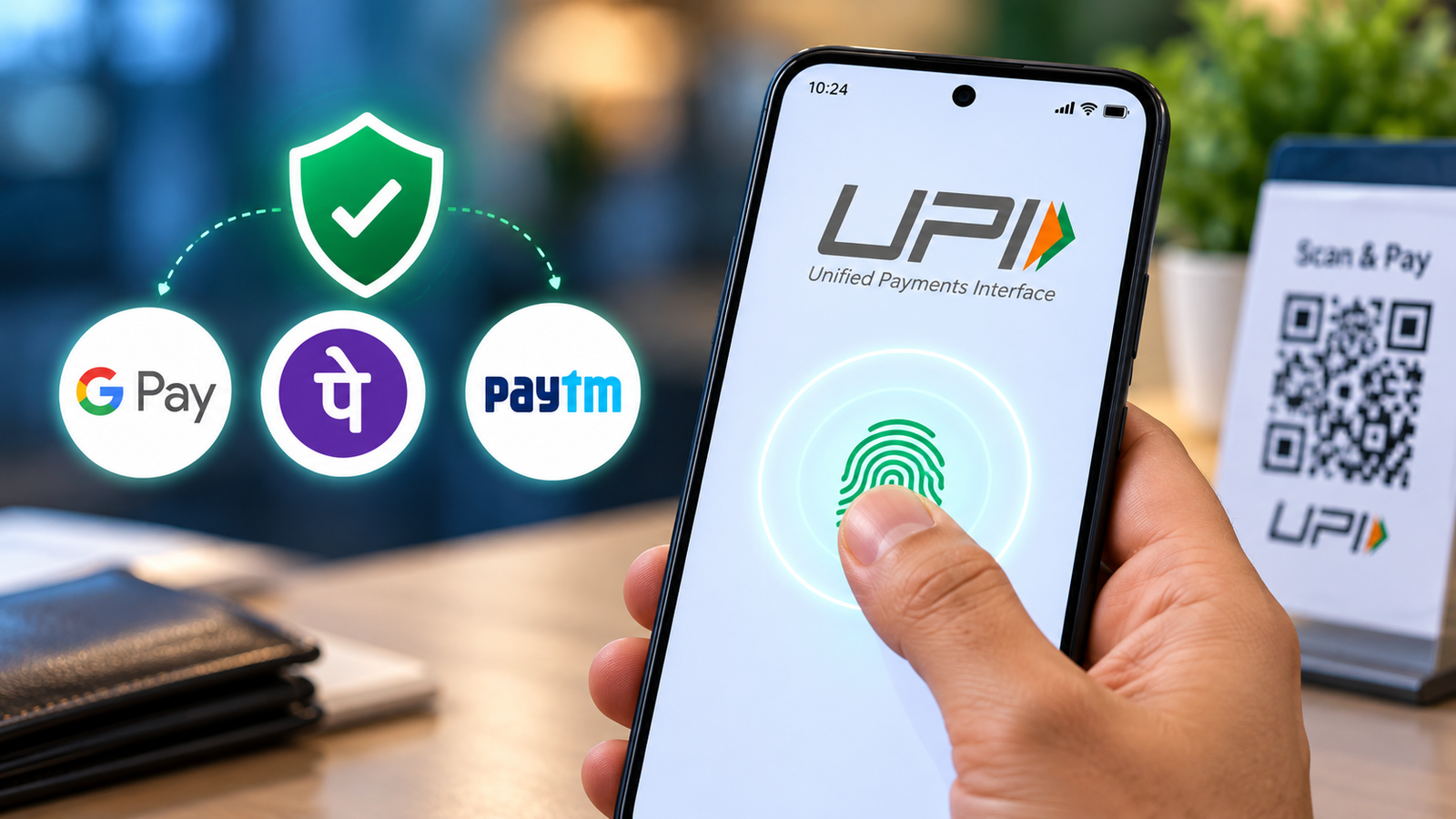
Paying through UPI feels almost instantaneous. You scan a QR code, enter an amount, type your UPI PIN and tap the payment button. Within seconds, your phone usually displays a successful transaction message and the merchant receives confirmation.
But behind those few seconds is a much larger digital infrastructure involving your payment app, bank systems, the National Payments Corporation of India (NPCI) and the recipient’s bank.
As discussions continue around the cost of operating India's massive digital-payment ecosystem, understanding what actually happens after you press the Pay button can help explain why a seemingly simple UPI transaction requires multiple systems to work together.
A UPI Transaction Does Not Physically Move Money
When you transfer ₹100 through UPI, currency notes obviously do not travel electronically from one bank to another.
Instead, banking systems exchange secure digital instructions. Your account balance is reduced by the transaction amount, while the recipient’s bank records a corresponding credit in the recipient's account.
UPI, or Unified Payments Interface, provides the infrastructure that allows participating banks and payment applications to communicate and process these instructions.
NPCI operates the UPI platform and acts as a key connecting layer between participating financial institutions.
What Happens When You Scan a QR Code?
Suppose you want to pay ₹100 to a shopkeeper. You open a UPI-enabled application and either scan the merchant's QR code or enter the recipient's UPI ID.
The QR code or UPI ID provides information that enables the payment system to identify where the payment needs to be routed without requiring you to manually enter the recipient's full bank account details.
You then enter ₹100 as the payment amount and authenticate the transaction using your UPI PIN.
While your screen may simply show a processing animation, several digital checks and messages are taking place in the background.
Your Bank Verifies the Payment Request
The payment request reaches the banking infrastructure linked to your UPI account.
Before allowing the transaction to proceed, banking systems perform various checks. These can include whether the account is active, whether sufficient funds are available, whether authentication is valid and whether applicable transaction limits have been exceeded.
Security and fraud-detection systems can also be involved in evaluating transactions.
If the necessary checks are successfully completed, your bank debits ₹100 from your account and sends confirmation through the payment network.
If the payment cannot be authenticated or there is insufficient balance, the transaction may fail instead.
NPCI Helps Route the Transaction
NPCI's infrastructure plays a central role in routing UPI payment instructions between participating institutions.
Once the transaction receives the necessary confirmation from the payer's side, the instruction can be routed towards the recipient's bank.
The recipient bank then records the corresponding credit in the beneficiary's account.
This is why a shopkeeper can often receive payment confirmation within seconds even when the customer and merchant use accounts at completely different banks.
How Does the Payment Success Message Return?
The process does not finish with the recipient's account being credited.
Confirmation must also travel back through the participating systems so that both sides know whether the payment was completed successfully.
The recipient's bank communicates the transaction status through the UPI infrastructure, and the information ultimately reaches the payer's application.
That is when you see a message such as "Payment Successful" on your screen.
The source explains that when a system in this communication chain does not respond properly, a transaction can remain pending. Depending on the eventual transaction status, the money may subsequently reach the recipient or be reversed.
Bank-to-Bank Settlement Happens Separately
An important distinction is that the instant balance updates visible to customers are not the same thing as banks physically exchanging money at that exact second.
The underlying obligations between participating banks are calculated and settled through the payment-system framework. The source describes this as banks' net payment positions being calculated and subsequently settled rather than currency moving between institutions for every individual retail transaction in real time.
For users, however, this complicated process is largely invisible. They generally see only the final debit, credit and transaction-status messages.
Why Does Running UPI Infrastructure Cost Money?
UPI may appear effortless from a customer's perspective, but operating a payment network at such a large scale requires significant infrastructure.
Banks need computing capacity and payment systems. Applications need technology infrastructure and customer support. NPCI operates the network connecting participants, while security systems must continuously monitor transactions and help identify suspicious activity.
Servers must remain operational, backup infrastructure needs to be maintained, engineers are required to manage technology, and cybersecurity and fraud-prevention systems need continuous investment.
The source article highlights these infrastructure, electricity, security, backup, engineering, customer-support and fraud-detection costs while explaining the broader debate over how the UPI ecosystem should be funded.
Why UPI Feels So Simple Despite a Complex Backend
UPI's convenience comes from hiding most of this technical complexity from the consumer.
A customer does not need to know how different bank systems communicate or how transactions are routed and settled. From the user's perspective, the process remains straightforward: choose the recipient, enter the amount, authenticate the payment and wait for confirmation.
Behind that simple experience, however, several independent technology and banking systems must communicate correctly and securely.
The next time a QR payment is completed within a few seconds, the transaction may look like a single tap on your screen—but in the background, multiple digital checks, routing instructions, account updates and confirmation messages have already taken place.