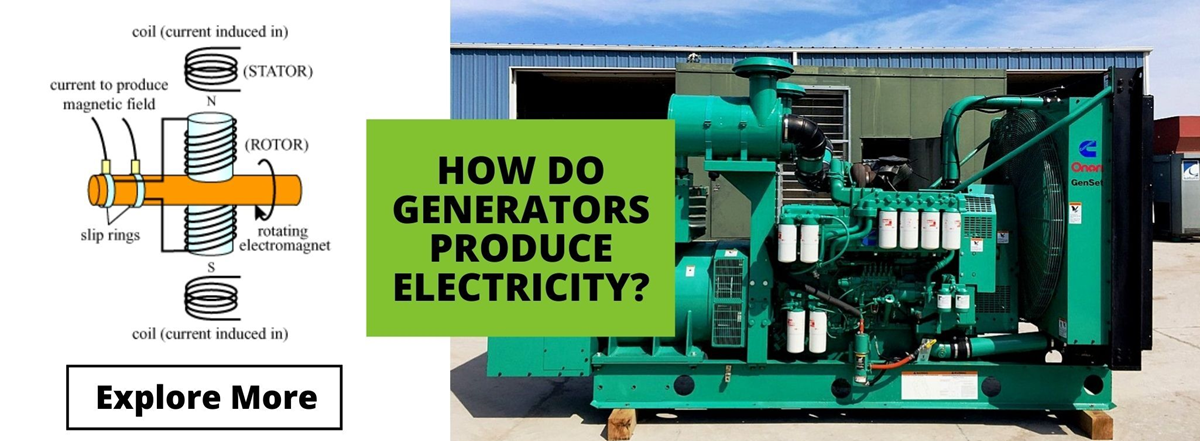
A generator instantly lights up the entire house when the power goes out, but have you ever wondered how this machine generates electricity from diesel? And how much load can it handle if you want to run an AC on a generator?
electricity from generator
The world may have progressed significantly; various technologies have emerged, and artificial intelligence has taken a toll. Despite all this, there are still many small towns in our country that don't have 24-hour electricity. Furthermore, even larger cities experience lengthy power cuts for various reasons. This often hinders important work. Some people use inverters, but in the summer, when ACs need to be run, a generator is more appropriate.
Have you ever wondered how this diesel-powered machine generates electricity? People generally think that a generator generates electricity internally. However, its working method is slightly different. Let's explain how a generator generates electricity and how many ACs you can run on a single generator.
How is electricity produced from a generator?
If you have questions about generating electricity from a generator, first understand the science behind it. According to scientific principles, a generator converts mechanical energy into electrical energy. It has two major components: the engine and the alternator. When you fill the generator with diesel and start it, its engine begins to function just like a car or bike engine.
This engine burns fuel to generate power and spins the rotor of its connected alternator at very high speeds. Inside the alternator is a binding of copper wires and a powerful magnetic field. When the engine's power causes the magnets to spin rapidly between the wires, electrons begin to flow. This flow is what we call electricity, which then travels through cables to your home's main switchboard.
Know these things before using AC
Before you can figure out how many ACs can run on a generator, you need to understand the power consumption of an AC. A typical 1.5-ton AC in your home or office, when running continuously, draws approximately 1500 to 1800 watts, or 1.5 to 1.8 kilowatts. This is called the running load. However, when the AC compressor starts, a normal AC draws almost twice its capacity, or 3000 to 3500 watts.
This is called the starting load. If your generator isn't capable of handling this initial shock, it could stall or trip the MCB as soon as you turn on the AC. However, if you have a modern inverter AC, it gradually increases its speed. Therefore, it doesn't suddenly take on a heavy load upon starting, and runs smoothly on the generator.
How many ACs will run on how many kVA generators?
Generator capacity is measured in kilovolt-amperes, or kVA. 1 kVA represents approximately 800 watts of power. If you want to run a 1.5-ton AC, along with fans and lights, you'll need to install a generator with at least a 5 kVA. A 1-ton inverter AC can easily run on a small 3 kVA portable generator.
But it won't work properly on a 1.5-ton AC. If you want to run two 1.5-ton ACs simultaneously, a generator with a capacity of 7.5 kVA to 10 kVA is best. Similarly, a silent diesel generator of 15 kVA or larger is required to handle the load of 3 to 4 ACs. One important thing to remember: if you want to run more than one AC on a generator, don't turn them all on at the same time, but turn them on one by one at an interval of 2-3 minutes.