LIFESTYLE
Hospital Rules 2026: Hospitals Asked to Display Treatment, Bed and Test Charges, Know What Changes for Patients
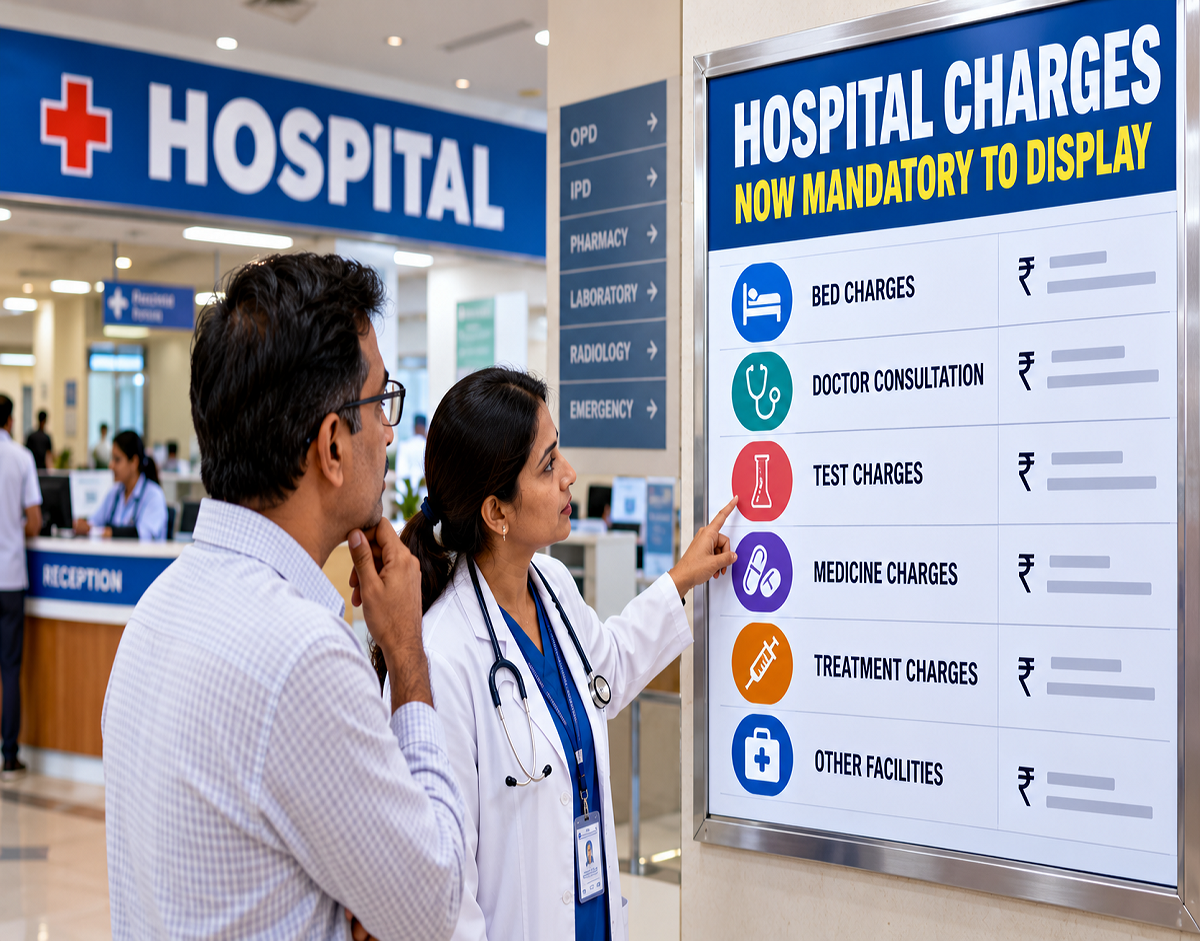
Hospital New Rules 2026: Patients and their families may soon find it easier to understand medical expenses before starting treatment. According to an October 14, 2026 report, the Union Health Ministry has asked states and Union Territories to strengthen transparency in hospital pricing by ensuring that charges for medical consultations, diagnostic tests, surgeries, hospital beds and other services are clearly displayed. The initiative aims to help patients estimate treatment costs, compare hospital charges and avoid unexpected medical bills.
Hospital Rules 2026: What Is the Government's Latest Decision?
Medical expenses are a major concern for families seeking treatment at hospitals.
Before admission, patients often want to know how much they will need to pay for consultations, diagnostic tests, medicines, room facilities and surgical procedures.
However, complete information about hospital charges is not always easily accessible.
In some cases, patients receive detailed information about medical expenses only after treatment has started or when the final bill is prepared.
To address this concern, the central government has reportedly asked states and Union Territories to ensure greater transparency in hospital pricing.
According to the report, hospitals covered by the applicable regulatory framework are expected to make their service charges accessible to patients and their families.
The initiative is intended to improve financial transparency and help people make more informed healthcare decisions.
However, the exact implementation requirements will depend on the applicable central or state legislation and official directions issued by the relevant authorities.
Hospitals to Display Treatment and Medical Service Charges
One of the main objectives of the reported directions is to make hospital pricing information more visible.
Patients should be able to understand the charges for commonly used medical services without having to request every detail separately.
The information may cover consultation fees, diagnostic procedures, accommodation charges and other hospital services.
The report also highlights the importance of displaying charges for routine medical supplies and treatments, including items such as glucose administration where separately billed.
By making this information accessible, hospitals can help patients estimate the potential cost of treatment.
However, the published rate for an individual service should not be confused with the total cost of hospitalization.
Final expenses can vary depending on the patient's medical condition, length of stay, medicines, procedures and other services required.
Where Will Hospitals Display Their Rate Lists?
According to the October 2026 report, hospitals may be required to display pricing information in locations that patients and visitors can easily access.
These may include:
- Hospital reception areas
- Admission and registration counters
- Billing departments
- Main entrances or other prominent locations
- Official hospital websites
Hospitals may use printed notice boards or digital displays to present their service charges.
Publishing rates online can also help patients review prices before visiting a hospital.
The report indicates that state health departments have been asked to ensure compliance through the Clinical Establishments Act or relevant state legislation.
The specific requirements may differ depending on the hospital's location, registration category and applicable legal framework.
Which Hospital Charges Will Patients Be Able to Check?
The proposed transparency measures are intended to cover several categories of healthcare expenses.
| Medical Service | Information Patients May Be Able to View |
|---|---|
| Doctor Consultation | Consultation and specialist fees |
| Hospital Bed | General ward and bed charges |
| Private Room | Daily room rental |
| ICU Facilities | Applicable intensive care charges |
| Diagnostic Tests | Charges for laboratory tests and scans |
| Surgery | Listed procedure or package charges |
| Medical Procedures | Charges for specified treatments |
| Other Hospital Services | Applicable service and supply charges |
The exact categories displayed will depend on the hospital and the applicable regulations.
Patients should also check whether a quoted amount includes medicines, consumables, professional fees and other expenses.
For example, a hospital may publish a room rental charge separately from nursing services, investigations or treatment-related costs.
Understanding these distinctions can help families estimate the overall expense more accurately.
Why Has the Government Emphasized Hospital Price Transparency?
One of the biggest difficulties faced by patients is uncertainty about treatment expenses.
A family may be informed about the approximate cost of a procedure but later discover additional charges for medicines, tests, equipment or extended hospitalization.
Unexpected expenses can create financial pressure, particularly when treatment involves a prolonged hospital stay.
Billing disagreements may also arise when patients do not understand why certain charges have been included.
Making hospital rates more accessible could help reduce such confusion.
The initiative also encourages clearer communication between hospitals and patients.
When charges are available in advance, families can ask questions about treatment packages, exclusions and additional expenses before making financial arrangements.
However, price transparency alone does not guarantee that the final bill will match an initial estimate, particularly when a patient's medical needs change.
Can Patients Compare Treatment Costs Between Hospitals?
Greater access to hospital pricing information may help patients compare the costs of similar services.
For example, a patient planning a non-emergency procedure may be able to review consultation charges, room rates and estimated surgical expenses at different hospitals.
This information could support more informed financial planning.
However, patients should not choose a hospital solely because its advertised charges are lower.
The qualifications of medical professionals, availability of appropriate facilities, quality of care and suitability for the patient's condition are also important considerations.
In emergencies, obtaining timely and appropriate medical attention should take priority over comparing prices.
Patients should also check whether a hospital is covered under their health insurance policy or a government healthcare scheme.
Will All Private and Government Hospitals Follow the Same Rules?
The report refers to directions issued to states and Union Territories, but implementation may not be identical across India.
Healthcare establishments are regulated through different legal arrangements, including the Clinical Establishments (Registration and Regulation) Act, 2010, where applicable, and relevant state laws.
As a result, the precise obligations may vary depending on the state and type of healthcare facility.
The supplied report does not provide a specific nationwide enforcement date, penalty structure or detailed list of establishments covered by the latest directions.
Therefore, patients should not assume that every hospital across the country has already implemented identical pricing displays.
The relevant state health department's official instructions will determine the applicable compliance requirements.
What Are the Benefits for Patients and Their Families?
Greater transparency in hospital charges could provide several practical advantages.
First, families may be able to estimate routine treatment expenses before admission.
Second, clearly displayed rates can make it easier to understand the different components of a hospital bill.
Third, patients may be able to compare available treatment options when they have sufficient time to make a decision.
Finally, accessible pricing information can encourage hospitals to explain their billing procedures more clearly.
For people managing treatment expenses without comprehensive insurance coverage, such information can be particularly useful.
However, published rates should be treated as part of the financial information needed for treatment planning rather than a guarantee of the final bill.
What Should Patients Check Before Hospital Admission?
Before a planned hospital admission, patients can ask for a written estimate of expected expenses.
They should also clarify whether the quoted amount includes consultation fees, investigations, medicines, surgical charges and room rent.
If a hospital offers a treatment package, patients should ask which services are included and which may be billed separately.
For insured patients, it is important to confirm network eligibility, room-rent restrictions, co-payment requirements and other applicable policy conditions.
Patients should also retain receipts, estimates and itemized bills for their records.
If any charge appears unclear, they can request an explanation from the hospital's billing department.
What if a Hospital Does Not Display Its Charges?
Patients who cannot find the relevant rate list may first request the information from the hospital reception or billing counter.
If the hospital is subject to a legal requirement to publish charges and fails to comply, patients may seek guidance from the appropriate state health authority.
The available grievance procedure will depend on the applicable rules and the nature of the complaint.
It is important to distinguish between a hospital's failure to disclose required information and a disagreement about the final amount charged.
Both situations may require different forms of review.
Hospital New Rules 2026: What Should the Public Remember?
The reported directions on hospital pricing transparency are intended to make healthcare expenses easier for patients to understand.
Displaying consultation fees, diagnostic test charges, surgery costs and hospital room rates can help families prepare financially and reduce confusion about medical bills.
The initiative may also encourage better billing practices and more informed communication between healthcare providers and patients.
However, the actual implementation will depend on state-level directions and the laws applicable to individual hospitals.
Patients should ask for a clear estimate before planned treatment, review the published rate list where available and request an itemized bill to understand the final charges.
Disclaimer: This article is based on the October 14, 2026 report supplied. The specific government notification, enforcement date and state-wise implementation requirements have not been independently verified. Hospital charges and legal obligations may vary by location and healthcare establishment.