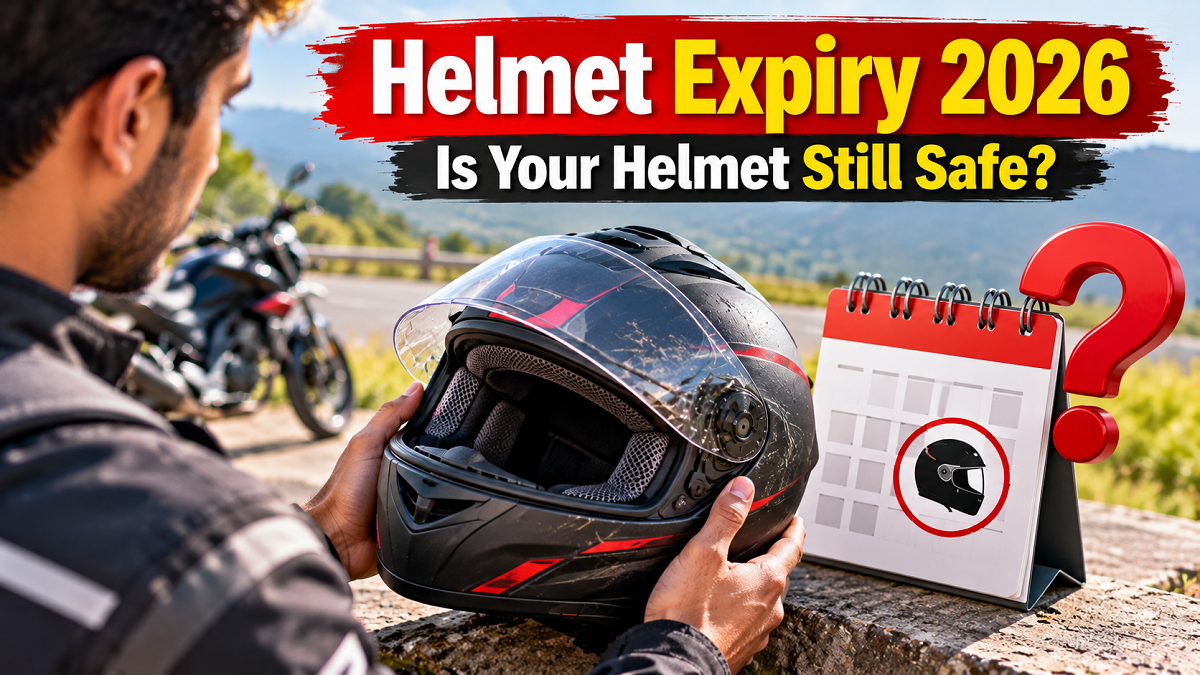
Helmet Safety Tips 2026: Wearing a helmet while riding a motorcycle or scooter is one of the most important safety precautions for two-wheeler users. In India, helmet use is required under road safety regulations, and riders who fail to follow the applicable rules may face penalties. However, the primary purpose of wearing a helmet is not to avoid a traffic fine but to reduce the risk of serious head injuries during accidents.
Many people continue using the same helmet for several years without checking its condition. Some believe that a helmet remains safe as long as its outer shell looks undamaged. However, this assumption can be dangerous.
Helmets are not designed to last forever. Continuous exposure to sunlight, heat, rain, dust, sweat and regular wear can gradually affect their materials. Additionally, a helmet involved in an accident may lose some of its protective ability even when no visible cracks appear on the outside.
So, how long does a motorcycle helmet last? Does it have an expiry date? And what signs indicate that it is time to purchase a replacement? Here is everything riders should know.
Helmet Expiry Date: How Many Years Should You Use a Helmet?
Unlike food products or medicines, motorcycle helmets do not necessarily have a universal expiry date that applies to every brand and model.
The recommended replacement period depends on several factors, including the helmet's construction, materials, frequency of use, storage conditions and manufacturer instructions.
Many helmet manufacturers recommend replacing helmets after approximately three to five years of regular use, although the recommended period can differ depending on the product.
Some manufacturers may specify a longer service period or provide guidance based on the helmet's manufacturing date.
For example, a helmet used daily in hot weather may experience different levels of wear compared with one used occasionally and stored properly.
Riders should always check the manufacturer's instructions rather than assuming that every helmet becomes unsafe after exactly three or five years.
It is also important to distinguish between the manufacturing date and the date when the helmet was first used.
Why Does a Motorcycle Helmet Lose Its Protective Ability?
A helmet is designed with multiple protective components that work together to reduce the impact of a collision.
These generally include a hard outer shell, an impact-absorbing inner liner, comfort padding and a retention system consisting of straps and a fastening mechanism.
Each component plays a different role in protecting the rider.
The outer shell helps distribute impact forces, while the inner liner absorbs energy during a collision.
Over time, regular use and environmental exposure can affect the condition of certain materials.
Heat, sweat, moisture, improper cleaning products and physical damage may contribute to deterioration.
However, normal ageing does not affect every helmet in the same way. The condition of the helmet and the manufacturer's recommended service life are more useful indicators than age alone.
Helmet Inner Foam: Why Is It Important for Safety?
One of the most important parts of a motorcycle helmet is its impact-absorbing liner.
This protective layer is commonly manufactured using expanded polystyrene, also known as EPS foam.
During an accident, the EPS liner is designed to compress and absorb part of the impact energy, helping reduce the force transmitted to the rider's head.
Unlike removable comfort padding, this protective foam is an essential safety component.
If the EPS liner becomes cracked, crushed, loose or otherwise damaged, the helmet may no longer provide the intended level of protection.
Sweat, hair products, moisture and heat can also affect comfort padding, adhesives and other components over time.
Riders should regularly inspect the interior of their helmets for unusual changes.
Important: Never attempt to repair damaged impact-absorbing foam using household glue, tape or other adhesives. If the protective liner is damaged, the helmet should be replaced.
Should You Replace Your Helmet After an Accident?
Yes. A helmet that has experienced a significant impact during an accident should generally be replaced.
This is particularly important if the rider's head was inside the helmet when the impact occurred.
The protective liner is designed to absorb impact energy, and some of its internal structure may become permanently compressed during a collision.
Such damage may not always be visible from the outside.
Even when the outer shell appears normal, the helmet may have lost part of its ability to absorb another impact.
If a helmet falls from a significant height or strikes a hard surface, riders should inspect it and follow the manufacturer's guidance. Not every minor drop automatically requires replacement, but uncertainty about structural damage should be taken seriously.
Continuing to use a helmet with known impact damage can increase the risk of injury during another accident.
5 Warning Signs That Your Helmet Needs Replacement
Motorcycle riders should inspect their helmets regularly, particularly when they are used every day.
The following signs may indicate that replacement is necessary:
- Cracks or visible damage: Cracks, splits or deformation in the outer shell can compromise protection.
- Damaged inner liner: Crushed, cracked, loose or deteriorating impact-absorbing foam is a serious warning sign.
- Loose or damaged chin straps: Frayed straps, broken buckles or faulty fastening systems can prevent the helmet from staying securely in place.
- Poor fitting: A helmet that has become excessively loose or no longer fits correctly may not provide adequate protection.
- Previous accident damage: A helmet involved in a significant crash should generally be replaced, even if the damage is not immediately visible.
Riders should not wait for every warning sign to appear before purchasing a new helmet.
ISI Helmet Rules in India: What Should Buyers Check?
When purchasing a motorcycle helmet in India, riders should choose a genuine product that complies with the applicable Bureau of Indian Standards (BIS) requirements.
The relevant Indian safety standard for protective helmets for two-wheeler riders is IS 4151.
A genuine ISI certification mark indicates that the product is manufactured under the applicable certification requirements.
However, buyers should remain cautious about counterfeit certification labels and poor-quality products.
Before purchasing a helmet, check that it comes from a reliable manufacturer or authorised seller.
The helmet should fit securely without causing excessive discomfort. It should not move freely when the rider turns their head.
The chin strap must fasten correctly, and the buckle should remain secure during normal use.
A properly certified helmet with a comfortable and secure fit is generally a better choice than an uncertified product purchased only because it is inexpensive.
How to Increase the Life of Your Motorcycle Helmet
Although helmets have a limited service life, proper care can help maintain their condition.
Riders should follow these basic maintenance practices:
- Store the helmet in a cool, dry place away from prolonged direct sunlight.
- Avoid leaving it exposed to excessive heat, such as inside a vehicle parked in strong sunlight.
- Prevent unnecessary drops and avoid placing heavy objects on top of the helmet.
- Clean the outer shell and removable padding according to the manufacturer's instructions.
- Avoid harsh chemicals, petrol, paint thinners and strong solvents that could damage helmet materials.
- Regularly inspect the chin strap, buckle, shell and internal lining.
- Replace removable comfort padding only when the manufacturer permits it and compatible replacement parts are available.
Proper maintenance can help preserve the helmet's condition, but it cannot restore protection lost through significant impact damage.
Does Every Helmet Expire After Five Years?
There is no single five-year expiry rule that applies to all motorcycle helmets.
Different manufacturers may recommend different replacement intervals based on product design, materials and testing.
Some helmets may need replacement sooner because of accidents, damage or heavy use.
Others may remain in acceptable condition for a longer period when used and stored correctly, provided this is consistent with the manufacturer's guidance.
Riders should therefore check the product manual, manufacturing information and recommended replacement schedule.
If the helmet's history is unknown, especially when purchasing a second-hand product, it may be difficult to determine whether it has previously sustained damage.
For this reason, buying a new, properly certified helmet from a trustworthy seller is generally the safer option.
Final Thoughts: When Should You Buy a New Helmet?
A motorcycle helmet is an essential piece of protective equipment, and its condition should never be ignored.
While many manufacturers suggest replacement after approximately three to five years of regular use, the exact timeline depends on the brand, model, usage and maintenance.
More importantly, a helmet should be replaced immediately if it has suffered significant impact damage or if its essential protective components are compromised.
Riders should also ensure that their helmets meet applicable BIS safety standards, fit correctly and have functioning straps and buckles.
Remember: A helmet is designed to protect your head, not simply help you avoid a traffic penalty. Regular inspection, proper maintenance and timely replacement can make an important difference to your safety on the road.