Business
Court E-Filing 2026: File Petitions Online From Home, Save Time and Avoid Unnecessary Court Visits
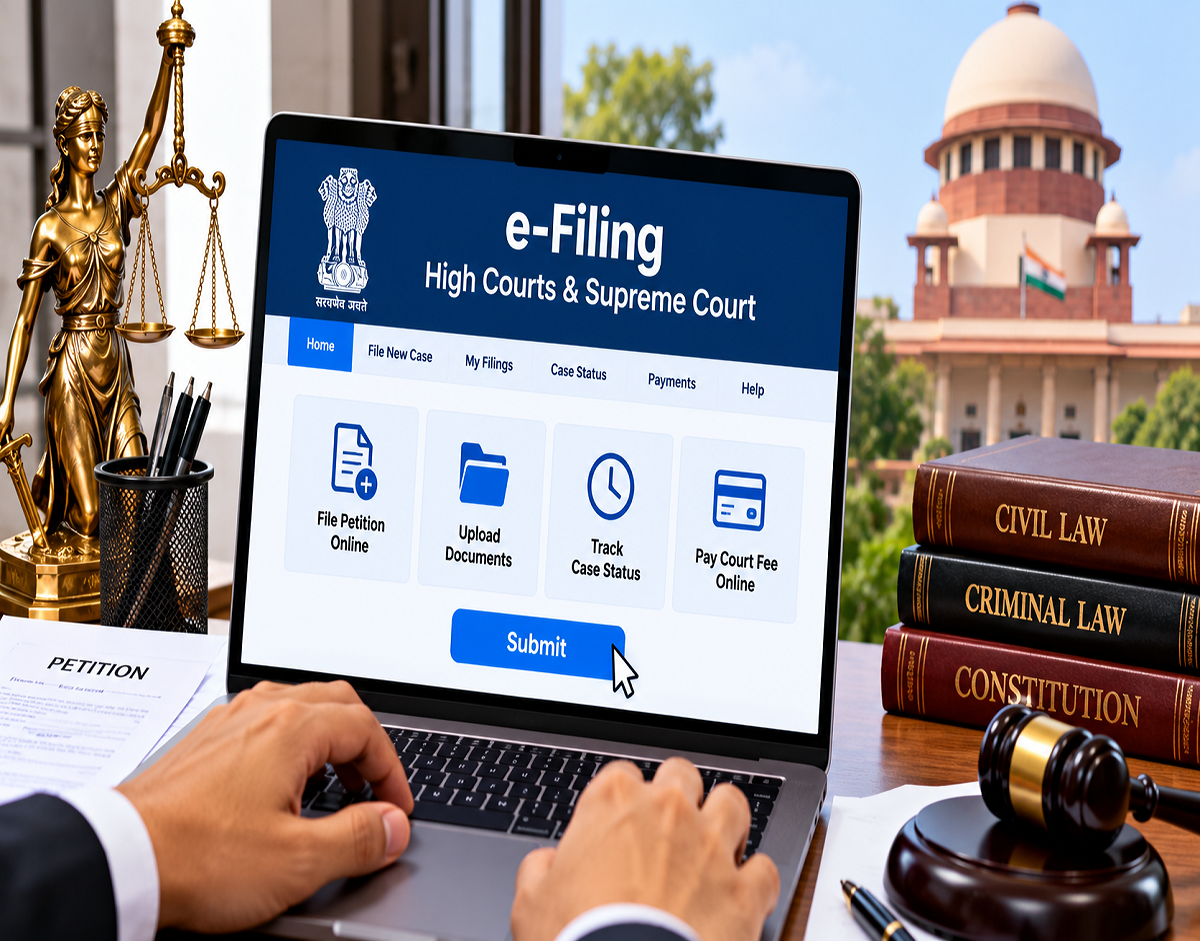
Court E-Filing India 2026: Filing a petition or submitting legal documents no longer requires repeated visits to court offices in every situation. India's judicial system is increasingly adopting digital services that allow lawyers and eligible litigants to submit petitions, applications and supporting documents electronically. The e-filing facility, introduced as part of the broader e-Courts initiative, aims to simplify legal procedures, reduce paperwork and improve access to judicial services. However, the availability of online filing and the exact procedure depend on the court and its applicable rules.
Court E-Filing 2026: Submit Legal Documents Without Repeated Court Visits
For many people, approaching a court involves considerable preparation, including arranging documents, completing filing formalities and visiting the appropriate court registry.
Traditional filing procedures can require physical copies of petitions, supporting evidence and other legal documents.
This can become particularly challenging for individuals who live far from court premises or have limited time to complete administrative formalities.
Electronic filing offers an alternative by allowing eligible users to submit documents through authorized digital platforms.
The facility can help reduce unnecessary travel and make certain court-related procedures more convenient.
The Ministry of Law and Justice has also highlighted the advantages of e-filing, emphasizing the ability to submit petitions remotely and receive digital acknowledgments.
However, users must comply with the relevant court's filing rules, document requirements and verification procedures.
What Is E-Filing in Indian Courts?
E-filing refers to the electronic submission of petitions, applications and other legal documents through an approved court filing system.
Instead of submitting every document physically at a filing counter, authorized users can upload the required files through a designated online portal.
Depending on the court and the type of proceeding, electronic filing may be available to advocates, registered litigants appearing in person and other permitted users.
The system is designed to support digital document submission and improve the management of court records.
Once the filing is submitted, the platform may generate an acknowledgment or reference number.
This helps users maintain a record of the submission and, where supported, check its processing status.
However, an electronic acknowledgment generally confirms receipt of the submission. It does not necessarily mean that the petition has passed registry scrutiny, been formally registered or been accepted for hearing.
How to File a Petition Online in India: Step-by-Step Guide
People who want to use court e-filing services should begin by identifying the court that has jurisdiction over their matter.
The precise steps can differ between the Supreme Court, High Courts and district courts.
A general process is outlined below.
Step 1: Visit the Official Court E-Filing Portal
Open the official e-Courts e-filing service or the relevant court's authorized filing website.
Ensure that the website is genuine before entering personal or case-related information.
Step 2: Register or Sign In
New users may need to create an account according to the portal's registration requirements.
The platform may ask whether the applicant is an advocate, a party appearing in person or another authorized user.
Existing users can sign in using their registered credentials.
Step 3: Select the Relevant Court and Filing Category
Choose the appropriate court and type of proceeding, where the system provides these options.
Correctly identifying the filing category is important because different proceedings may have different legal requirements.
Step 4: Enter the Required Case Information
Provide the necessary details about the parties, the nature of the matter and other information requested by the portal.
Ensure that the details match the supporting legal documents.
Step 5: Upload the Petition and Supporting Documents
Upload the petition, applications, affidavits and other required documents in the prescribed format.
Some courts may require specific PDF formatting, electronic signatures, scanned documents or additional verification.
Step 6: Complete Applicable Court Fee Requirements
Where court fees apply, users may be able to pay them electronically through an authorized payment facility.
The amount and payment procedure depend on the type of case and the applicable court rules.
Step 7: Submit the Filing and Save the Acknowledgment
Review the information carefully before submitting the filing.
Once the system confirms receipt, save the acknowledgment, filing number or other reference details.
These records may be useful for tracking the submission or responding to registry objections.
What Documents Are Required for Online Court Filing?
The documents required for e-filing depend on the nature of the case and the rules of the concerned court.
Commonly required materials may include:
- Petition, plaint, appeal or application, as applicable
- Supporting affidavits
- Relevant documentary evidence and annexures
- Details of the parties involved
- Authorization or vakalatnama, where required
- Applicable identity or verification information
- Proof of payment of court fees, where necessary
This is only a general guide.
A particular court may require additional documents, specific formats or compliance with electronic signing requirements.
Applicants should review the applicable filing instructions before submitting their documents.
Major Benefits of E-Filing in Courts
Electronic filing can offer several practical advantages to lawyers and litigants.
Reduced Paperwork
Digital submission can reduce dependence on multiple physical copies of legal documents.
This may help simplify record management and lower printing requirements.
However, some courts or proceedings may still require physical copies or original documents.
Less Travel and Waiting Time
Where remote filing is permitted, users may avoid visiting the court registry solely to submit documents.
This can be particularly useful for people who would otherwise need to travel considerable distances.
Digital Acknowledgment
Online systems can provide electronic confirmation that a submission has been received.
Such acknowledgments make it easier to maintain records of filing activity.
Better Document Management
Electronic records can help users organize submitted documents and retrieve filing information through supported services.
Improved Administrative Efficiency
Digital filing may reduce manual handling and support more systematic processing of legal documents.
The extent of these benefits depends on the technology and procedures used by each court.
Can Ordinary Citizens File Cases Online Without a Lawyer?
Online filing is not necessarily restricted to advocates.
Certain courts allow litigants appearing in person to register and submit documents through their authorized systems.
However, whether an individual can file without a lawyer depends on the relevant law, court rules and type of proceeding.
A person representing themselves must still comply with procedural requirements.
E-filing does not remove the need to prepare legally appropriate documents or establish that the court has jurisdiction.
Individuals unfamiliar with legal procedures may benefit from consulting a qualified advocate or an authorized legal aid service.
E-Filing Can Help People Living in Remote Areas
One of the potential advantages of electronic court filing is improved accessibility.
People living in rural or remote locations may face significant travel expenses when visiting court offices.
Where the relevant court supports remote filing, digital services can reduce the number of visits required for document submission.
This may be particularly useful for individuals with mobility difficulties, limited transportation options or professional commitments.
However, access to reliable internet services and basic digital skills remains important.
Those who cannot use online services independently may still need assistance from an advocate or another authorized support channel.
Does Online Filing Mean the Court Will Hear Your Case Immediately?
No. Filing a petition electronically does not guarantee immediate registration, listing or hearing.
After submission, court registry officials may examine the documents for compliance with applicable rules.
If the filing contains errors or missing information, the applicant may be asked to correct those defects.
The case may proceed to registration or listing only after the required procedural steps are completed.
Hearing dates and further proceedings depend on the court's schedule, judicial directions and applicable rules.
Therefore, e-filing should be understood as a digital method of submitting legal documents rather than a guarantee of faster judicial decisions.
How to Check the Status of an E-Filed Petition
After submitting documents, users should preserve the acknowledgment or reference number generated by the system.
Depending on the court's digital services, the portal may provide information about the filing's progress.
Possible updates may relate to receipt of documents, registry scrutiny, defects or registration.
Once a case is registered, additional case information may be available through the appropriate court's official case-status services.
Users should distinguish between a filing acknowledgment number and a formally assigned case number, as these may not be the same.
Important Precautions Before Using Court E-Filing Services
Legal documents often contain sensitive personal and financial information.
Users should therefore exercise caution when accessing digital court services.
Always use official court websites and avoid unfamiliar links claiming to provide guaranteed case registration or priority hearings.
Do not share account passwords or authentication codes with unauthorized individuals.
Before uploading documents, check that the files are complete, readable and in the required format.
It is also important to confirm the correct court, filing category and applicable deadlines.
Technical difficulties do not automatically extend statutory limitation periods or court-imposed deadlines.
Where filing is time-sensitive, users should follow the relevant court's procedures for technical failures or alternative submission arrangements.
Court E-Filing 2026: A Step Toward Digital Judicial Services
India's court e-filing facilities are part of a wider effort to modernize judicial administration and improve access to legal services.
By allowing electronic submission of petitions and supporting documents, these systems can reduce paperwork, save travel time and make filing records easier to manage.
The facility may be particularly beneficial for lawyers, self-represented litigants and people living far from court offices.
However, electronic submission does not eliminate the legal and procedural requirements involved in filing a case.
Anyone planning to file a petition online should first confirm that the concerned court supports e-filing, review its official instructions and complete all required formalities carefully.
The expansion of digital court services represents an important development in making judicial administration more accessible, organized and convenient.
Disclaimer: This article provides general information about electronic court filing in India and is not legal advice. Filing procedures, eligibility, fees, document requirements and digital services vary between courts. Users should consult the official website and rules of the concerned court or seek professional legal guidance where necessary.