NEWS
Earth's Rotation Day: What would happen if the Earth suddenly stopped rotating? Find out the answer on Earth Rotation Day.
The Earth's rotation is essential to our lives. This rotation causes day and night, changes in seasons, and influences our natural and biological cycles.
Earth Rotation Day
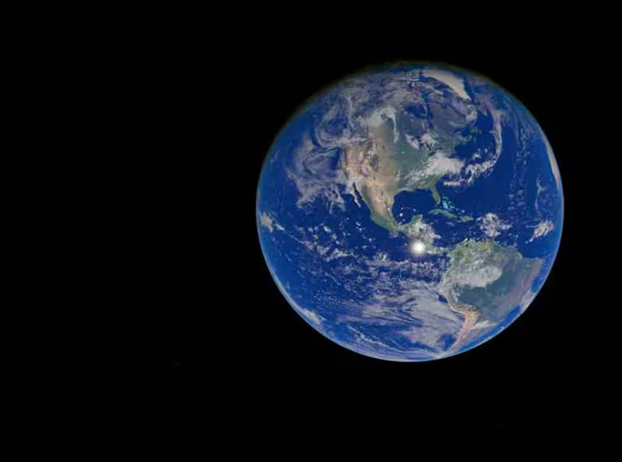
Earth Rotation Day is celebrated every year on January 8th. This day was specifically chosen because on this day, in 1851, French physicist Leon Foucault proved that the Earth rotates on its axis. The Earth's rotation is vital to our lives. This rotation causes day and night, changes in seasons, and influences our natural and biological cycles. So, on Earth Rotation Day, let's explore what would happen if the Earth suddenly stopped rotating.
What is the rotation of the Earth?
The Earth rotates around an imaginary line called its axis, which connects the North and South Poles. The Earth completes one rotation on its axis approximately every 24 hours. This is why we experience day and night. Furthermore, the Earth's rotation affects seasons, winds, and natural phenomena. For example, atmospheric currents deflect due to the Coriolis effect. In the Northern Hemisphere, winds deflect to the right, and in the Southern Hemisphere, winds deflect to the left. This influences the direction of air and ocean currents, such as the trade winds and westerlies.
History of Earth Rotation Day
The idea of the Earth's rotation has been debated and experimented with for centuries. Ancient Greek philosophers claimed that the Earth rotates as early as 470 BC, but Leon Foucault is credited with proving this idea with scientific evidence. In 1851, he created a device called the Foucault pendulum, which provided direct evidence of the Earth's rotation. This experiment was so impressive that it was displayed in science museums in Paris and Greece. Even today, this experiment holds special significance in many international science museums.
What will happen if the Earth stops rotating?
The Earth's rotation not only determines day and night, but also influences many natural and physical processes. For example, the Earth's rotation determines day and night; the Earth's tilt and rotation alter the seasons; the Coriolis effect alters the direction of atmospheric and ocean currents; the movement of the Earth's molten core generates a powerful magnetic field that protects us from the Sun's harmful radiation. If the Earth suddenly stopped rotating, it would have a devastating impact on the Earth. One part of the Earth would become extremely cold and be covered in a blanket of ice, while the other part would become so hot that human life could even cease to exist.
How is Earth Rotation Day celebrated?
The purpose of this day is not only to commemorate Leon Foucault's experiment but also to raise awareness about the Earth's rotation, its significance, and its effects. Special programs are held in science museums and schools on this day. Children and young people can understand the Earth's rotation by watching a demonstration of the Foucault pendulum. Awareness is spread on social media using the hashtag #EarthsRotationDay.