Business
Basic Salary vs Gross Salary: Understand CTC, Take-Home Pay and Salary Deductions Before Accepting a Job
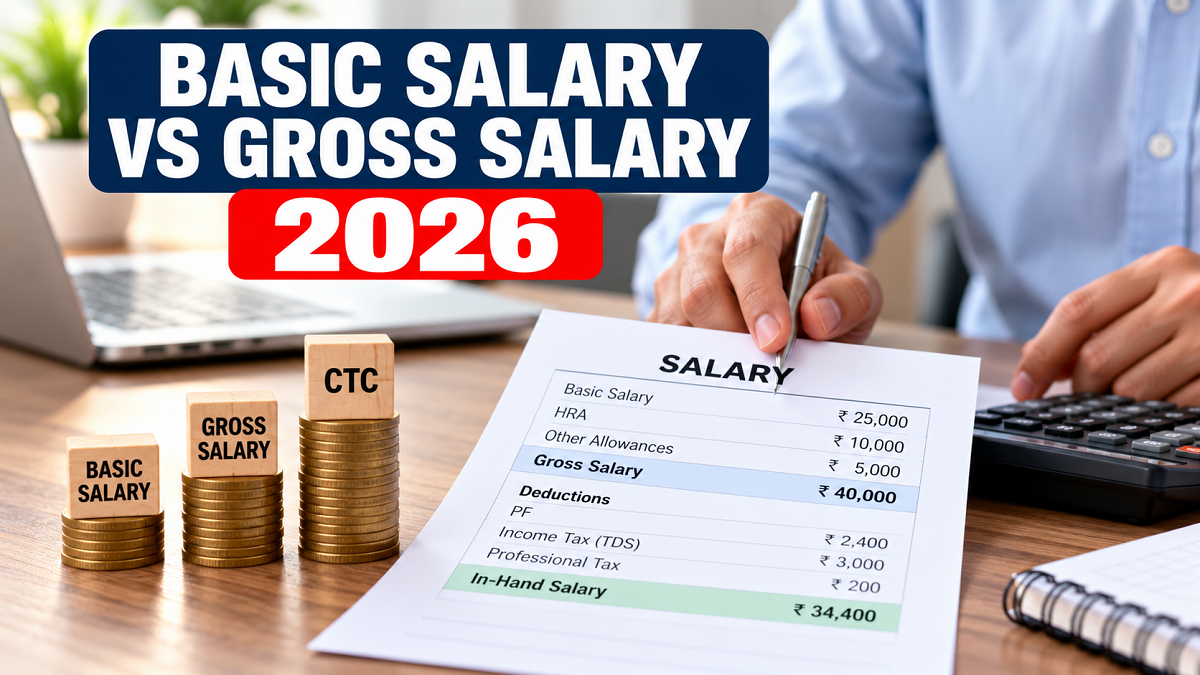
Receiving a job offer with an attractive salary package is exciting, especially for employees working in the private sector. However, the amount mentioned in an appointment letter is not necessarily the amount credited to an employee's bank account every month.
Many professionals become confused when their take-home salary turns out to be lower than expected. This difference arises because Cost to Company (CTC), basic salary, gross salary and in-hand salary represent different components of an employee's compensation.
Understanding these terms can help employees compare job offers, estimate monthly income and make better financial decisions.
What Is CTC (Cost to Company)?
CTC refers to the total annual amount an employer spends on an employee. It represents the overall compensation package rather than the money an employee receives directly.
Depending on the company's salary structure, CTC may include basic salary, House Rent Allowance (HRA), special allowances, employer contributions to the Employees' Provident Fund (EPF), gratuity provisions, medical insurance and performance-linked incentives.
Some companies also include additional employee benefits and variable compensation in their CTC calculations.
An important point: A CTC of ₹6 lakh annually does not automatically mean an employee will receive ₹50,000 in their bank account every month.
Certain components of CTC are employer-funded benefits, while others may be paid only after specific conditions are met.
What Is Basic Salary?
Basic salary is the fixed component of an employee's regular compensation. It forms an important part of the overall salary structure and is often used when calculating certain employment benefits.
In many organisations, basic salary accounts for approximately 40% to 50% of the total compensation package. However, this is not a universal rule, and the actual percentage depends on the employer's policies and applicable legal requirements.
Basic salary matters because it may influence provident fund contributions, gratuity calculations and allowances linked to fixed pay.
For example, if an employee receives a monthly basic salary of ₹20,000, certain statutory contributions may be calculated using that amount or the applicable contribution wage under relevant rules.
Employees should therefore review their basic salary separately instead of focusing only on the overall package.
What Is Gross Salary?
Gross salary represents the total salary earned before employee-side deductions are made.
It generally includes basic salary, HRA, special allowances and other regular cash payments. Depending on the employment agreement, incentives, bonuses and variable pay may be included or accounted for separately.
For example, an employee's monthly salary structure could look like this:
| Salary component | Monthly amount |
|---|---|
| Basic salary | ₹18,000 |
| House Rent Allowance | ₹7,000 |
| Special allowance | ₹5,000 |
| Gross salary | ₹30,000 |
In this example, the employee's gross monthly salary is ₹30,000 before deductions such as provident fund contributions and applicable taxes.
Employer contributions and non-cash benefits included in CTC are generally not part of the employee's monthly gross cash salary.
What Is In-Hand or Take-Home Salary?
In-hand salary is the amount an employee actually receives after applicable deductions.
These deductions may include employee EPF contributions, income tax deducted at source (TDS), professional tax where applicable, and other authorised salary deductions.
The exact amount varies depending on the employee's salary structure, tax liability, benefits and employer policies.
An employee with a higher gross salary may not always receive a proportionately higher take-home amount if their deductions are also greater.
How to Calculate Monthly Take-Home Salary
The basic calculation is:
In-Hand Salary = Gross Salary − Total Employee Deductions
Suppose an employee earns ₹30,000 as monthly gross salary and has deductions totalling ₹2,500.
| Particulars | Amount |
|---|---|
| Monthly gross salary | ₹30,000 |
| Total deductions | ₹2,500 |
| Monthly in-hand salary | ₹27,500 |
The employee would receive ₹27,500 in their bank account for that month.
This is an illustrative calculation. Actual deductions depend on the applicable statutory rules and individual circumstances.
Basic Salary, Gross Salary, CTC and In-Hand Salary: Key Differences
| Salary term | Meaning |
|---|---|
| Basic salary | Fixed core component of compensation |
| Gross salary | Total earnings before employee deductions |
| CTC | Total annual employment cost to the company |
| In-hand salary | Amount received after applicable deductions |
These figures are connected, but they serve different purposes. Basic salary helps determine certain benefits, gross salary shows earnings before deductions, CTC represents the employer's overall compensation commitment, and take-home salary reflects the employee's actual monthly cash income.
What Should Employees Check Before Accepting a Job Offer?
Before accepting an employment offer, candidates should carefully examine the salary breakup provided by the company.
They should confirm the monthly gross salary and expected take-home pay, review basic salary and HRA, and identify whether employer PF contributions, gratuity and insurance are included in the quoted CTC.
It is equally important to determine whether bonuses and incentives are guaranteed or dependent on performance.
Employees should also understand the applicable tax deductions and ask the employer for an estimated monthly payslip whenever possible.
Final Takeaway
A large CTC figure can make a job offer attractive, but it does not reveal the complete picture of an employee's monthly earnings.
The most useful approach is to compare both the total compensation package and the expected in-hand salary. Understanding the difference between basic salary, gross salary, CTC and take-home pay can prevent confusion and help employees plan their household budgets more accurately.