WhatsApp May Introduce SIM-Based Verification for Indian Users
Messaging platform WhatsApp is reportedly testing a new SIM binding feature for users in India. The feature is being developed in response to regulatory guidelines issued by the Department of Telecommunications (DoT), aimed at reducing cyber fraud and strengthening account verification.
If implemented, the feature would link a user’s WhatsApp account to the SIM card used during registration. This means that changing or removing the SIM card associated with the account could temporarily restrict access to the app until verification is completed.
The measure is expected to apply specifically to Indian phone numbers starting with the +91 country code.
Why the SIM Binding Feature Is Being Introduced
The proposed SIM binding system is part of a broader effort by authorities to curb the rising number of cyber fraud cases involving messaging platforms.
According to reports, the Department of Telecommunications issued guidelines in November 2025 requiring messaging apps that use phone numbers for sign-ups to implement SIM-based login verification.
Apart from WhatsApp, the rule could potentially affect other popular messaging platforms such as:
- Telegram
- Signal
These platforms may also be required to introduce mechanisms to verify that the registered SIM card is present in the user’s device.
Feature Spotted in WhatsApp Beta Version
According to insights shared by WABetaInfo, the feature has been detected in the Android beta version 2.26.8.6 of WhatsApp.
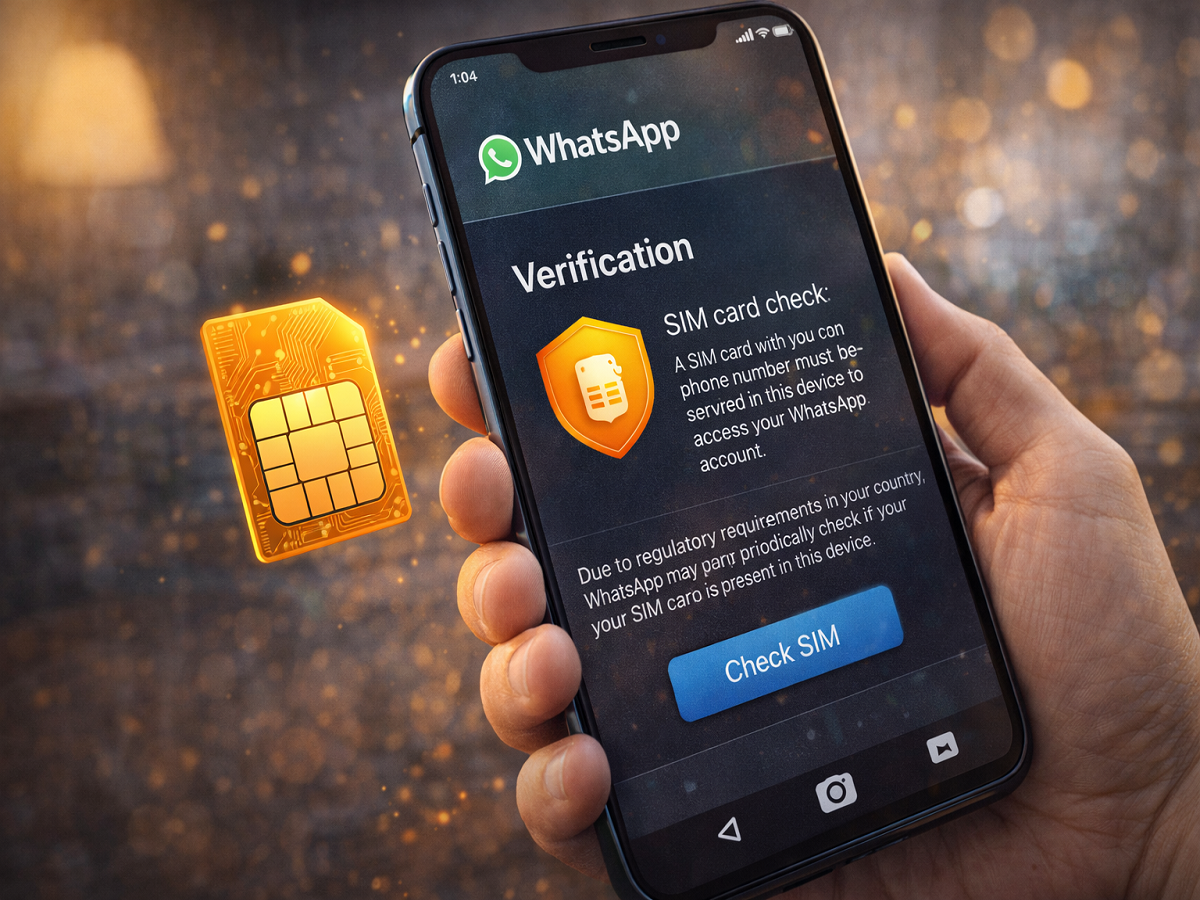
Users testing the beta build reportedly saw a notification explaining that, due to regulatory requirements in India, the app may verify whether the registered SIM card is present in the device.
However, the feature is still under development and has not yet been released to the general public.
How SIM Binding Could Work
If the feature is officially rolled out, WhatsApp may periodically check whether the SIM card used during account registration is still inserted in the device.
This process could involve:
- Periodic session renewal checks
- Verification of the registered SIM card
- Confirmation that the SIM matches the account linked to the phone number
If the verification process fails—for example, if the SIM card is removed or replaced—the app may temporarily restrict access until the user completes a new verification process.
Importantly, reports indicate that existing chats and messages will remain safe even if access is limited.
Additional Security Rules May Apply
The regulatory guidelines from the Department of Telecommunications also propose additional security measures for messaging platforms.
One of the suggested changes includes automatic logout of web and desktop sessions every six hours.
Under this rule, users would need to scan a QR code again to log back into linked devices such as laptops or desktops.
This step is designed to reduce the risk of unauthorized access through compromised or forgotten sessions.
Aim Is to Reduce Cyber Fraud
Authorities say the main objective of these new requirements is to strengthen user authentication and prevent misuse of messaging platforms for cybercrime.
Fraudsters often exploit messaging apps by creating accounts linked to stolen or temporary phone numbers. By ensuring that the registered SIM remains active in the user’s device, regulators hope to make it more difficult for scammers to misuse the platform.
Feature Still in Development
For now, the SIM binding system remains in the testing stage and may undergo further changes before being rolled out to users.
WhatsApp has not officially confirmed a launch timeline, and it is possible that the final implementation could differ from the current beta version.
If introduced, the feature would represent a significant shift in how messaging platforms verify users in India, potentially improving security while adding another layer of authentication.