NEWS
Traffic Challan Rules 2026: Pay Fines Instantly Through UPI or QR Code in Himachal Pradesh, No Court Visit for Eligible Cases
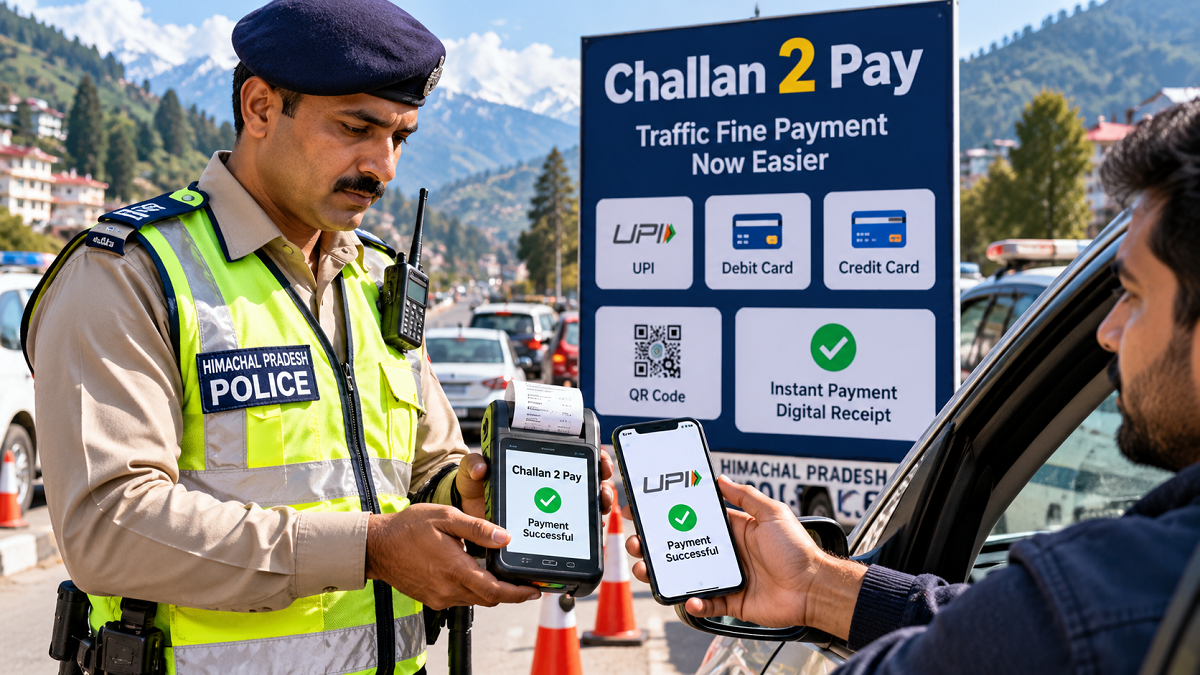
Traffic Challan New Update 2026: Vehicle owners and tourists travelling through Himachal Pradesh may soon find it easier to settle traffic penalties without visiting government offices. The state has introduced a digital payment initiative called Challan 2 Pay, designed to simplify traffic fine collection and make the process faster, more convenient and transparent.
Under the initiative, traffic police personnel will be equipped with handheld Point of Sale (POS) devices that allow motorists to pay eligible traffic fines directly at the location where a challan is issued. Payments can be made using UPI, debit cards, credit cards and QR codes.
The initiative aims to reduce unnecessary visits to Regional Transport Offices (RTOs), police stations and courts for traffic violations that can legally be settled through the new system.
However, motorists should understand that not every traffic offence can necessarily be resolved through an immediate payment. Serious violations and cases requiring judicial proceedings will continue to follow the applicable legal process.
Himachal Pradesh Introduces Digital Traffic Challan Payment Facility
The Himachal Pradesh government's Challan 2 Pay initiative is intended to modernise the existing traffic penalty collection system.
Previously, motorists dealing with certain traffic challans sometimes had to visit an RTO, police station or virtual court platform to complete the payment process.
Such procedures could involve additional paperwork, delays and repeated follow-ups.
The new arrangement seeks to make eligible challan payments available directly through authorised traffic police personnel.
With handheld payment machines, drivers can complete transactions electronically and receive digital confirmation.
The system is expected to benefit both residents and tourists, particularly those travelling through busy highways and popular tourist destinations.
Pay Traffic Fines Instantly Using UPI, Debit Cards and QR Codes
One of the most important features of the Challan 2 Pay initiative is the availability of multiple digital payment methods.
Instead of depending entirely on cash payments or separate online payment procedures, motorists will be able to use commonly available electronic payment options.
The proposed payment facilities include:
- UPI payments: Motorists can pay eligible fines using supported UPI applications.
- QR code payments: Drivers can scan an authorised payment QR code to complete the transaction.
- Debit cards: Payments can be processed through supported bank debit cards.
- Credit cards: Eligible transactions can also be completed using credit cards.
After successful payment, the system is designed to generate a digital receipt.
This receipt serves as confirmation that the relevant traffic penalty has been paid.
Drivers should retain the receipt or transaction reference number until the challan is officially marked as settled.
How Will the New Traffic Challan Payment System Work?
The digital challan settlement process is intended to be straightforward.
When a traffic police officer identifies a violation, the officer can issue a challan according to the applicable traffic regulations.
If the offence is eligible for immediate settlement, the driver may be offered a digital payment option through an authorised POS device.
The motorist can then select a supported payment method and complete the transaction.
Once payment is successful, the electronic system should generate confirmation and update the relevant challan record.
This approach is intended to reduce the time spent resolving routine traffic penalties.
However, the precise procedure may vary depending on the offence, enforcement requirements and operational availability of the payment facility.
No Need to Visit Court for Every Traffic Challan
A major objective of the initiative is to reduce the number of routine traffic penalty cases requiring additional visits to government offices.
Under the existing enforcement framework, some challans may require settlement through designated online platforms, transport authorities or judicial channels.
For eligible offences, the new digital payment arrangement could allow motorists to settle penalties immediately.
This may reduce administrative delays and make traffic enforcement more efficient.
Nevertheless, the new system does not eliminate court proceedings for every traffic violation.
Cases involving serious offences, disputed penalties or violations that cannot legally be compounded may still require action by the appropriate authority or court.
Motorists should therefore check the status and settlement requirements of their particular challan before assuming that immediate payment is sufficient.
Digital Receipts Could Improve Transparency in Traffic Fine Collection
The Challan 2 Pay initiative also aims to improve accountability in the collection of traffic penalties.
Digital transactions create electronic records that can help authorities track payments and reconcile challan information.
Compared with undocumented cash transactions, authorised electronic payments provide clearer evidence of the amount paid and the transaction reference.
This could reduce disputes over whether a fine has been collected or remains outstanding.
For motorists, digital receipts offer a convenient way to retain proof of payment.
For enforcement authorities, electronically recorded transactions can support more efficient administration and financial recordkeeping.
However, the effectiveness of the system will depend on proper implementation, secure payment processing and accurate record updates.
Traffic Challan Records to Be Updated Through the E-Challan System
Another important component of the initiative is its proposed integration with digital traffic enforcement records.
The system is intended to support updates through the central e-challan infrastructure.
This can help authorities maintain records of traffic violations, vehicle information and payment status.
Electronic records may also make it easier to identify outstanding challans and avoid unnecessary duplication.
Motorists can independently check their challan details through the official e-challan portal.
When using online services, drivers should verify that they are accessing an authorised government platform.
They should also avoid making payments through suspicious links received in unsolicited messages.
What Happens to Your Driving Licence and Vehicle RC?
Many drivers worry that receiving a traffic challan could result in their driving licence or vehicle registration certificate being withheld.
The introduction of digital fine payments does not automatically change the legal rules governing these documents.
Whether a driving licence or registration certificate can be seized, suspended or subjected to further action depends on the nature of the violation and the relevant provisions of law.
For minor offences eligible for immediate settlement, the new payment facility may help drivers resolve the matter without additional administrative visits.
However, more serious violations may still involve separate enforcement action.
Drivers should not assume that paying a fine automatically cancels every legal consequence associated with a traffic offence.
Why the New System Could Benefit Tourists Visiting Himachal Pradesh
Himachal Pradesh attracts visitors throughout the year, especially during holiday periods and peak tourist seasons.
Popular destinations and major highways can experience heavy traffic, making road safety enforcement an important responsibility for local authorities.
For tourists travelling from other states, resolving a traffic penalty through repeated visits to a local police station or government office can be inconvenient.
The Challan 2 Pay system aims to address this problem by providing an immediate digital settlement option for eligible violations.
Visitors may be able to complete the payment and continue their journey without arranging additional visits solely to settle a routine fine.
The facility could also help reduce administrative pressure on traffic police and transport offices.
How to Check and Pay a Traffic Challan Online
Apart from any on-the-spot payment facility, motorists can use the official government e-challan system to review traffic penalties.
The general process involves visiting the official Parivahan e-challan website, selecting the challan checking option and entering the requested vehicle or challan information.
If a valid outstanding challan is displayed and online payment is permitted, the motorist can proceed using the available payment methods.
After completing the transaction, the payment confirmation should be saved for future reference.
Drivers should verify the challan number, vehicle registration details and payment recipient before authorising any transaction.
Is Challan 2 Pay Available Across India?
The initiative described in the supplied report relates specifically to Himachal Pradesh.
It should not be interpreted as a nationwide change requiring every state to adopt the same system.
Other states may already provide digital challan payments through their own enforcement systems, POS devices or online portals.
The availability of on-the-spot settlement can therefore differ according to local implementation and the type of violation.
Motorists travelling outside Himachal Pradesh should follow the payment procedures applicable in the relevant state.
Traffic Challan Update 2026: What Drivers Should Remember
Himachal Pradesh's Challan 2 Pay initiative represents an effort to simplify traffic penalty collection through modern digital payment technology.
By enabling authorised police personnel to accept eligible fines through UPI, QR codes and bank cards, the system aims to reduce paperwork, improve payment transparency and save time for motorists.
The initiative could be particularly useful for tourists and daily commuters who want to settle routine traffic penalties without repeated visits to government offices.
However, the availability of digital payment does not remove the obligation to follow traffic rules, and not every violation will qualify for immediate settlement.
Drivers should continue to carry the legally required vehicle documents, follow road safety regulations and use only authorised payment channels when settling traffic fines.