NEWS
Bank Account Rules 2026: Can Children Below 18 Open a Savings Account? Check RBI Guidelines and Documents
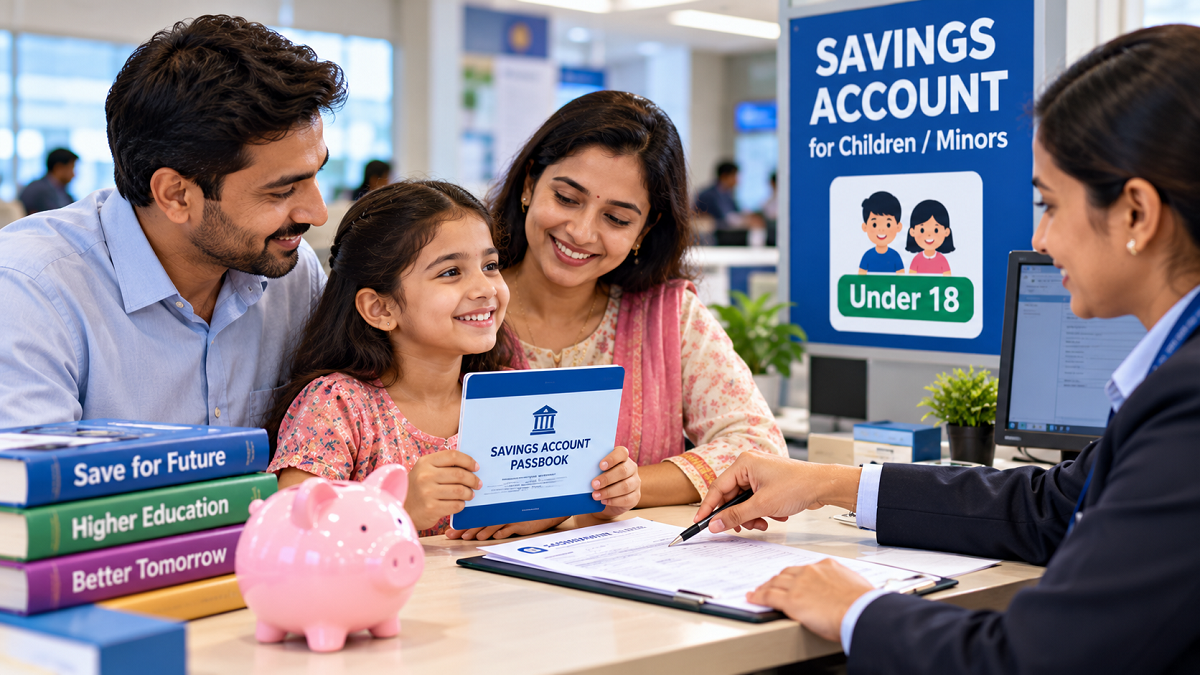
Minor Bank Account Rules 2026: Opening a bank account for children is becoming an increasingly popular way for Indian parents to encourage saving habits and prepare for future expenses. Whether the goal is to save pocket money, birthday gifts or funds for higher education, a dedicated savings account can help children understand the importance of managing money from an early age.
However, many parents remain confused about whether children below 18 years of age are legally allowed to open bank accounts in India. Some also wonder whether minors can use ATM cards, withdraw money independently or access internet banking services.
The answer is yes. The Reserve Bank of India (RBI) permits banks to offer savings accounts to minors, subject to applicable regulations and individual bank policies. The rules for operating these accounts generally depend on the child's age and the facilities offered by the bank.
Here is a detailed explanation of minor savings account rules, eligibility, required documents, available banking services and the changes that become necessary when the account holder turns 18.
Can Children Under 18 Open a Bank Account in India?
Yes, children below 18 years of age can hold savings accounts in India.
These accounts are commonly known as minor savings accounts and are specifically designed for individuals who have not yet reached adulthood.
Parents or legal guardians can open and operate such accounts on behalf of their children, subject to the bank's requirements.
The money deposited in these accounts may come from pocket money, family contributions, gifts or other legitimate sources.
Apart from encouraging savings, these accounts can introduce children to essential financial concepts such as deposits, withdrawals, interest earnings and responsible spending.
However, the level of independence given to a minor account holder depends on the child's age and the bank's operating rules.
RBI Rules for Children Below 10 Years of Age
For children younger than 10 years, savings accounts are generally opened and operated through a parent or legal guardian.
The guardian is responsible for managing the account according to the bank's terms and applicable regulations.
For example, parents may deposit money into the account regularly to build savings for the child's future education or other financial needs.
The account remains in the child's name, but the authorised guardian generally handles banking transactions.
Banks may offer specially designed children's savings accounts with features intended to encourage long-term saving.
Parents should compare account conditions, minimum balance requirements and applicable charges before choosing a bank.
Can Children Aged 10 or Above Operate Their Own Bank Accounts?
Children aged 10 years and above may be permitted to open and operate savings accounts independently, depending on the bank's policies.
RBI guidelines allow banks to provide this facility, subject to appropriate safeguards and operating conditions.
However, this does not mean that every bank must offer unrestricted account access to all children above 10.
Banks may determine transaction limits, withdrawal restrictions and other conditions based on their internal risk management policies.
For instance, a bank may allow a child to deposit money and make limited withdrawals while restricting certain high-value transactions.
The exact facilities can vary between financial institutions.
Parents should therefore confirm the applicable rules directly with their preferred bank before submitting an application.
Can Minors Get ATM Cards, Debit Cards and Internet Banking?
One of the most common questions is whether children can use modern banking services such as debit cards and mobile banking.
Under the applicable framework, banks may offer selected digital banking facilities to minor account holders, subject to their policies and safeguards.
Depending on the bank and account category, available services may include:
- ATM cards or debit cards with transaction limits.
- Internet banking facilities.
- Mobile banking access.
- Cheque books, where permitted.
- Limited cash withdrawal and fund transfer facilities.
These features are not automatically included with every minor savings account.
Banks may restrict daily withdrawal amounts, online transactions and spending limits to protect younger customers.
Parents should also help children understand safe banking practices, including the importance of keeping PINs, passwords and OTPs confidential.
Can Children Withdraw More Money Than Their Account Balance?
Generally, minor savings accounts are not permitted to operate with an overdraft facility.
This means children should not be allowed to withdraw or spend more money than the available balance in their accounts.
For example, if a minor's savings account contains ₹5,000, the account holder would ordinarily be able to use only the available funds, subject to applicable transaction restrictions.
The restriction is intended to prevent minors from accumulating debt through their savings accounts.
Banks may also impose additional controls to ensure that accounts remain in credit.
What Happens to a Minor Bank Account After Turning 18?
When a child reaches the age of 18, their minor savings account does not necessarily close automatically.
Instead, the bank must update the account's operating arrangements to reflect the customer's new legal status as an adult.
The account holder may be required to complete certain formalities before continuing to operate the account independently.
These may include submitting updated signatures, completing Know Your Customer (KYC) requirements and providing any additional identification documents requested by the bank.
The bank may also review previous operating instructions and replace guardian-based arrangements with instructions authorised by the adult account holder.
Completing these formalities promptly can help prevent interruptions to banking services.
Documents Required to Open a Minor Savings Account
The documentation requirements for children's savings accounts can vary depending on the bank, the child's age and the type of account.
However, banks commonly request the following information.
| Document | Purpose |
|---|---|
| Child's birth certificate or valid age proof | To establish the minor's age |
| Child's identity documents | To complete applicable identification requirements |
| Parent's or guardian's identity proof | To verify the authorised guardian |
| Address proof | To confirm the relevant residential address |
| PAN or other accepted tax documentation | Where required under applicable rules |
| Passport-size photographs | If requested by the bank |
| Account opening form | To record account details and declarations |
| Guardian declaration | To establish guardian authority where applicable |
Parents should check the exact documentation requirements with their bank before applying.
How to Open a Bank Account for a Child
Opening a minor savings account generally involves a straightforward application process.
First, parents should select a bank that offers savings accounts for children and compare its account features.
Next, they should determine whether the account will be operated by a guardian or independently by the minor, where permitted.
The applicant must then complete the relevant account opening form and submit the required identification and KYC documents.
The bank will review the application and complete the necessary verification procedures.
Once the account is approved, the customer may receive an account number, passbook and any additional banking facilities included in the selected product.
Some banks may offer digital application options, while others may require a branch visit.
Are Minor Savings Accounts Different From Regular Savings Accounts?
Although minor savings accounts share several features with ordinary savings accounts, they may include additional safeguards.
| Feature | Minor Savings Account | Regular Adult Savings Account |
|---|---|---|
| Account holder | Below 18 years | Generally 18 years or above |
| Guardian involvement | Usually required for younger children | Generally not required |
| Independent operation | Subject to age and bank policy | Normally permitted |
| ATM and debit card | Subject to bank restrictions | Based on account eligibility |
| Internet banking | May have limited access | Usually available |
| Overdraft facility | Generally not permitted | May be offered to eligible customers |
| KYC requirements | Minor and guardian-related requirements | Adult account holder's KYC |
These differences help banks provide age-appropriate services while maintaining appropriate safeguards.
Why Should Parents Consider Opening a Savings Account for Their Children?
A savings account can help children develop financial awareness from an early age.
Regular deposits can teach the importance of setting money aside instead of spending everything immediately.
Parents can also use the account to explain how interest works and why long-term saving matters.
For older children, supervised access to banking facilities may provide practical experience in managing everyday financial transactions.
Additionally, a separate savings account can help families organise funds intended for education, extracurricular activities or other future expenses.
However, parents should remember that savings accounts generally offer relatively modest returns compared with some long-term investment products.
The right financial product depends on the family's goals, time horizon and willingness to accept investment risk.
Minor Bank Account Rules 2026: Important Points for Parents
Under RBI's framework, children below 18 years of age can hold savings accounts in India.
For younger children, accounts are generally operated through parents or legal guardians. Children aged 10 years and above may be allowed to operate their accounts independently, depending on the bank's policies.
Additional facilities such as debit cards, mobile banking and internet banking may be available with appropriate restrictions.
Once the account holder turns 18, updated KYC documents, signatures and operating instructions may be required.
For parents planning to open a savings account for their child, the most important step is to compare bank-specific eligibility conditions, charges, transaction limits and available facilities before applying.
Disclaimer: Banking features, documentation requirements and transaction restrictions may vary by institution. Customers should verify the latest applicable RBI guidelines and their chosen bank's terms before opening a minor savings account.