NEWS
ATM Card Blocked After Loss or Theft? Follow These 5 Important Steps to Keep Your Bank Account Safe
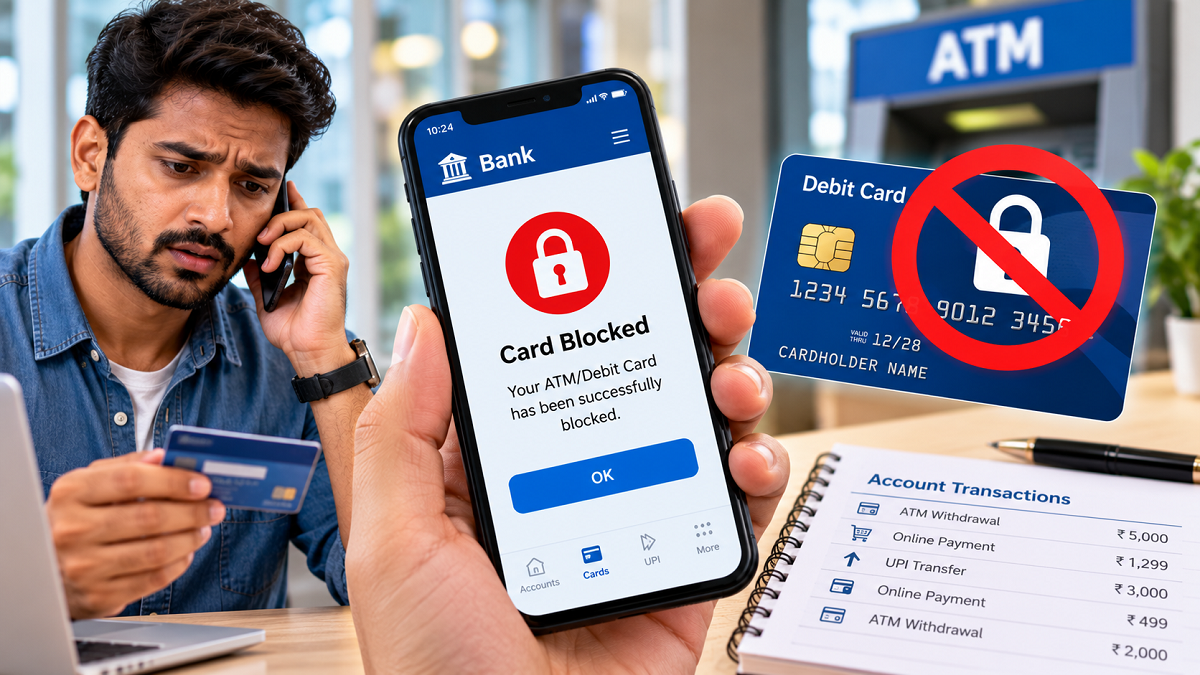
ATM Card Safety Tips 2026: Debit cards have become an essential part of everyday banking, allowing people to withdraw cash, shop online and make payments at stores. However, losing an ATM or debit card can create serious financial risks, particularly if the card falls into the wrong hands.
Most people immediately contact their bank to block a missing card. While this is the most important first step, simply blocking the card may not be enough to protect your money.
Even after a debit card has been blocked, customers should review their bank transactions, check for suspicious activity and take additional precautions to secure their digital banking services.
If you have recently lost your ATM card or requested your bank to block it, here are five essential steps you should follow to reduce the risk of financial fraud.
1. Check Your Bank Account Transactions Immediately
After blocking your lost ATM card, the first thing you should do is carefully examine your recent bank account transactions.
You can review your transaction history through your bank's mobile banking application, internet banking platform or account statement.
Pay particular attention to withdrawals, online purchases and card payments that you do not recognise.
Sometimes, an unauthorised transaction may have occurred before the bank successfully blocked the card.
If you discover any suspicious activity, report it to your bank immediately rather than waiting for additional transactions to appear.
Why is this important?
Under the Reserve Bank of India's customer protection framework, the timing of reporting unauthorised electronic banking transactions can affect a customer's liability.
Depending on the circumstances, customers may qualify for zero or limited liability when they report certain unauthorised transactions within the prescribed period.
Therefore, reviewing your transaction history promptly can help protect your finances and support any subsequent complaint.
2. Report Suspicious Transactions and Register a Complaint
If you notice an unauthorised withdrawal or payment, contact your bank through its official customer support channels.
You can generally register a complaint using the bank's customer care number, mobile banking application, internet banking service or nearest branch.
When reporting the incident, provide accurate information about the missing card and the suspicious transaction.
Important details may include the approximate time when the card was lost, the transaction amount and the date on which the unauthorised activity appeared.
After registering the complaint, ask the bank for an acknowledgement or complaint reference number.
This number can help you track the investigation and follow up if the issue remains unresolved.
Remember: Blocking a card and reporting an unauthorised transaction are not necessarily the same process. If money has already been deducted without your permission, make sure the bank records a separate fraud or transaction dispute complaint where required.
If you suspect cyber-enabled financial fraud, you can also report the incident through India's National Cyber Crime Reporting Portal or the cybercrime helpline 1930.
3. Review UPI, Mobile Banking and Other Payment Services
Many bank customers assume that blocking their ATM card automatically disables every payment facility linked to their bank account.
However, this is not necessarily true.
Your debit card, UPI service, mobile banking application and internet banking facilities may operate through different authentication systems.
Consequently, blocking a debit card does not automatically mean that your UPI account or internet banking access has been disabled.
After blocking the card, review the transaction history of your UPI applications and mobile banking services.
Check whether any unfamiliar payments, transfers or account changes have occurred.
If you notice unusual activity, immediately contact your bank and request appropriate security measures.
Depending on the situation, the bank may advise you to change passwords, reset credentials, restrict certain transactions or temporarily disable affected services.
You should also review transaction alerts received through SMS and email.
These notifications may help identify unauthorised activity even when you are not actively using your banking application.
4. Apply for a Replacement ATM or Debit Card
Once your missing debit card has been permanently blocked, you may need a replacement to continue using card-based banking services.
Most banks provide several options for requesting a new debit card.
Depending on the bank, you may be able to submit a replacement request through its official mobile application, internet banking platform, customer care service or branch.
Before applying, check whether the bank charges a replacement fee.
The fee, card type and delivery period may vary between banks.
After receiving the replacement card, follow the bank's instructions for activation and PIN generation.
Your new card will generally have different card details from the previous one, so you may also need to update payment information for subscriptions or other services linked to the old card.
Important Security Precautions for Your New Debit Card
Never share your ATM PIN, card verification value (CVV), OTP or banking password with anyone.
Fraudsters sometimes impersonate bank representatives and ask customers to disclose confidential information while pretending to activate or replace a card.
Legitimate bank representatives should not ask you to reveal your confidential PIN or OTP.
Always complete card activation through authorised banking channels.
5. Keep Records and Continue Monitoring Your Account
Even after receiving confirmation that your old debit card has been blocked, continue monitoring your bank account.
Suspicious transactions may have occurred before the block took effect, and some transaction records may become visible later.
Maintaining proper documentation can help if you need to raise a dispute or request further investigation.
Keep the following information securely:
- Date and time when you reported the missing ATM card.
- Confirmation that the card was successfully blocked.
- Complaint or reference number issued by the bank.
- Details of any unauthorised withdrawals or payments.
- Copies of relevant SMS alerts, emails and complaint acknowledgements.
- Records of communication with bank representatives.
These documents may be useful if a disputed transaction remains unresolved or if you need to escalate your complaint.
Can Someone Withdraw Money After Your ATM Card Is Blocked?
Once a debit card has been successfully blocked, new transactions using that card should generally be declined.
However, the block does not necessarily reverse transactions that were authorised or processed before it became effective.
There may also be differences in how pending transactions are handled.
Additionally, blocking the debit card does not automatically freeze the underlying bank account.
Other payment methods linked to the account may continue to function unless they are separately restricted.
Therefore, customers should not assume that their entire bank account is protected simply because the missing card has been blocked.
What Should You Do If the Bank Does Not Resolve Your Complaint?
If your bank does not satisfactorily resolve a complaint about an unauthorised transaction, you can follow its official grievance redressal process.
Customers should first raise the matter with the bank and retain the complaint reference number.
If the bank rejects the complaint, provides an unsatisfactory response, or does not respond within 30 days, eligible customers may approach the RBI Ombudsman under the applicable Integrated Ombudsman Scheme.
The RBI's complaint management system allows customers to submit eligible complaints through official channels.
However, the outcome of a complaint depends on the facts, applicable regulations and the evidence available.
How to Prevent ATM Card Fraud in the Future
A few simple precautions can significantly improve debit card security.
Enable SMS or mobile banking alerts so that you receive notifications whenever transactions occur.
Avoid sharing card photographs or confidential banking details through messaging applications.
Use only trusted banking websites and applications.
Where supported by your bank, consider setting transaction limits and disabling international, online or contactless card transactions when you do not need them.
Regularly reviewing your bank statements can also help identify unfamiliar activity before it becomes a larger financial problem.
Final Words
Losing an ATM or debit card can be stressful, but taking immediate action can help reduce the risk of financial loss.
Blocking the missing card is the first step. Customers should also examine recent transactions, report unauthorised payments, review linked digital banking services and request a replacement card when necessary.
Most importantly, keep monitoring your bank account even after the card has been blocked.
Prompt reporting, careful recordkeeping and responsible banking habits can help protect your savings and make it easier to resolve problems if suspicious transactions occur.
Disclaimer: This article is intended for general banking awareness. Card replacement procedures, transaction restrictions and customer liability rules depend on the bank and applicable RBI regulations. Customers should contact their bank immediately in cases of suspected fraud.