ASTROLOGY
Shardiya Navratri 2026: Avoid These 5 Common Mistakes When Growing Barley for Maa Durga Puja
Shardiya Navratri 2026 Puja Tips: Shardiya Navratri is one of the most significant Hindu festivals, celebrated with devotion to Goddess Durga and her nine divine forms. According to the festival schedule mentioned for 2026, the celebrations began on October 11. During this sacred period, devotees observe fasting, perform special prayers, and follow traditional rituals to seek the blessings of Maa Durga.
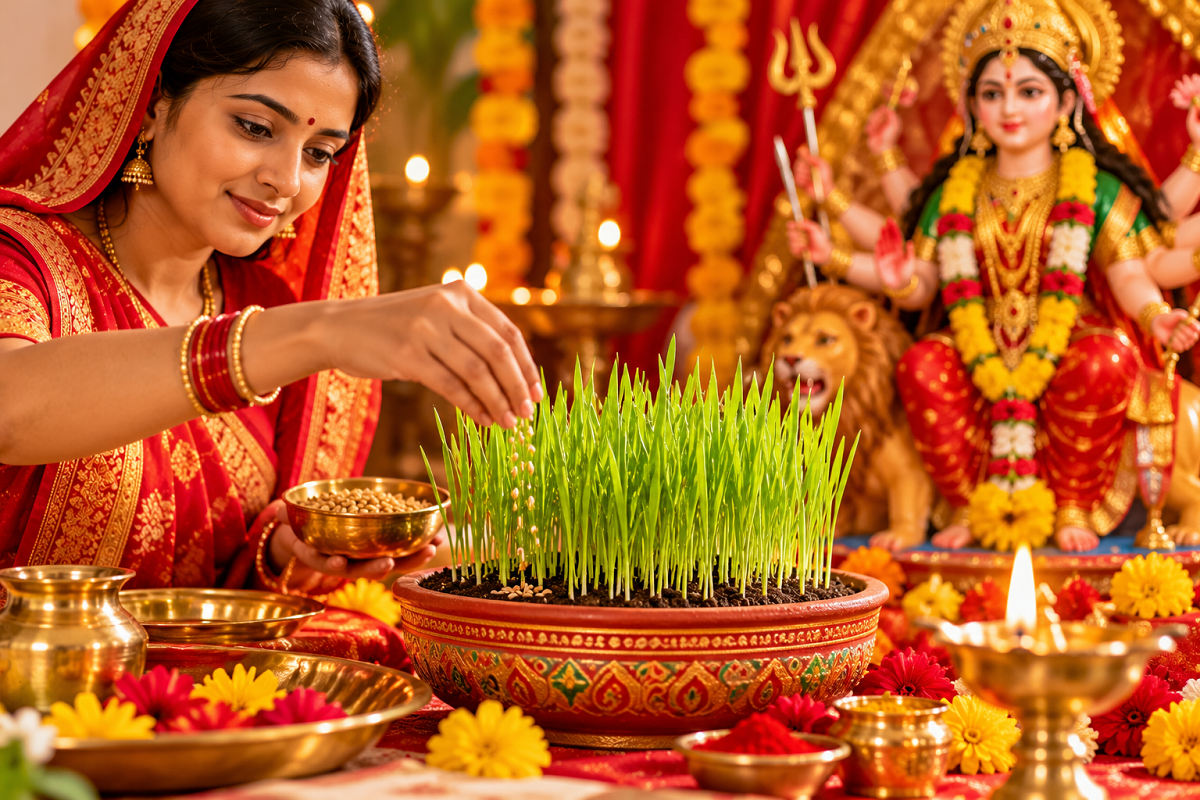
One important custom associated with Navratri is sowing barley seeds, commonly called Jaware or Javare, during Ghatasthapana or Kalash Sthapana. The young green shoots are traditionally regarded as symbols of growth, fertility, prosperity, and auspicious beginnings.
However, growing barley during Navratri requires proper attention. Choosing unsuitable soil, adding excessive water, or neglecting the seeds can affect germination and plant growth.
If you are performing Navratri Ghatasthapana at home, understanding these common mistakes can help you maintain healthy barley sprouts throughout the festival.
Why Is Barley Sown During Shardiya Navratri?
The tradition of sowing barley during Navratri has deep cultural and religious significance.
In many Hindu households, devotees place a Kalash in their worship area on the first day of Navratri and sow barley seeds in a clay or metal container filled with soil.
The seeds are watered and cared for during the festival as part of the daily worship of Goddess Durga.
According to traditional beliefs, barley represents prosperity, agricultural abundance, and the beginning of new opportunities. The emergence of fresh green shoots is often viewed as an encouraging symbol of growth and renewal.
Some families also interpret the appearance and development of Jaware as an auspicious sign. However, the actual growth of barley depends on environmental conditions, seed quality, moisture, and proper care rather than supernatural factors.
1. Using an Unclean Container or Poor-Quality Soil
One of the most common mistakes people make while preparing Jaware is selecting an unsuitable container or soil.
Barley seeds require an appropriate growing environment to germinate successfully. If the soil is excessively compact or remains waterlogged, the seeds may fail to sprout properly.
Before sowing barley, thoroughly clean the container and ensure that it is suitable for planting.
Choose loose, well-draining soil that can retain enough moisture without becoming excessively wet.
A container with drainage holes is preferable where the ritual arrangement allows it. If using a traditional vessel without drainage, watering should be especially controlled.
It is also advisable to select healthy barley seeds that are free from visible damage or mould.
Proper preparation increases the likelihood of uniform germination and healthy growth during Navratri.
2. Adding Too Much Water to Barley Seeds
Water is essential for seed germination, but excessive watering can create problems.
Many devotees mistakenly believe that adding more water will make the barley grow faster. In reality, continuously saturated soil may reduce oxygen availability around the seeds and encourage fungal growth.
After sowing, lightly sprinkle water over the soil to provide sufficient moisture.
Check the soil before watering again. If it is already damp, additional water may not be necessary.
Avoid allowing water to collect at the bottom of the container.
The goal is to maintain consistently moist soil without creating waterlogged conditions.
This simple precaution can help prevent seed decay and support healthy sprouting.
3. Keeping Jaware in an Unsuitable Location
The location of the barley container also plays an important role in its development.
Placing freshly planted seeds in intense afternoon sunlight may cause the soil to dry out quickly. On the other hand, keeping the container in a completely dark or poorly ventilated space may result in weak, pale, or elongated shoots.
Choose a clean and well-ventilated location that receives sufficient indirect or gentle natural light.
Once the seeds begin to sprout, adequate light becomes especially important for healthy green growth.
Avoid placing the container near excessive heat, strong winds, or locations where it may be accidentally knocked over.
A stable environment helps the delicate seedlings develop properly.
4. Ignoring the Barley After the First Day
Another common mistake is assuming that sowing the seeds completes the responsibility.
Although the religious ritual begins with Ghatasthapana, the barley requires regular care throughout the festival.
Devotees should examine the growing container daily and check whether the soil needs additional moisture.
If the soil becomes too dry, sprinkle a small quantity of water. If it remains wet, allow excess moisture to reduce before watering again.
Avoid frequently touching, pulling, or rearranging the young shoots.
Repeatedly moving the container may also disturb the roots or damage delicate seedlings.
Consistent care is more useful than excessive watering or unnecessary handling.
5. Using Damaged Seeds or Sowing Them Unevenly
Seed quality can significantly influence the success of barley cultivation during Navratri.
Old, damaged, or poorly stored seeds may have reduced germination capacity.
Similarly, placing too many seeds in a very small area can create overcrowding, making it difficult for the young plants to develop evenly.
Choose good-quality barley seeds and spread them relatively evenly over the prepared soil.
Cover them lightly with soil according to the planting method being followed, and gently moisten the surface.
Avoid pressing the soil too firmly, as this may restrict air movement and make germination more difficult.
With suitable moisture and temperature, healthy barley seeds can begin sprouting within a few days.
What Is the Religious Importance of Green Jaware During Navratri?
In Hindu tradition, the fresh shoots that emerge from barley seeds are associated with growth, prosperity, and the blessings of Goddess Durga.
Many devotees regard healthy green Jaware as an auspicious part of their Navratri worship.
The sprouts are traditionally kept near the Kalash and included in daily prayers throughout the festival.
However, the colour, height, or density of barley shoots should not be considered a reliable prediction of a family's financial future or personal fortune.
Differences in growth are generally explained by factors such as seed quality, sunlight, temperature, soil conditions, and watering practices.
The primary religious significance of the ritual lies in devotion, gratitude, and the symbolism of renewal.
What Should You Do With Jaware After Navratri?
At the conclusion of Navratri, families follow different customs regarding the barley grown during the festival.
In some regions, devotees offer the sprouts during the concluding worship ceremony. Others distribute small portions among family members as a traditional blessing.
Some communities follow immersion-related customs, while others respectfully return the plant material to the soil.
The exact practice varies according to regional traditions and family beliefs.
Those following immersion customs should avoid disposing of soil, plastic containers, or other non-biodegradable materials in rivers and lakes. Environmentally responsible disposal or composting is a better option where compatible with local traditions.
Final Thoughts
Sowing barley during Shardiya Navratri is a meaningful tradition associated with Goddess Durga worship, prosperity, and new beginnings.
While the ritual carries spiritual importance, healthy Jaware growth depends on simple practical measures such as using clean containers, selecting suitable soil, controlling moisture, and providing adequate light.
By avoiding these common mistakes and caring for the sprouts throughout the festival, devotees can maintain their Navratri arrangements while honouring the religious significance of the practice.
Disclaimer: This article is based on traditional Hindu customs and general plant-care guidance. Religious interpretations may vary by region and family. The growth of barley sprouts is influenced by natural conditions and should not be treated as a scientific indication of good fortune or future prosperity.