NEWS
One Nation One Ration Card Explained: How Migrant Workers Can Get Food Grains Anywhere in India
Ensuring food security for economically weaker families remains one of the key responsibilities of the Government of India. For years, ration card holders could collect subsidised food grains only from their designated fair price shop in their home area. However, with increasing migration for work, this system created difficulties for daily wage earners and migrant workers who frequently move across states.
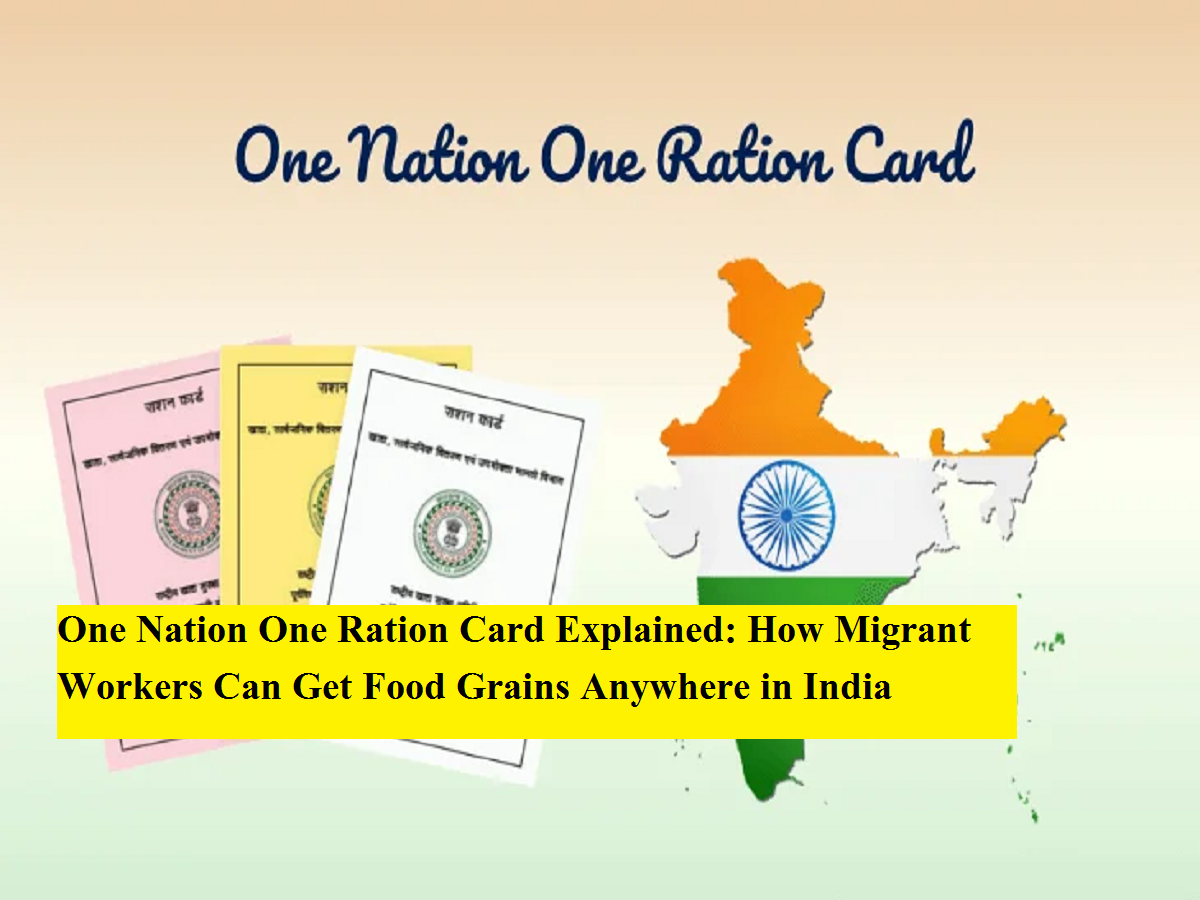
To address this challenge, the government introduced the One Nation One Ration Card (ONORC) scheme. This reform allows eligible beneficiaries to access subsidised food grains from any fair price shop across the country, regardless of their original place of registration.
The initiative is being implemented nationwide to ensure that no eligible family is deprived of food due to relocation.
What Is the One Nation One Ration Card Scheme?
The One Nation One Ration Card scheme enables ration card holders to lift their entitled food grains from any state or union territory under the Public Distribution System (PDS).
In simple terms, if a worker moves from one state to another for employment, they do not need to apply for a new ration card. They can continue using their existing card to receive subsidised food grains at their new location.
This facility is especially beneficial for migrant labourers, construction workers, and low-income families who frequently relocate in search of livelihood opportunities.
Digital Integration of Ration Cards
To make the scheme operational, ration cards have been digitised and linked to Aadhaar numbers. The digital integration ensures accurate identification of beneficiaries and prevents duplication.
All states are connected through an online database system. Fair price shops are equipped with electronic Point of Sale (e-POS) machines. When a beneficiary visits a shop, biometric authentication—usually fingerprint verification—is conducted to confirm identity.
Once verified, the system displays details of the individual’s entitlement and previous withdrawals. This ensures transparency and prevents misuse.
Key Benefits of ONORC
1. Portability of Benefits
Beneficiaries can collect their food grains from any authorised ration shop across India. This eliminates dependency on a single shop in their hometown.
2. Support for Migrant Workers
Workers who move to different states no longer face disruptions in food supply. They can access their quota near their workplace, reducing financial and logistical stress.
3. Reduction in Fake Ration Cards
Aadhaar linking has helped eliminate duplicate and fraudulent ration cards. Only genuine beneficiaries can access subsidised food grains, ensuring better targeting of resources.
4. Greater Transparency
The use of biometric authentication and digital records has improved accountability within the Public Distribution System.
The scheme is considered a significant step towards strengthening food security and reducing hunger among vulnerable populations.
Who Is Eligible?
All beneficiaries covered under the National Food Security Act (NFSA) 2013 can avail benefits under ONORC.
However, Aadhaar seeding with the ration card is mandatory for portability. Without Aadhaar authentication, beneficiaries may not be able to access ration in another state.
How to Apply for a Ration Card
Applying for a ration card has become simpler due to digitisation.
Online Process:
- Visit your state’s Food and Civil Supplies Department website.
- Register and log in.
- Fill out the new ration card application form.
- Upload required documents.
- Pay the applicable fee and submit.
Offline Process:
- Collect the form from the nearest food supply office or ration dealer.
- Fill in family details.
- Attach required documents and submit the form.
After verification, the ration card is issued as per eligibility norms.
Impact on Common Citizens
The One Nation One Ration Card scheme has significantly eased the burden on migrant families who earlier struggled to access subsidised food outside their home state. By introducing portability and biometric verification, the government has reduced leakages and ensured that benefits reach the rightful recipients.
Overall, ONORC plays a crucial role in strengthening India’s food distribution network and promoting nationwide food security.