International trade involves a basic challenge: the buyer and seller may be located in different countries and may not know each other well enough to completely trust the transaction.
The seller may worry about shipping goods and not receiving payment. At the same time, the buyer may be concerned about making payment without receiving the goods or documents agreed upon in the contract.
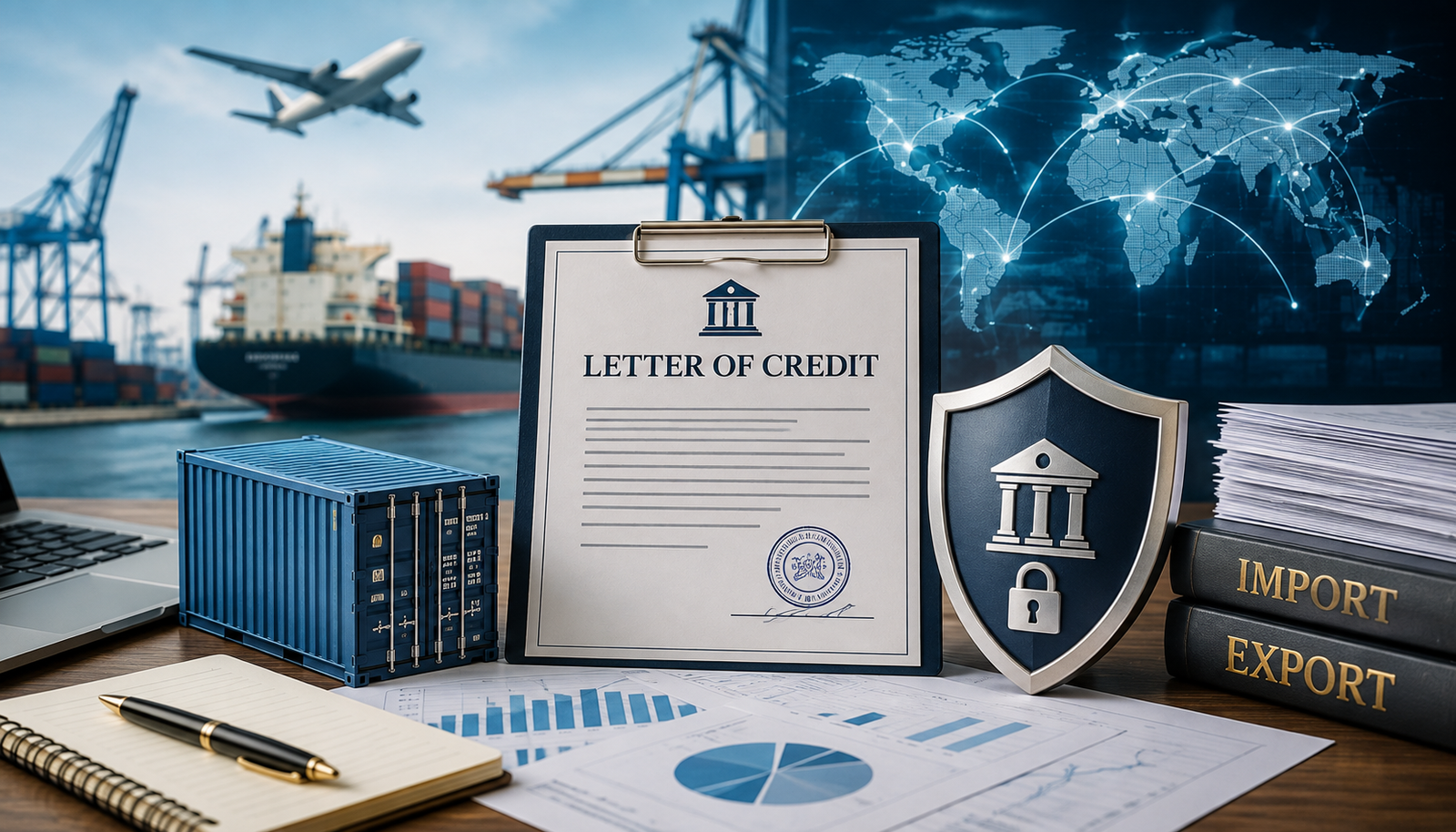
A Letter of Credit, commonly known as an LC, is one of the banking mechanisms used to reduce this payment-related uncertainty. It creates a structured arrangement in which a bank undertakes to make payment to the seller when the conditions mentioned in the LC are fulfilled and the required documents are presented correctly.
Although Letters of Credit are widely associated with international trade, they may also be used in some domestic commercial transactions.
What Is a Letter of Credit?
A Letter of Credit is generally issued by a bank at the request of a buyer.
Through the LC, the issuing bank provides an assurance that the seller, also known as the beneficiary, will receive payment if the seller complies with the terms stated in the document and submits the required paperwork in the prescribed manner.
In simple terms, an LC helps reduce the direct payment risk between buyer and seller by bringing a bank into the transaction.
This does not mean that every commercial risk disappears. The payment mechanism is primarily linked to compliance with the LC terms and documents.
How Does a Letter of Credit Work?
The LC process usually begins after a buyer and seller agree on a commercial transaction.
They may decide the price of the goods, quantity, quality requirements, shipping schedule, delivery conditions and payment terms.
Once these terms are agreed upon, the buyer approaches its bank and requests the issuance of a Letter of Credit in favour of the seller.
The bank evaluates the request according to its own procedures and, if approved, issues the LC.
The LC is then communicated to the seller, generally through a bank in the seller's country. The document specifies the conditions that must be met and the documents that need to be presented before payment can be processed.
The seller then ships the goods in accordance with the agreed conditions and submits the required documents.
Banks examine these documents to determine whether they comply with the LC.
If the documentation satisfies the applicable requirements, payment is made according to the terms of the Letter of Credit.
Who Are the Main Parties in an LC Transaction?
Several participants may be involved in a Letter of Credit transaction.
The Applicant is usually the buyer who asks a bank to issue the LC.
The Issuing Bank is the buyer's bank that issues the Letter of Credit and provides the payment undertaking subject to the stated conditions.
The Beneficiary is generally the seller that is entitled to receive payment after fulfilling the LC requirements.
An Advising Bank communicates the LC to the beneficiary and helps authenticate the message received from the issuing bank.
In some transactions, a Confirming Bank may provide an additional undertaking to pay, depending on the structure and terms of the LC.
Not every transaction necessarily involves the same combination of banks. The structure can vary depending on the type of LC and the commercial arrangement.
What Is a Sight Letter of Credit?
A Sight LC generally provides for payment after compliant documents are presented and checked, without a long deferred credit period.
For sellers, this structure may be attractive when they prefer to receive payment relatively quickly after completing the documentary requirements.
However, payment still depends on compliance with the terms and documentation specified in the LC.
What Is a Usance Letter of Credit?
A Usance LC provides payment after a pre-agreed credit period rather than immediately.
For example, the payment terms may provide for settlement after 30, 60 or 90 days, depending on the commercial agreement.
This type of LC can provide the buyer with additional time before payment becomes due while still giving the seller a structured banking arrangement for receiving the money.
What Is a Confirmed Letter of Credit?
In a Confirmed LC, another bank may add its own payment undertaking in addition to that of the issuing bank.
This additional confirmation can provide greater comfort to a seller in situations where it wants another bank to stand behind the payment obligation, subject to the agreed terms.
The availability and cost of confirmation depend on the banks involved and the transaction conditions.
Revocable and Irrevocable LC: Why the Terms Matter
The ability to amend or cancel a Letter of Credit depends on its type and the rules governing it.
For this reason, businesses should carefully understand whether and how the LC can be modified, what approvals are required and what conditions apply to any amendment.
Even a seemingly small change in shipping dates, quantities or documentation requirements can affect compliance.
How Does an LC Benefit the Seller?
For a seller, one of the biggest advantages of an LC is greater payment confidence.
Instead of depending entirely on the buyer's willingness or ability to make payment after shipment, the seller can rely on the banking arrangement, provided all relevant conditions are met.
This can make it easier to work with a new or overseas buyer where there is limited previous business history.
The LC also establishes a formal documentary process, which can reduce some payment uncertainty when both sides follow the agreed requirements correctly.
How Does an LC Help the Buyer?
The buyer also gets important protections from the structure of a Letter of Credit.
Payment can be linked to the presentation of documents required under the LC rather than being made without any documentary conditions.
This can help the buyer structure the transaction around agreed commercial requirements.
For businesses dealing with a new overseas supplier, an LC may therefore help create greater confidence on both sides.
What Is Documentary Discrepancy?
One of the most important risks in a Letter of Credit transaction is a mismatch between the submitted documents and the conditions mentioned in the LC.
This is often referred to as a documentary discrepancy.
For example, a difference in a name, shipment date, quantity, description or another required detail can create problems during document examination.
Even if the actual goods have been dispatched, discrepancies in the paperwork can delay payment or require additional approvals and corrections.
This is why exporters and importers need to review every documentary requirement carefully before shipment and submission.
What Are the Main Drawbacks of a Letter of Credit?
An LC is useful, but it is not free of cost or complexity.
Banks can charge issuance fees, handling charges, amendment fees and other costs depending on the transaction and services involved.
The process can also involve substantial documentation.
Businesses need to pay close attention to timelines, document formats, shipment details and other conditions. Mistakes can lead to delays and additional expenses.
An LC should therefore not be viewed as an automatic or unconditional payment guarantee in every circumstance. The bank's obligation is connected to compliance with the terms of the credit.
Why Is a Letter of Credit Important in International Trade?
Cross-border transactions often involve greater uncertainty than domestic deals because the parties may be separated by distance, different legal systems and limited previous commercial experience.
A Letter of Credit helps address some of this uncertainty by placing a formal banking arrangement between the buyer and seller.
The seller receives greater confidence that payment can be made when the required conditions are fulfilled, while the buyer can make the payment process dependent on the agreed documentary requirements.
This makes the LC particularly useful where two businesses are dealing with each other for the first time or where the transaction value is significant.
Bottom Line
A Letter of Credit is an important trade-finance tool used to manage payment risk between buyers and sellers, particularly in import-export transactions.
Under an LC arrangement, the buyer's bank undertakes to pay the seller according to the specified terms when the required documents are presented correctly.
Sight LCs, Usance LCs and Confirmed LCs can serve different commercial requirements, but every arrangement depends heavily on accurate documentation and strict compliance with the stated conditions.
For businesses, the key lesson is simple: an LC can strengthen trust in a trade transaction, but its effectiveness depends on understanding every condition, deadline and document requirement before the goods are shipped.