Rising electricity bills can put additional pressure on a household budget, particularly when several electrical appliances are used throughout the day. Refrigerators, air conditioners, coolers, fans and inverters are among the devices that may operate for long hours, making efficient use particularly important.
However, reducing electricity consumption does not necessarily mean replacing every appliance with a new one. In many cases, using the right settings, maintaining appliances properly and changing a few everyday habits can help prevent unnecessary power consumption.
Two appliances that deserve particular attention are the refrigerator and home inverter. A refrigerator normally runs around the clock, while an inverter repeatedly charges its battery and supplies backup electricity during outages. Incorrect settings or poor maintenance may reduce their efficiency.
Here are some practical steps households can follow to use these appliances more efficiently and potentially lower electricity consumption.
1. Check Your Refrigerator's Cooling Setting
A refrigerator remains switched on almost continuously, so even small improvements in the way it operates can make a difference over time.
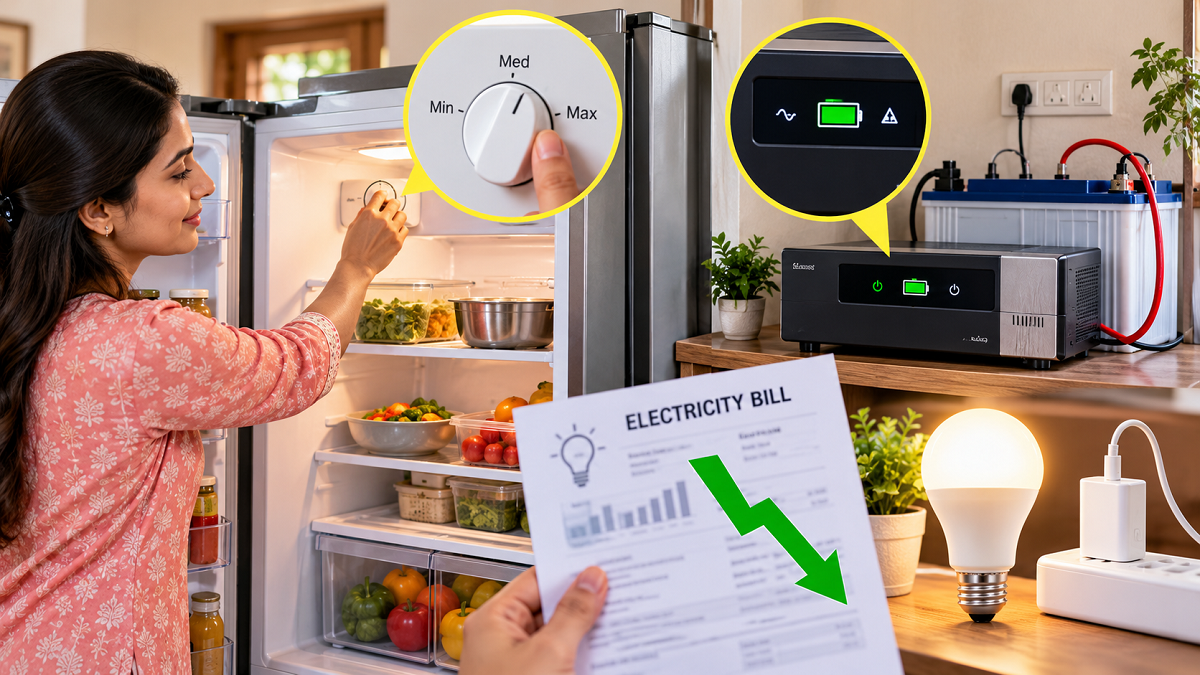
Avoid automatically setting the refrigerator to its maximum cooling level when such intense cooling is not required. Instead, select an appropriate temperature based on the season, the amount of food stored and the manufacturer's recommendations for your particular model.
Placement also matters. A refrigerator releases heat while operating, so adequate ventilation should be available around it. Avoid pushing the appliance tightly against a wall if the manufacturer recommends clearance at the rear or sides.
Another common habit that can increase the workload on a refrigerator is repeatedly opening its door. Every time the door stays open, cold air escapes and warmer room air enters. The compressor may then have to operate longer to restore the required internal temperature.
Decide what you need before opening the refrigerator and avoid keeping the door open unnecessarily.
2. Let Very Hot Food Cool Before Refrigerating It
Putting piping-hot food directly inside a refrigerator can temporarily increase the temperature inside the compartment. The cooling system then has to remove this additional heat.
Allow freshly cooked food to cool sufficiently before refrigerating it, while also following proper food-safety practices and avoiding leaving perishable food at room temperature for an unsafe length of time.
Proper organisation inside the refrigerator can also help. Avoid packing shelves so tightly that air circulation is obstructed. Cold air needs sufficient space to circulate around stored items for consistent cooling.
At the same time, there is no need to keep the refrigerator unnecessarily empty. The objective should be sensible organisation rather than overcrowding.
3. Maintain Your Inverter Battery Properly
An inverter's performance depends heavily on the condition of its battery. A poorly maintained or ageing battery may charge inefficiently, provide shorter backup and affect the overall performance of the system.
If your inverter uses a serviceable lead-acid battery, check the electrolyte or water level at intervals recommended by the battery manufacturer. Use only the type of water specified by the manufacturer and follow all safety instructions.
Maintenance-free batteries should not be opened or topped up.
Users should also ensure that the inverter's charging system and automatic cut-off functions are working correctly. If the battery takes unusually long to charge, loses backup rapidly, overheats or shows other abnormal behaviour, professional inspection may be required.
4. Avoid Putting Unnecessary Load on the Inverter
An inverter should ideally be used for appliances that are genuinely needed during a power cut.
Connecting too many devices can increase the load on the system and drain the battery more quickly. Instead of running every available appliance, prioritise essential equipment such as selected lights and fans, depending on the capacity of your inverter.
The inverter's rated capacity should also be respected. Appliances with high starting or running loads should not be connected unless the inverter is specifically designed to handle them.
Reducing unnecessary backup load can improve battery runtime and help the inverter operate within its intended limits.
5. Change Everyday Habits to Reduce Electricity Use
Fridge and inverter adjustments are only part of the solution. Daily household habits can also influence total electricity consumption.
Switch off lights, fans, televisions, coolers and other appliances when they are not required. Chargers and adapters can also be unplugged after use where practical instead of remaining connected continuously.
Replacing old incandescent bulbs with energy-efficient LED lighting can reduce lighting-related electricity consumption. During daytime hours, households can also make greater use of natural light where possible.
Air conditioners and coolers require attention as well. Dirty filters can affect airflow and performance, so filters and other serviceable components should be cleaned according to the manufacturer's instructions. Periodic servicing can also help identify faults that may be reducing efficiency.
Energy Efficiency Matters When Buying New Appliances
When an old appliance eventually needs replacement, energy efficiency should be considered alongside purchase price, capacity and features.
In India, consumers can check the BEE star rating and energy-consumption information displayed on applicable appliances. A more energy-efficient model may cost more initially in some cases, but lower electricity consumption over its usable life can make operating costs more manageable.
The actual savings will depend on the appliance, usage pattern, electricity tariff and household requirements.
Small Changes Can Make a Difference Over Time
There is no single refrigerator or inverter setting that can guarantee a specific reduction in every household's electricity bill. Consumption varies depending on appliance efficiency, usage duration, weather, household size and local electricity tariffs.
Still, avoiding unnecessarily high cooling settings, keeping the refrigerator properly ventilated, maintaining the inverter battery, controlling backup loads and switching off unused appliances can help reduce electricity waste.
Rather than making drastic changes, households can start with simple improvements in appliance settings and everyday usage. Over time, more efficient electricity use can contribute to better appliance performance as well as more manageable power bills.