LIFESTYLE
Drone Blood Delivery: Blood will now be delivered to accident sites by drone, saving many lives.
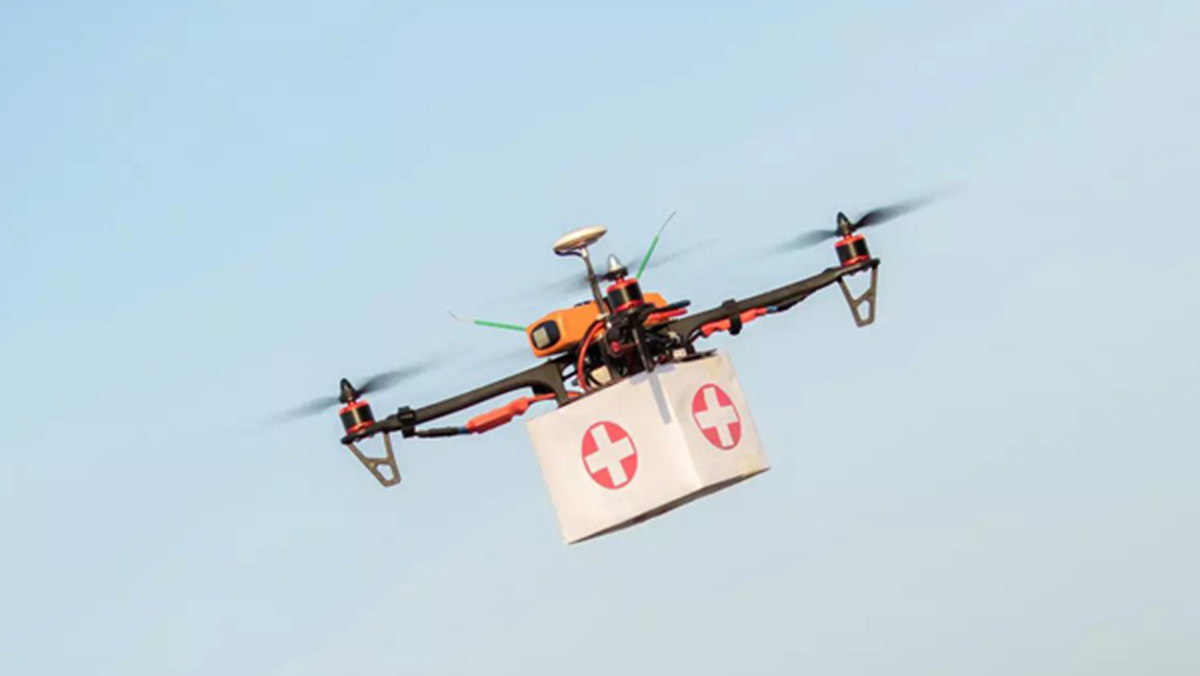
Life-saving: Under this system, if a patient is bleeding profusely, paramedics will be able to request temperature-controlled whole blood through a mobile app.
Blood delivery by drone
Hillsborough County Drone Service: In Florida, USA, preparations are underway to deliver blood to critically injured patients via drone. This system, which is being launched in Hillsborough County, is said to be the first of its kind in the country. It will begin in a few weeks, covering an area of approximately 70 square miles.
Under this system, if a patient is bleeding heavily, paramedics will be able to request temperature-controlled whole blood via a mobile app. The effort will be to ensure the blood reaches the patient within approximately three and a half minutes of the request. The aim is to provide quick help to patients for whom waiting to reach the hospital could be life-threatening.
People injured in accidents will get help
According to county officials, drones can be used in cases of road accidents, gunshot wounds, or knife attacks. Furthermore, this system can be helpful for women who are bleeding profusely after childbirth. In such cases, timely delivery of blood can be crucial. This blood delivery system is operated by a company called Archer First Response Systems. The company began flying drones for emergencies in two Florida counties in May 2024. According to Gordon Folks, the company's founder and CEO, their drones have responded to 15 emergency calls so far.
Drones will deliver not just blood, but other medical supplies as well.
These emergency drones can also carry pre-prepared medical kits. These kits include a variety of items depending on the need. They may also include an automated external defibrillator (AED). This is a small device that monitors a patient's heartbeat and, if necessary, delivers an electric shock to try to restore it.
Apart from this, bandages to stop bleeding, medicine used in case of overdose of narcotic drugs, medicine given in case of asthma attack and medicine used in case of severe allergy can also be kept in the kit.
In one case, a drone delivered an AED to a woman whose husband had suddenly collapsed. According to Gordon Folks, the woman received the AED about four minutes before ground medical teams arrived at the scene. However, the patient could not be saved. The device detected a heart condition that could not be corrected with an electric shock, and the patient died.
Every minute is important when the heart stops beating.
Nevertheless, time plays a crucial role in an emergency. Especially when a person's heart stops, it's crucial to receive treatment as quickly as possible. According to the American Heart Association, if an electric shock isn't administered, the patient's chances of survival decrease by 7 to 10 percent with each passing minute.
According to Dr. Robson Gilmore, a British doctor and researcher on drone delivery of organs, it is very important to quickly deliver a defibrillator to the patient in case of cardiac arrest.
Drones are also being used in Sweden.
The use of drones in medical emergencies isn't limited to the United States. Drones are also being used to deliver AEDs during emergencies in western Sweden. According to local authorities, approximately 15 percent of the population is covered by this facility. The use of drones for medical delivery is also increasing. In July, the Cleveland Clinic, in collaboration with drone company Zipline, launched a system for delivering medicines via drone.
Many challenges remain in America.
However, medical drones haven't yet been widely used in the United States. One major reason for this is the regulations governing drone flight. According to US aviation regulations, drones are generally only allowed to fly within a pilot's immediate sight. While this limitation may be waived in some cases, it remains a significant challenge for implementing large-scale drone delivery systems on a daily basis.