NEWS
How a Clock Works: By what technology do the clock's hands move, and how does it know the time?
Have you ever wondered how a watch's hands keep moving without stopping? Is there a tiny machine inside it that counts time? Learn how quartz and mechanical technology work.

How the clock works
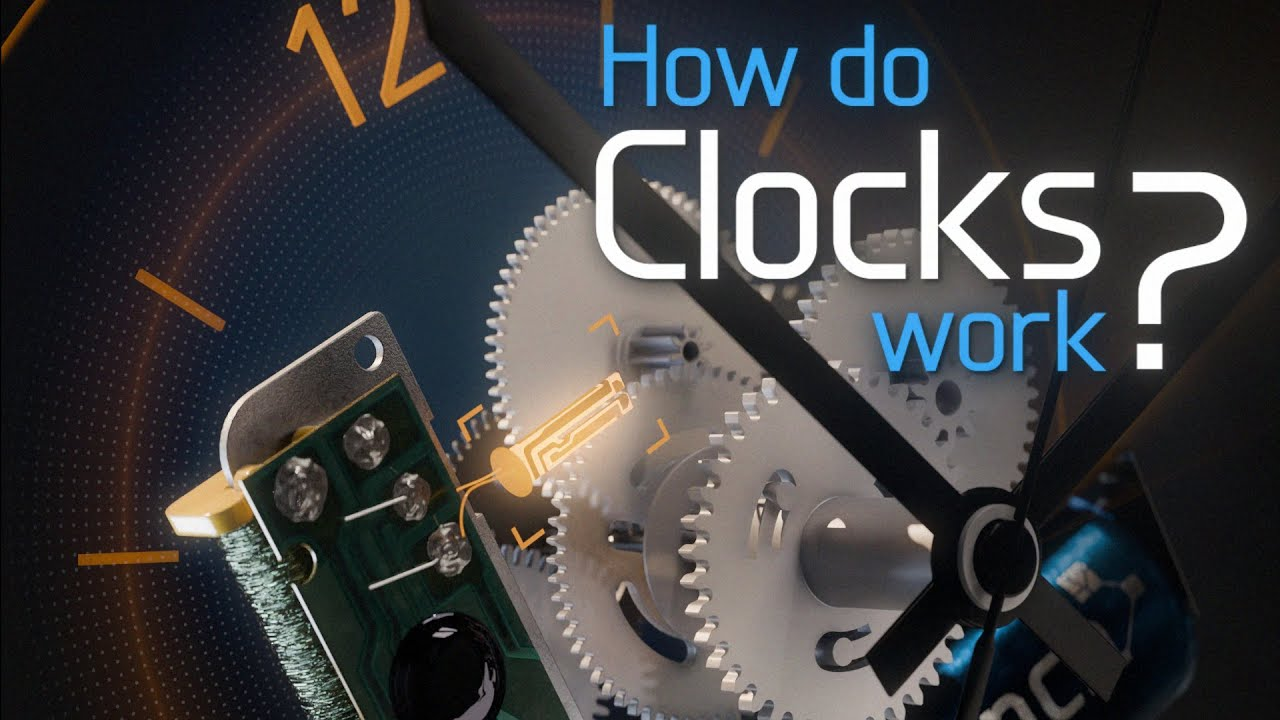
We look at our watches many times a day, but have you ever wondered how their hands keep moving? How does a watch know when a second, a minute, or an hour has passed? In fact, a special technology works inside watches, which continuously counts down the time. Watches typically operate using quartz and mechanical technology.
How does a watch run on quartz technology?
Most common watches used today use quartz technology. They contain a small battery that powers a quartz crystal inside the watch. When powered, this crystal vibrates at a set rate. Typically, it vibrates 32,768 times per second. An
electronic circuit within the watch counts these vibrations. When the set number is reached, it sends a signal to a motor. The motor and gears then move the watch's hands forward. This is why quartz watches are considered highly accurate in telling time.
What does a mechanical clock consist of?
A mechanical watch works differently than a quartz watch. It doesn't require a battery. It runs using energy from a spring or pendulum. Inside the watch are several small gears, connected to each other. These gears are set in motion by the spring or pendulum. These gears are then used to move the hands of the watch. This technology is found in older wall clocks and some expensive wristwatches.
How does a clock know the correct time?
In fact, a watch doesn't know the correct time automatically. It needs to be set to the correct time initially. After that, it tells the time based on a regular internal clock. Every 60 steps of the second hand, the minute hand advances one minute. Similarly, every 60 minutes of the minute hand, the hour hand advances one hour.
Mobile phones and smartwatches also use a network or internet connection to correct their time. However, regular watches need to be manually set from time to time. This means that the watch doesn't recognize time, but rather calculates it using a fixed technique.