NEWS
Bihar vs Jharkhand: Why is one state at a huge loss and the other in profit after the division?
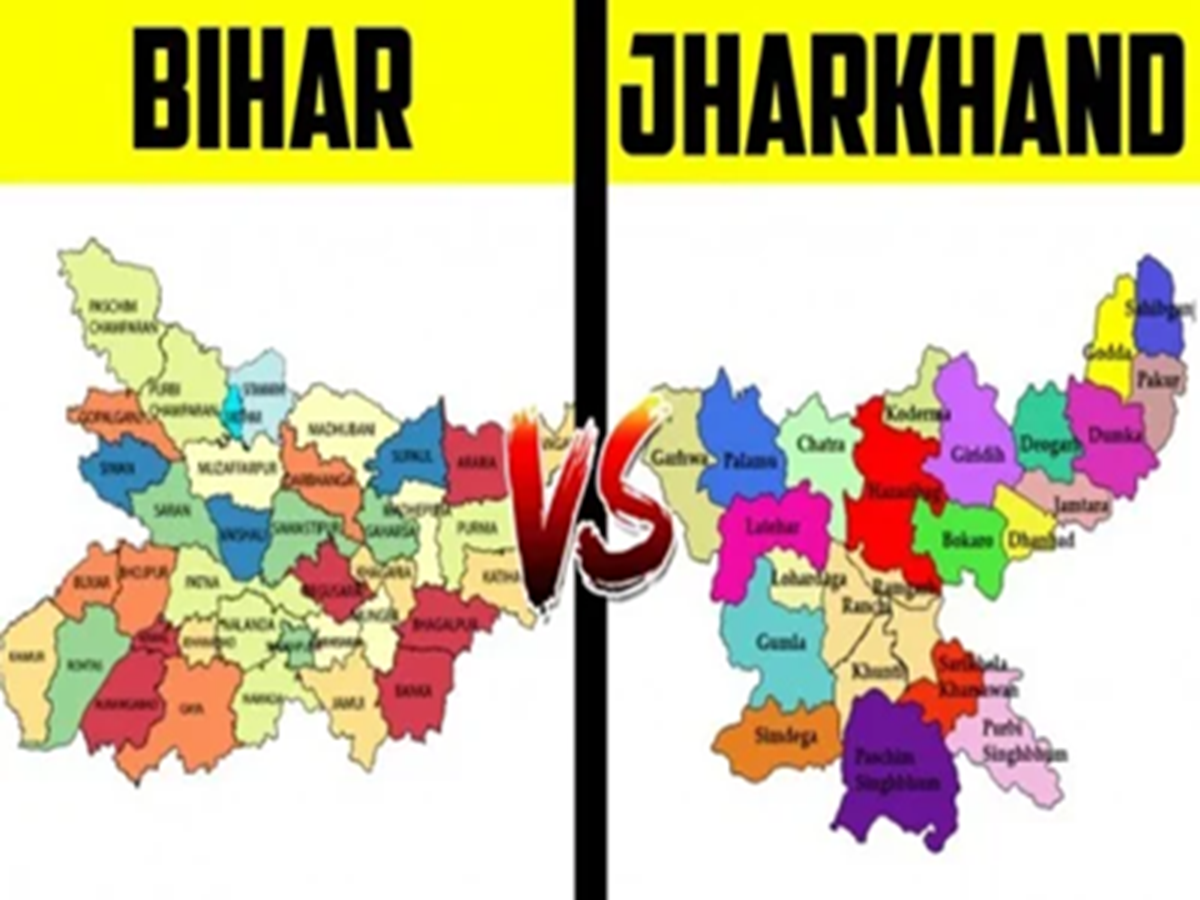
Bihar and Jharkhand Fiscal Deficit: When Bihar and Jharkhand were divided in 2000, the economic situation of both states changed. Learn why one state is in a huge deficit and the other in profit after the division.
Bihar vs Jharkhand: Why is one state in huge loss and the other in profit after the division?
Bihar and Jharkhand Economy: Bihar and Jharkhand are neighboring states, but they were once one. On November 15, 2000, Jharkhand was carved out of the southern part of Bihar, making it India's 28th state. Despite nearly 26 years having passed, Bihar has failed to make any significant progress. Due to unemployment, poverty, and migration, Bihar is considered a backward state. However, the picture in Jharkhand is the opposite.
According to the latest report, "Seeing Like a State," by rating agency Crisil, Bihar had the highest fiscal deficit among the country's 17 major states in the fiscal year 2025-26. Bihar's fiscal deficit was 5.8% of the state's gross domestic product (GDP). Jharkhand, on the other hand, had the lowest fiscal deficit at 1.2%.
10 states have a deficit of more than 3%
The 17 states included in the report account for approximately 90% of the country's GDP and nearly 90% of total state revenue and expenditure, based on the country's historical GDP series. Together, these states' fiscal deficit was 3.2% of GSDP in 2025-26. A total of 10 states had deficits exceeding 3%.
Besides Bihar, Madhya Pradesh, Tamil Nadu, Uttar Pradesh, and Telangana also had high fiscal deficits, but their economic conditions haven't improved significantly. In 2025-26, 13 states met or exceeded their fiscal deficit targets. In 2024-25, only eight such states met the target.
Jharkhand was carved out of Bihar in 2000.
Jharkhand was carved out of Bihar in 2000. Following the division, a significant portion of mineral resources like coal and iron ore, along with several major economic sectors, went to Jharkhand, dividing the income bases of the two states. However, the current situation is not just influenced by the division, but also by income, expenditure, and debt.
Crisil also pointed out the high debt of states as a concern. According to the budget estimates for 2025-26, total state debt reached 29.2% of GDP, compared to 28.1% in 2024. This is well above the recommended limit of 20%. Bihar, Madhya Pradesh, Punjab, West Bengal, Rajasthan, and Kerala have high deficits and high debt burdens.
Bihar is currently exploring sand, limestone, pyrites (Amjhore), and in some areas, gold deposits (Jamui). Jharkhand, meanwhile, holds approximately 40% of India's total mineral reserves. It is a major center for coal, iron ore, copper, bauxite, uranium, and mica in the country. Mining royalties contribute approximately 17-18% of the state's revenue.
economy
Bihar's economy is heavily dependent on the service sector and agriculture. On the industrial front, efforts are being made to attract private investment through an ethanol production policy, food processing, a textile-leather policy, and plug-and-play parks. Jharkhand, meanwhile, is home to heavy industrial and steel/cement production centers like Jamshedpur, Bokaro, and Dhanbad. The manufacturing and processing sector contributes 33 percent to the state's economy. Currently, the government is focused on establishing automobile, electronic manufacturing, and fin-tech universities.
Escape
In Bihar, 50% of the population depends on the agricultural sector. The lack of large mills and heavy industries in manufacturing has led to a massive migration of unskilled, semi-skilled, and IT-technical professionals to Delhi, Gujarat, Maharashtra, and Punjab.
Despite Jharkhand's rich mineral and heavy industries, migration rates from rural areas, tribal-dominated areas, and the unorganized sector to other states remain high. However, the state government has implemented measures such as 75% reservation for locals in the private sector and a skill development mission. The government has allocated ₹585 crore in the budget for this purpose.
More reliance on borrowing from the market
Market borrowing by states has also increased. In 2025-26, states' total market borrowing increased by more than 19% to ₹12.76 lakh crore. Until 2017, market borrowing covered about half of state deficits, but by 2025-26, this share increased to 76%.
The states' combined revenue deficit was 0.8%, compared to 0.7% last year. Monetary expenditure fell to 2.2% of GSDP, compared to 2.3% last year. Crisil said that states are facing difficulties in managing their expenditures in a sustainable manner while also balancing their development needs.