NEWS
Amazing work by scientists! This electronic skin will break and reattach itself! Learn about the technology.
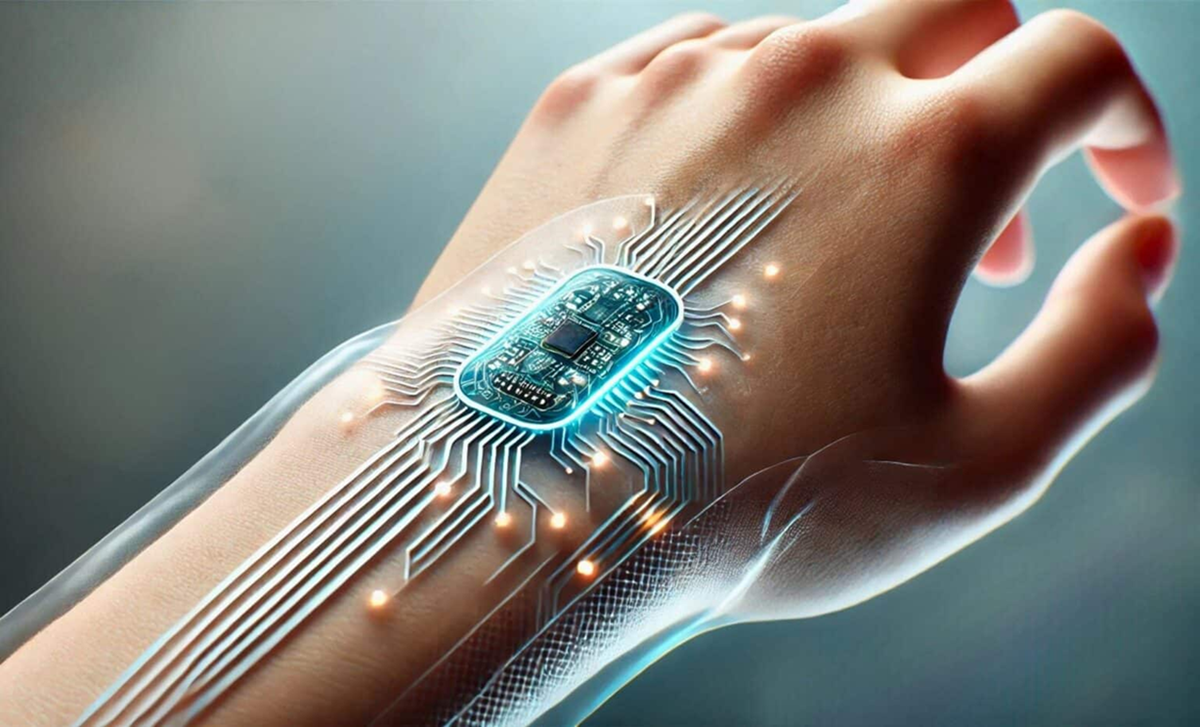
Electronic Skin: Scientists have developed a new material called Intrinsically Dynamic Biosubstrate (IDBS).
(Scientists have created self-healing electronic skin.)
Electronic Skin: Today, the world of technology offers many advanced devices that people use extensively. But have you ever considered how a scratch on the surface of your smartwatch or virtual reality glove could repair itself? Scientists have developed an electronic skin that heals itself and can be recycled once it's no longer needed. Let's explore the full technology.
What is electronic skin?
According to media reports, scientists at the National University of Singapore (NUS) have developed a soft and flexible device that can repair itself after damage. Furthermore, its most significant advantage is that it not only securely holds electronic components but can also be recycled after use. The results of this research have been published in the journal Nature Sustainability.
Solving multiple problems at once
Now, with these problems in mind, scientists have developed a new material called Intrinsically Dynamic Biosubstrate (IDBS). Its aim is to create a base that is both flexible and strong, can repair itself when damaged, and can be reused later.
To create this material, scientists used two natural ingredients: lipoic acid, found in living cells, and phytic acid, found naturally in seeds and grains.
These two materials are heated together without the use of harmful solvents or separate chemical catalysts to create a unique network. This network contains different types of chemical bonds, each of which contributes to the material's unique properties.
The big challenge facing wearable electronics
Fitness trackers, smart health sensors, electronic skins, and other wearable devices are rapidly gaining popularity. These gadgets require the ability to bend and stretch with body movements. Soft and flexible materials are used for this purpose.
But constant bending, stretching, and pressure can cause the extremely thin metal circuits inside them to become dislodged. Sometimes even a minor cut or crack can damage the sensor. Many flexible electronic materials are made from petroleum-based plastics, which are not easily recycled after use.
Heals itself after a cut
For your information, the most remarkable feature of this new material is its self-healing ability. When the material is damaged, some of its bonds break, but they repair themselves. This process allows the material to regain a significant portion of its strength.
In lab tests, a version of the material was stretched to more than eight times its original length. It was severely deformed, but it regained more than 80 percent of its strength in about six hours at room temperature.
The most interesting thing about this is that even after repeating the damage and recovery process five times, the material regains more than 90 percent of its strength.
Metal circuits will also remain firmly connected.
It's worth noting that flexibility alone isn't enough for wearable electronics. The metal conductors that transmit electrical signals must also be firmly attached to the base material.
According to the scientists, IDBS formed a stronger bond with metal than some commonly used flexible materials. This reduced the risk of electronic circuits breaking apart even under repeated bending and stretching.
The team has also created several prototypes using this material. These include an electronic skin that can measure temperature, humidity generated by breathing, and body activity, and electrodes that can record heart and muscle activity.