The US has claimed that more than 40 countries, including India, are helping China evade Trump's tariffs by operating an alleged shadow trans-shipment network in collaboration with China.
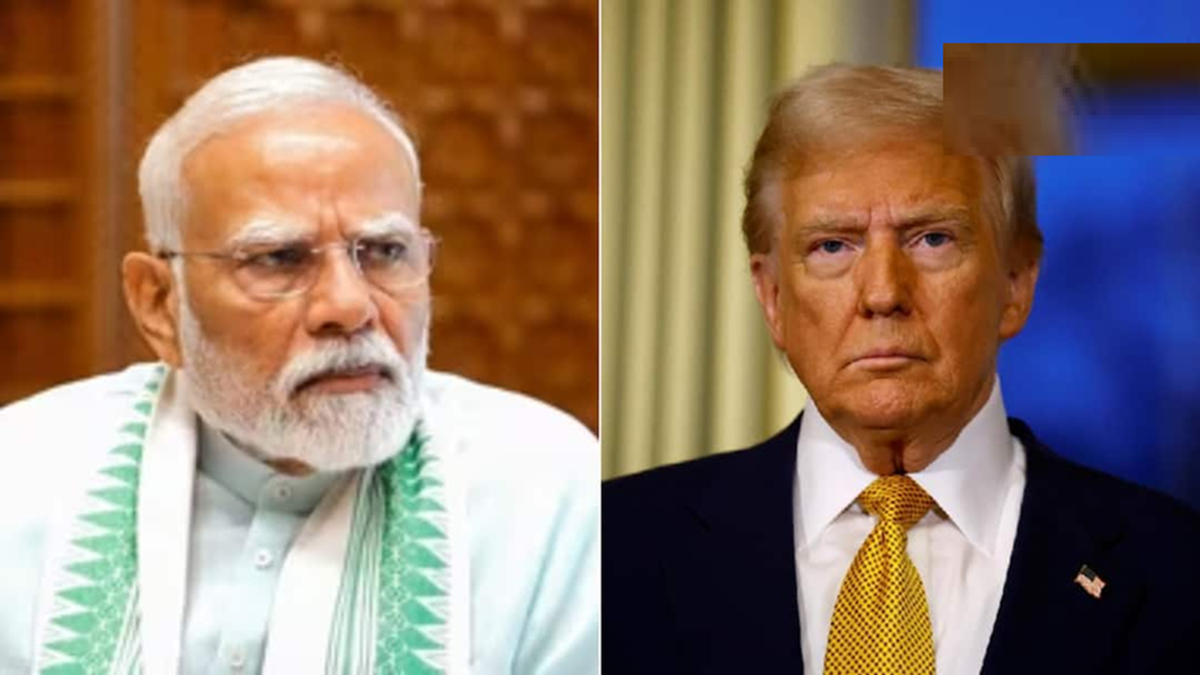
PM Modi and Donald Trump
Relations between India and the United States continue to fluctuate. The United States has now claimed that more than 40 countries, including India, are part of China's so-called shadow transshipment network, which is helping it evade Trump's tariffs. The US alleges that through this network, China is diverting its goods to the American market via other countries to avoid heavy American tariffs.
Trump administration trade adviser Peter Navarro has released a report on this issue, and the US also outlined plans to use artificial intelligence (AI)-based systems to identify and take action on such cases.
More than 40 countries accused of helping China
In a report titled "The Great Transshipment Scam," Peter Navarro stated that China is routing its exports through multiple countries to avoid US tariffs. He said this practice increased significantly after 2018, when the Trump administration imposed Section 301 tariffs to combat China's alleged unfair trade practices.
Navarro claimed that through this alleged trans-shipment network, which has been in operation for years, China is transporting its products to the US market through more than 40 countries as goods from other countries.
The report states that this network includes several major US trading partners, including Mexico and Canada, which share the US border, as well as the European Union, India, Japan, and South Korea.
The country of origin is changed by making minor changes to the goods
According to Navarro, China uses third countries for minor processing, label changes, repacking, billing changes, or rerouting of goods. This makes the country of origin appear to be from a country other than China, while the materials and ingredients used are largely Chinese.
According to the report, China and its government-backed companies and trading firms avoid tariffs by moving to countries that offer cheap labor, weak customs surveillance, special economic zones, or special privileges for trade with the US.
India's Pune-Gujarat-Chennai belt mentioned in the report
The US report also mentions India's Pune-Gujarat-Chennai manufacturing region. According to the report, this region includes products such as pumps and compressors in its production and supply network, which impacts industrial supply chains in Cincinnati, Dayton, and Columbus in the US.
Navarro said in the report that a Chinese pump that comes out of Pune as an Indian pump is a pump that was not machined in Cincinnati, Dayton or Columbus.
Baggage claims total between $40 billion and $303 billion annually.
The report estimates the annual value of illegal goods shipped through other countries to be between $40 billion and $303 billion. Navarro explained that the US will now use an AI-based Detector Border System to identify such goods. This system will assist US Customs and Border Protection (CBP).
According to the report, this system will use technologies like shipment data, history of goods route, classification of products, information about companies and ownership relationships, indicators related to production capacity, detection of abnormal activities, and computer vision.