The ordering process is entirely based on ONDC's system. First, a consumer's order is generated on the seller app, after which the order is allocated to an Uber rider.
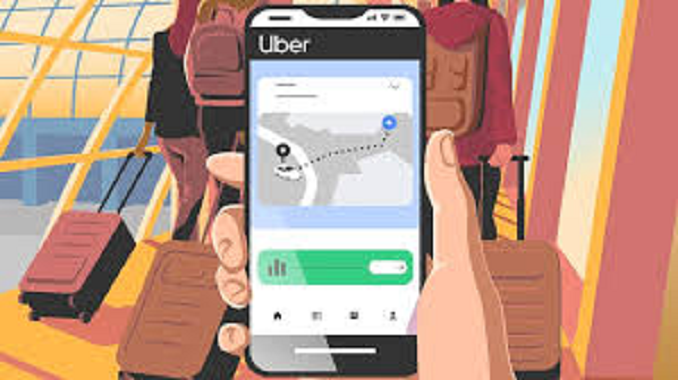
Uber launches B2B logistics services in Bengaluru; learn about B2B and B2C services.
Uber B2B Logistics Service: Uber is launching a new service in Bengaluru that will allow consumers to order food directly from popular food brands like KFC, Burger King, Taco Bell, and Rebel Foods. The service is based on Uber's B2B model, where the company will generate revenue through the Open Network for Digital Commerce (ONDC) using its two-wheeler delivery service.
Previously, Uber only handled deliveries of Zepto and KPN Farm Fresh orders, but now the company has expanded its scope to include food delivery. This service was launched on the Uber app in partnership with Metro, enabling faster delivery within the city via two-wheeler delivery.
How will the order be placed?
The ordering process is entirely based on ONDC's system. First, a consumer's order is generated on the seller app, after which the order is allocated to an Uber rider. Interestingly, the customer has no direct contact with Uber during this transaction. Uber simply completes the delivery according to ONDC's instructions.
This means that the service operates entirely on a business-to-business (B2B) model, where services are exchanged between two companies. For example, a software company sells a CRM to another company. In contrast, in a B2C model, a company sells its service or product directly to consumers, such as a customer purchasing clothing from an e-commerce site.
Different targets for B2B and B2C
The biggest difference between B2B and B2C lies in their target customers and marketing strategies. In B2C, transactions are fast and immediate, while in B2B, long-term relationships and process coordination are more important. Uber's entry into the B2B model aims to increase the usability of its platform and maximise the potential of its two-wheeled delivery network. This new expansion will not only allow Uber to benefit from the growing ONDC ecosystem but will also provide customers with fast, reliable, and diverse food delivery options.