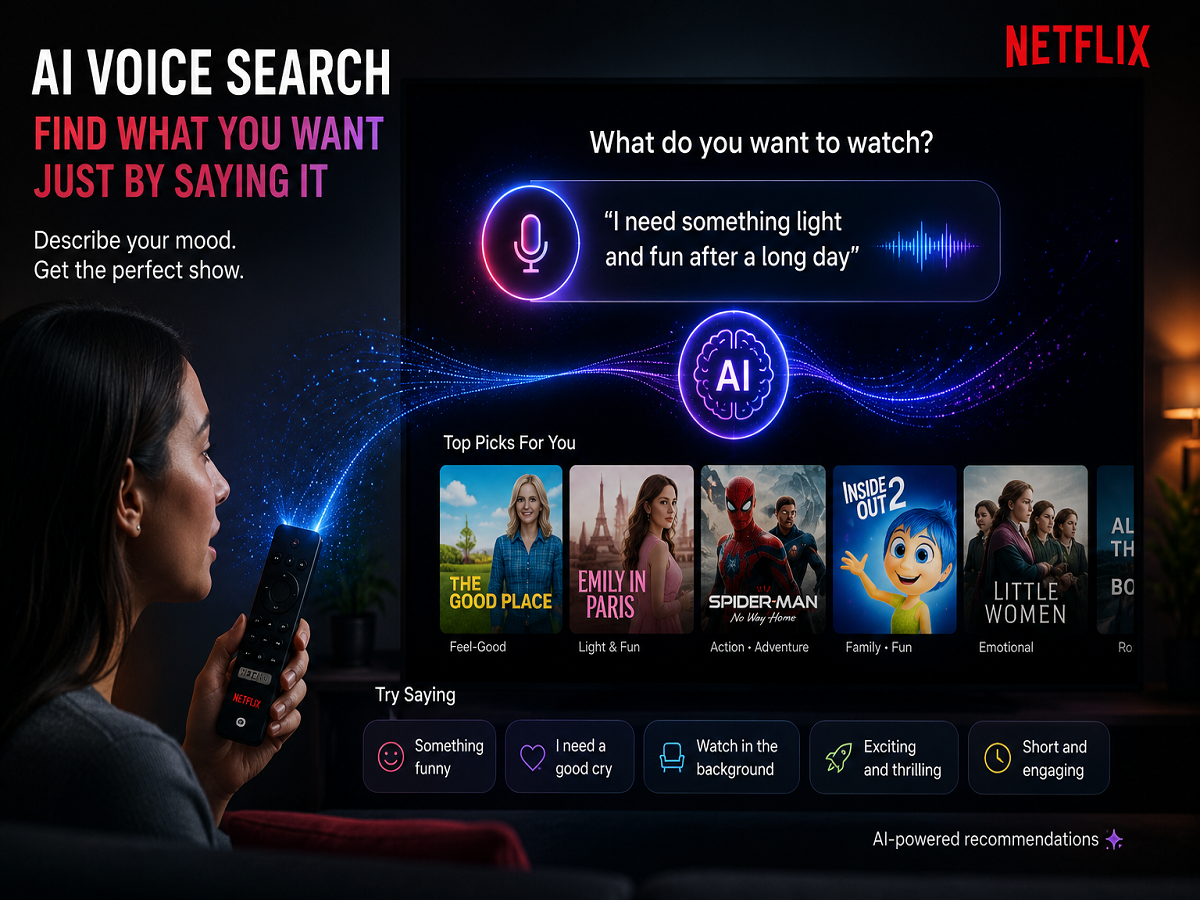
Netflix is reportedly testing a new AI-powered voice search feature designed to help users discover movies and shows simply by describing how they feel or what kind of content they want to watch.
The experimental feature uses artificial intelligence to understand natural language requests instead of relying only on traditional keyword or genre-based searches.
Currently being tested with a limited number of users in the United States, the feature could significantly change how people search for entertainment content on streaming platforms.
Instead of typing a movie title or browsing categories manually, users can now speak naturally to the app and describe their mood or viewing preference.
How Netflix’s AI Voice Search Works
The new feature is designed to make content discovery faster and more conversational.
Users simply:
- Press the voice search button
- Speak their request naturally
- Receive AI-generated content recommendations
Unlike standard search systems that depend on exact titles or genres, the AI tries to understand the intent and emotion behind the request.
For example, users can say things like:
- “I want something relaxing after work”
- “Show me emotional movies”
- “I need a funny background show”
- “Recommend something intense but short”
The system then suggests relevant Netflix titles based on the meaning of the request.
AI Tries to Understand Human Emotions and Intent
The feature is reportedly powered by a Large Language Model (LLM), similar to the AI systems currently being used across modern conversational platforms.
This allows the search tool to:
- Understand natural speech
- Interpret vague or emotional prompts
- Handle unusual search requests
- Deliver more context-aware recommendations
According to reports, the AI performs differently from traditional search engines because it focuses on conversational understanding instead of matching exact keywords.
This means users no longer need to know:
- Exact titles
- Actor names
- Genres
- Categories
before searching.
Netflix Adds Mood-Based Search Suggestions
Netflix is also reportedly experimenting with preset recommendation prompts visible directly on the interface.
Some example suggestions include:
- “Watch in the background”
- “I need a good cry”
- “Something light and funny”
- “Easy late-night viewing”
Tapping these suggestions opens a curated list of recommended shows and films.
The interface also includes an “Ask” button featuring a waveform icon, allowing users to speak custom prompts directly to the AI.
Feature Still Has Some Limitations
Although the system is generating attention, reports suggest the feature remains in an early testing phase and still lacks several advanced capabilities.
At the moment:
- The AI does not respond with voice.
- Recommendations appear as text only.
- The system reportedly does not yet use individual watch history for personalization.
This means recommendations are based mainly on the spoken request itself rather than deeper user behavior analysis.
However, industry experts believe future versions could integrate viewing history, favorites, watch time, and user preferences to deliver more personalized suggestions.
Limited Beta Testing Underway in the US
Netflix is currently testing the feature with a small group of users in the United States.
Reports suggest the AI voice search currently works on selected devices, including:
- Chromecast with Google TV
- Some TCL Google TV models
The feature has reportedly not yet appeared on platforms such as:
- Roku
- Amazon Fire TV
Netflix has also not officially confirmed:
- A global rollout timeline
- Whether the feature will remain limited to certain subscription plans
- Regional availability details
The gradual rollout suggests the company is carefully testing user response and system accuracy before wider deployment.
Why Netflix Is Building Its Own AI Search System
One major reason behind the move appears to be platform control.
Currently, many smart TVs already offer voice assistants that search across multiple streaming platforms at once.
By developing its own AI-powered recommendation system, Netflix may be trying to:
- Keep users inside its ecosystem longer
- Improve content discovery
- Increase viewing time
- Reduce search frustration
- Personalize recommendations more effectively
The feature could also help Netflix surface lesser-known content that traditional browsing systems may overlook.
AI Becoming Central to Streaming Platforms
The new feature reflects the growing role of AI across streaming and entertainment platforms.
Streaming companies are increasingly using artificial intelligence for:
- Personalized recommendations
- Search optimization
- Content tagging
- Viewer engagement
- Ad targeting
- User retention
Netflix has long relied heavily on recommendation algorithms, but this new conversational AI approach represents a major shift toward more human-like interaction.
Could Change How People Search for Entertainment
Experts believe AI voice search could eventually replace traditional streaming navigation systems.
Many users currently spend large amounts of time:
- Scrolling endlessly
- Browsing categories
- Searching manually
- Struggling to decide what to watch
Mood-based conversational AI may simplify that process significantly by turning search into a more natural discussion.
Instead of searching by technical categories, users could simply describe:
- Their mood
- Available time
- Energy level
- Emotional preference
- Viewing environment
and receive tailored recommendations instantly.
Netflix Continues Expanding AI Features
The company has recently been testing several new AI-driven experiences aimed at modernizing its platform and improving engagement.
The latest AI voice search experiment comes shortly after Netflix also explored:
- Short-form discovery feeds
- Improved recommendation systems
- Smarter UI personalization
- Enhanced content categorization
As competition in the streaming industry intensifies, AI-powered discovery tools may become a major factor in how platforms attract and retain viewers in the future.