NEWS
Extra tariffs can damage relations, through dialogue...', what was India's response to Mexico's 50% tariff?

Mexican Tariff: To appease the United States, Mexico announced a 50% tariff increase on several Asian countries, including India. India responded by saying that necessary decisions must be made in the interests of Indians.
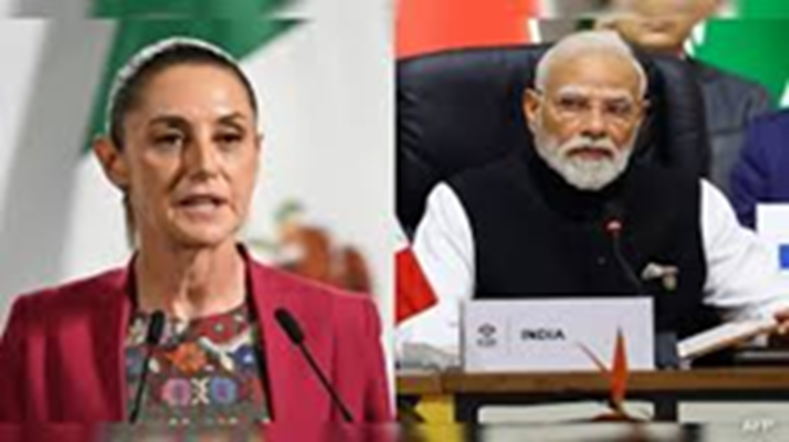
The Indian government has taken a tough stance following Mexico's decision to raise tariffs on some Indian products by up to 50 percent. The government has stated that it reserves the right to take "necessary decisions" to protect the interests of Indian exporters. "India reserves the right to take necessary steps to protect the interests of Indian exporters, and will continue to pursue a solution through dialogue," a government official said on Saturday.
A win-win solution for both countries
According to an Indian official, India began discussions with Mexico at the time of the bill's initial proposal. The Department of Commerce is in contact with the Mexican Ministry of Economy to find a mutually beneficial solution in accordance with global trade rules. A high-level meeting has already taken place between Commerce Secretary Rajesh Aggarwal and Mexican Deputy Economy Minister Luis Rosendo. Further discussions are planned.
The Indian government stated that unilaterally increasing Most Favoured Nation (MFN) tariffs without prior negotiations is detrimental to the security of the cooperative economic relationship between the two countries and is inconsistent with the principles of transparency and predictability of the multilateral trading system.
Tariffs will be applicable to Asian countries from next year
Mexico's tariff decision was made to protect its domestic industry and producers. These new tariffs will take effect on January 1, 2026. These tariffs will apply to products from countries with which Mexico does not have a free trade agreement (FTA), such as India, China, South Korea, Thailand, and Indonesia.
Affected products include auto parts, light vehicles, clothing, plastics, steel, household appliances, toys, textiles, furniture, shoes, leather goods, paper, cardboard, motorcycles, aluminum, trailers, glass, soap, perfumes, and cosmetics.
Major impact on Indian automobile exports
Mexico is India's third-largest car export market. India exports cars and parts worth approximately $1 billion (approximately Rs 8,500 crore) to Mexico. Major automakers such as Volkswagen, Hyundai, Nissan, and Maruti Suzuki will be affected. Tariffs on cars will increase from 20 percent to 50 percent.
The Indian official said, 'India values its partnership with Mexico and is ready to work together to create a stable and balanced trade environment for the benefit of businesses and consumers of both countries.'
Preparation of a new plan between the two countries
India and Mexico are also planning to begin negotiations for a free trade agreement. Experts believe that an FTA could provide Indian companies with exemptions from these tariffs. This decision comes at a time when global trade is facing a tariff war. Mexico's move is aimed at strengthening the domestic industry and increasing revenue, but it could lead to higher prices.