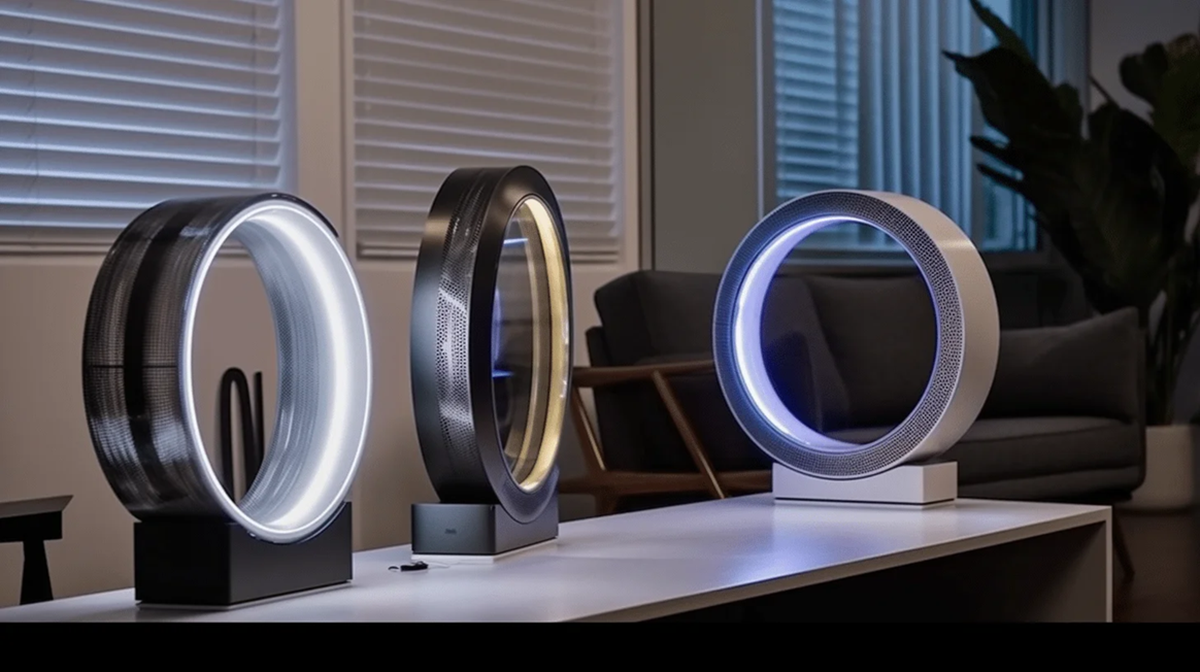
Bladeless Fan: The biggest question that arises after seeing a bladeless fan is that when there are no blades then how is the air coming out?
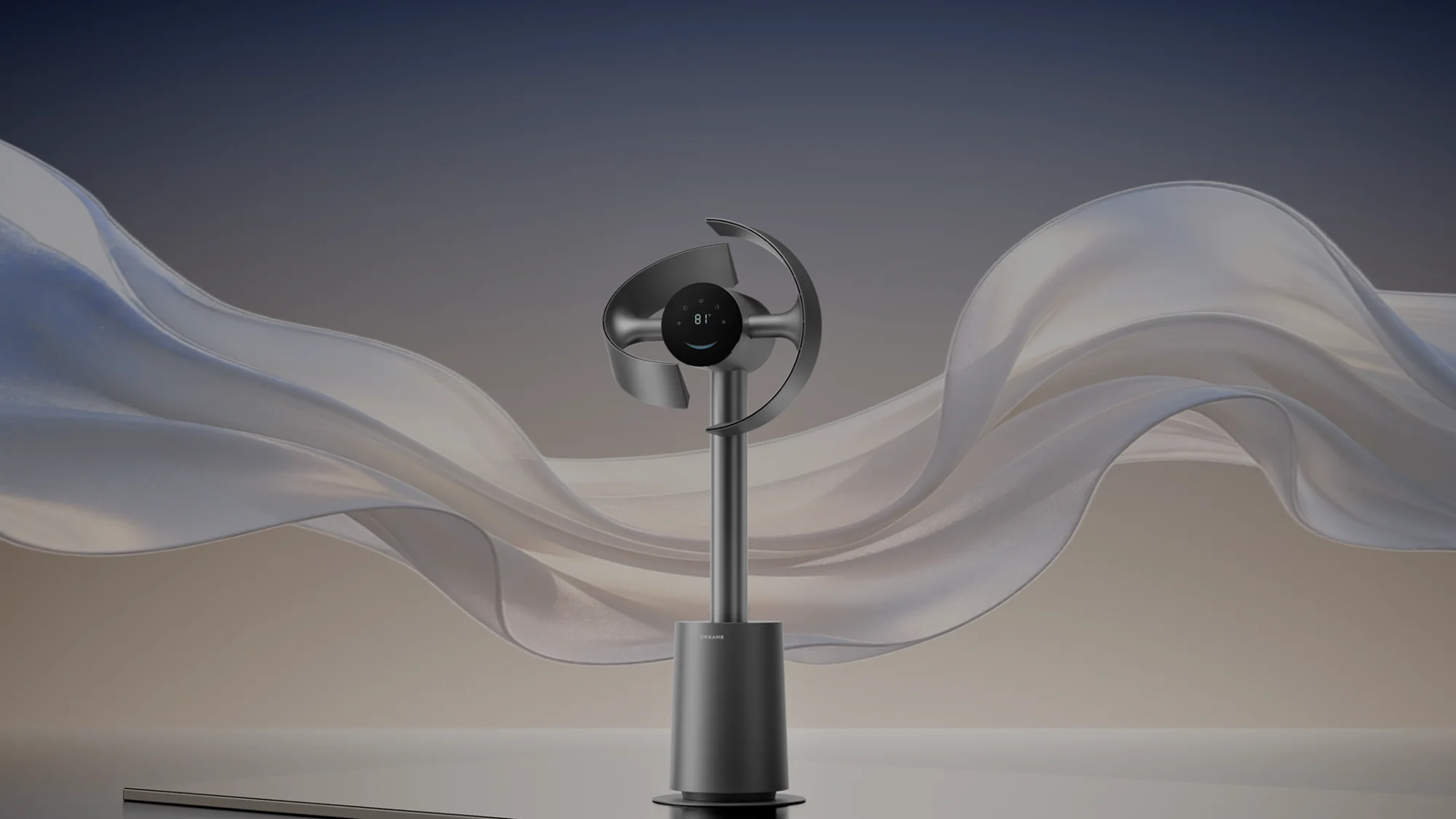
(What are bladeless fans?)
Bladeless Fan: During the summer season , people use fans, coolers, and other gadgets in their homes to protect themselves from the heat. In this context, when we hear the word fan, we usually think of a normal fan with three or four blades. But now, technology has advanced to the point where fans can even operate without blades. These are called bladeless fans. While they look quite different from normal fans, they also possess an interesting technology to move air rapidly.
Where does the air come from in a bladeless fan?
According to information, the biggest question that arises when looking at a bladeless fan is: how is the air coming out when there are no blades? Actually, its motor and impeller are normally hidden inside the base beneath the fan.
The motor draws in air and forces it upward at high speed. This air then enters a specially designed hollow ring or loop. The air exits through extremely thin air slots along the edge of the ring, pulling the air in front of it along with it.
What is Air Multiplier Technology?
For your information, many bladeless fans use technology called air multipliers. In this system, the fan not only expels air drawn in by the motor but also incorporates surrounding air into its flow.
This allows for a consistent, smooth airflow even without visible blades. The airflow is more palpable, rather than discrete, as with older fans.
Additionally, a major advantage of bladeless fans is their design. They don't have protruding, open blades, significantly reducing the risk of finger injuries compared to older fans. This makes them ideal for children. Furthermore, they are much easier to clean than older fans because they don't have blades that can cause problems like dust accumulation when rotating.
Does a bladeless fan save more electricity?
It's not fair to assume that every bladeless fan is more energy efficient than a conventional fan. In fact, power consumption depends on the motor, model, speed, and technology used.
Some advanced models are designed to deliver better airflow with less power. Therefore, when purchasing a bladeless device, it's important to consider wattage, airflow, and energy efficiency, rather than just the name.