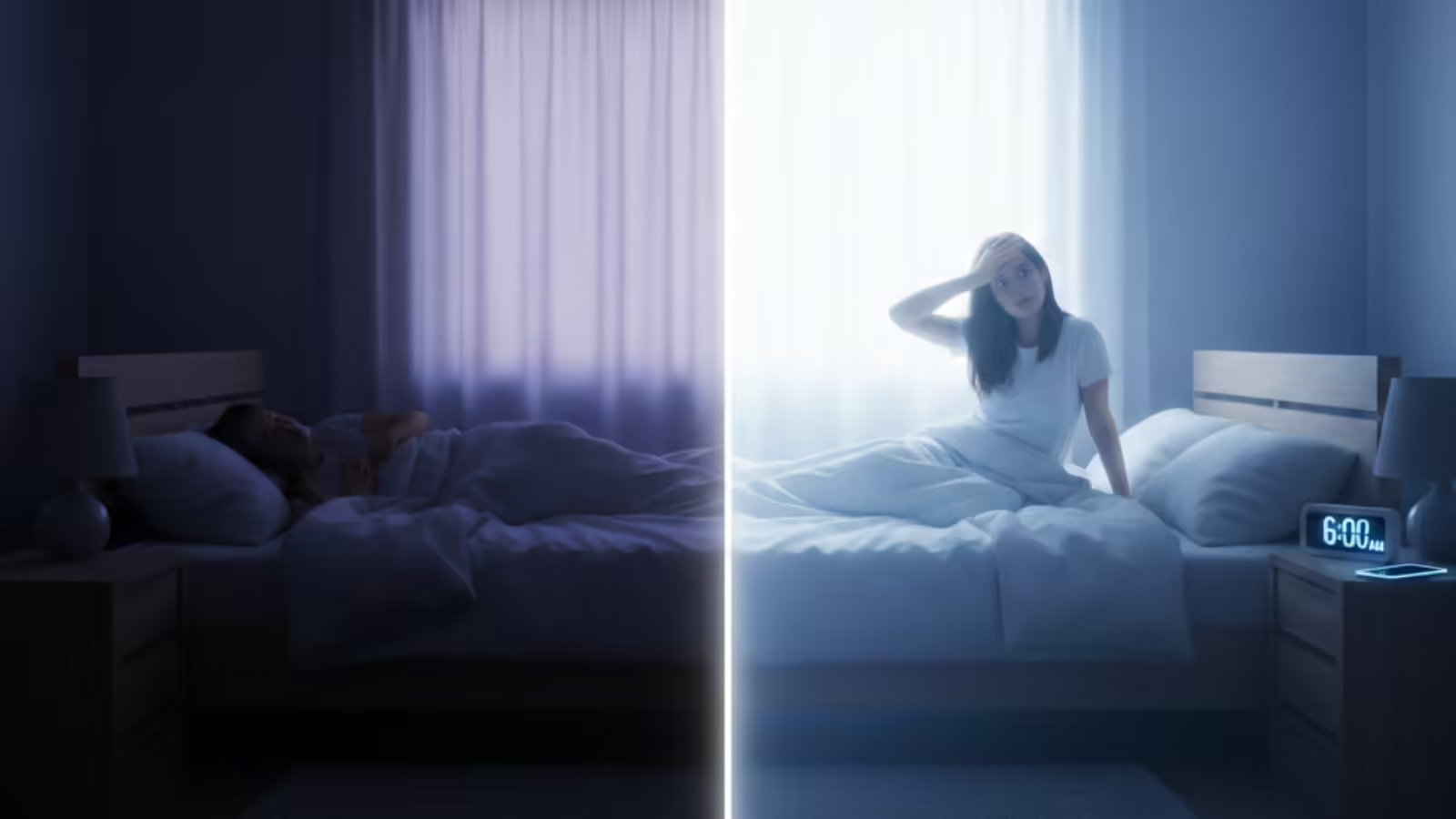
The human body is an extraordinary machine, operating in harmony with nature. Most people assume that turning on a light while sleeping is harmless, but modern science reveals that even a small source of light at night can disrupt your body’s natural processes.
The Body’s Internal Clock
Inside your brain, a tiny but powerful system called the circadian rhythm acts as an internal biological clock. It operates on a 24-hour cycle and signals your body when to wake up and when to sleep. Light entering the eyes reaches the retina, where specialized cells send signals to the brain. The brain interprets light as “day” and keeps the body alert, while darkness triggers the production of sleep hormones.
Role of Melatonin – The Sleep Hormone
Melatonin, often called the sleep hormone, plays a central role in regulating sleep. In darkness, the pineal gland increases melatonin production, making the body feel drowsy and ready for deep sleep. When exposed to light, melatonin production slows or stops, causing the body to wake up or stay alert. This is why sleeping with lights on can make restful sleep difficult.
Artificial Light and Blue Light Exposure
In earlier times, humans followed the natural cycle of the sun. Today, artificial light from street lamps, office lights, smartphones, and laptops disrupts this rhythm. Blue light, in particular, confuses the brain into thinking it is still daytime, reducing melatonin levels and affecting sleep quality.
Health Risks of Poor Sleep
Disruption of circadian rhythm due to light exposure is not just about feeling tired. Chronic sleep disturbances can lead to:
- Slower metabolism, which may contribute to weight gain
- Increased risk of heart diseases
- Higher stress levels and mood swings
- Reduced body repair and recovery
Sleep is essential for overall health, and repeated interruptions due to light can have long-term consequences.
Tips for Better Sleep
Experts recommend the following for quality sleep:
- Keep your bedroom dark and quiet.
- Avoid smartphones, laptops, and other gadgets at least an hour before bedtime.
- If light is necessary, use dim red or yellow lights, which have minimal impact on melatonin.
- Make the room as dark as possible to promote deep, restorative sleep.
Final Note: Sleep is not just relaxation; it is a biological necessity. If you experience difficulty falling asleep even in complete darkness, consult a healthcare professional, as it may indicate an underlying health issue.