Business
Savings Account Cash Deposit Rules: When Banks Report Transactions to the Income Tax Department
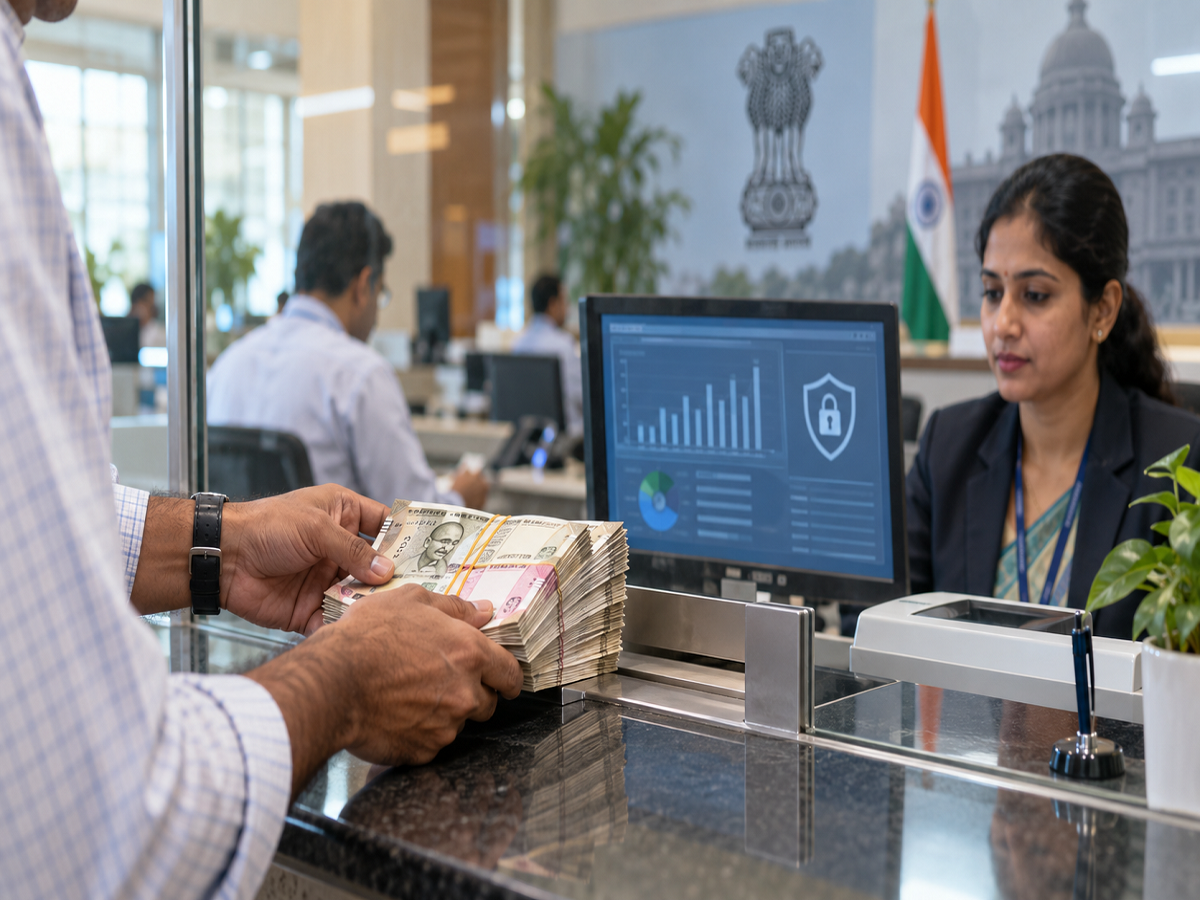
A savings account offers a convenient place to keep money, receive income and manage routine expenses. However, people who frequently deal in cash may wonder how much they can deposit without attracting scrutiny from the Income Tax Department.
There is no general rule that prohibits an individual from depositing a large amount of legitimate cash into a savings account. The crucial issue is whether the account holder can explain where the money came from and whether the transaction is consistent with the income disclosed in the tax return.
It is also important to understand that the ₹10 lakh threshold commonly associated with savings accounts is a reporting limit—not a tax-free allowance or a guarantee that deposits below this amount will never be examined.
When Do Banks Report Savings Account Cash Deposits?
Banks and post offices are required to report certain high-value transactions through the Statement of Financial Transactions, commonly known as SFT.
Under the applicable reporting framework, cash deposits totalling ₹10 lakh or more during a financial year in one or more accounts—excluding current accounts and time deposits—may be reported to the Income Tax Department. Savings accounts fall within this category.
The limit applies to the combined value of cash deposits made during the entire financial year, from April 1 to March 31. It is not restricted to a single transaction.
For example, suppose a person deposits ₹2 lakh on five different occasions during the same financial year. Even though each transaction is below ₹10 lakh, the total reaches ₹10 lakh and becomes reportable under the SFT framework.
The aggregation may also cover multiple qualifying accounts belonging to the same person. Therefore, dividing cash among different savings accounts does not necessarily prevent the transactions from being reported.
The official SFT framework is explained in the Income Tax Department’s reporting guidance.
Does Depositing ₹10 Lakh Automatically Trigger a Tax Notice?
No. A reported transaction does not automatically result in an income tax notice, penalty or additional tax demand.
SFT reporting provides the tax authorities with information about specified financial activities. The department may compare this information with the taxpayer’s Income Tax Return, Annual Information Statement and other available records.
Questions may arise when the amount deposited appears unusually high compared with the individual’s reported income or financial profile. Scrutiny may also occur when a person does not file a return despite undertaking substantial transactions.
If the source of the cash is legitimate and properly documented, the account holder should generally be able to explain the deposit. Possible sources may include:
- Cash receipts from a properly recorded business
- Agricultural income supported by relevant documents
- Sale proceeds from an asset or property
- Past savings accumulated from disclosed income
- Gifts received from eligible relatives
- Money received through inheritance
- Repayment of a documented loan
The tax treatment will depend on the nature of the money. For instance, depositing cash does not itself create taxable income, but the underlying receipt may be taxable if it represents business earnings, professional income, capital gains or another taxable source.
PAN Requirement for Large Cash Deposits
Banks generally require customers to quote their Permanent Account Number when cash deposits exceed ₹50,000 in a single day. A person who does not have a PAN may have to submit the prescribed declaration, subject to the rules applicable at the time of the transaction.
Depositors should keep in mind that the ₹50,000 PAN requirement and the ₹10 lakh annual SFT threshold serve different purposes. The first relates to identification for specified transactions, while the second determines when aggregate cash deposits become reportable.
Providing a PAN does not mean that tax will automatically be charged. It helps financial institutions correctly identify and report the person carrying out the transaction.
Understand the ₹2 Lakh Cash-Receipt Restriction
Tax rules also restrict a person from receiving ₹2 lakh or more in cash in certain circumstances, including from one person in a day, for a single transaction or for transactions connected with one event or occasion.
This restriction concerns the receipt of cash and should not be confused with the SFT limit for deposits into a savings account. Breaking one large cash receipt into smaller payments may not make the arrangement compliant if all the payments relate to the same transaction or event.
Certain exceptions apply, including specified transactions involving banks, post offices and government bodies. Because the rule depends on who received the money and why it was paid, anyone handling a substantial cash transaction should seek advice from a qualified tax professional.
How to Reduce the Risk of Tax Questions
The best protection is not merely keeping deposits below a particular figure. It is maintaining a clear financial trail.
Account holders should preserve invoices, sale agreements, gift deeds, inheritance papers, agricultural records, business books and other documents that establish the source of funds. The amount deposited should also be consistent with the income and transactions disclosed in the relevant tax return.
Where possible, digital payment methods such as UPI, NEFT, RTGS and account-payee cheques can create a clearer record than cash. Taxpayers should also review their Annual Information Statement and file their returns accurately and on time.
The Key Takeaway
There is no universal “safe” cash-deposit amount that guarantees freedom from an income tax notice. Cash deposits aggregating to ₹10 lakh or more in savings and other qualifying non-current accounts during a financial year are generally reportable by banks and post offices.
Crossing that threshold is not illegal, nor does it automatically create a tax bill. What matters most is whether the depositor can establish a lawful source for the money and whether the transaction matches the information declared to the Income Tax Department.
Disclaimer: Tax provisions and reporting requirements may change. Readers should consult the Income Tax Department or a qualified tax adviser for guidance based on their circumstances.