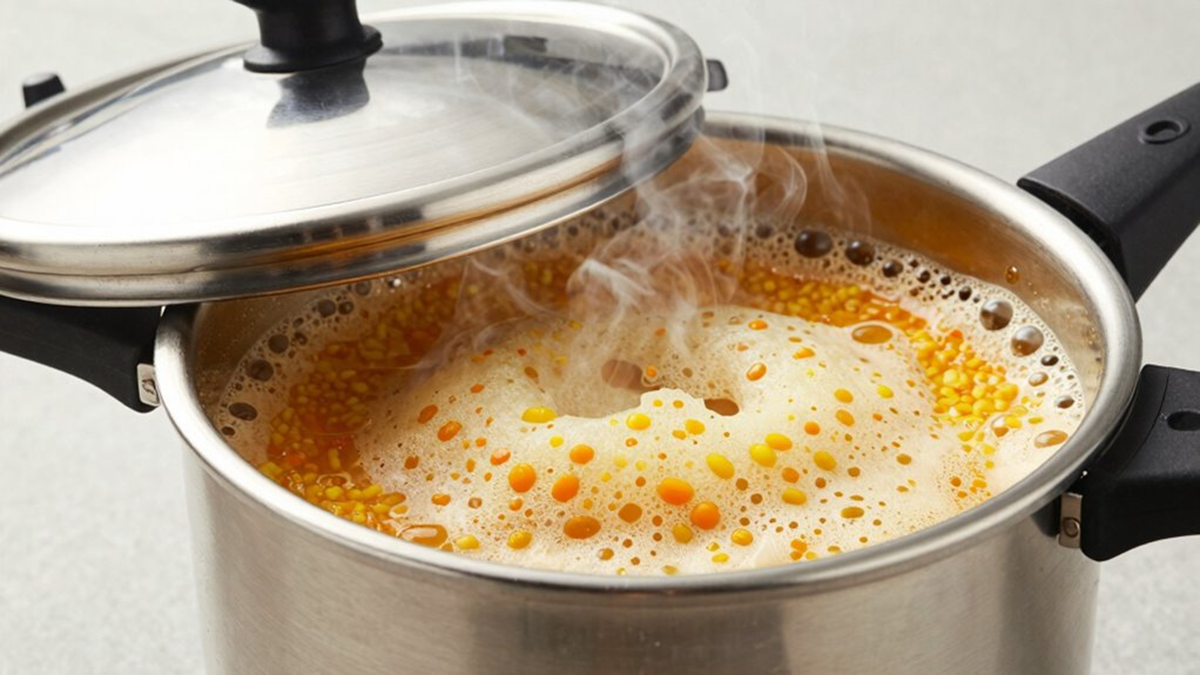
Prevent Dal Foam: Many people try cooking lentils in less water or repeatedly reducing the heat, but this doesn't always solve the problem. Standing near the cooker constantly is also not possible.
How to stop the lentil foam from coming out of the cooker?
How to stop dal overflow in a pressure cooker: When you repeatedly see foam coming out of the pressure cooker while cooking dal, dirtying the gas and the lid, it's truly frustrating. If you leave the dal aside for a while, you'll find dal splashes and foam around the cooker upon returning. Sometimes, the foam is so abundant that it becomes necessary to clean the gas. This begs the question: why does foam come out when cooking dal, and what's the easiest way to stop it?
In fact, when lentils are cooked, the starch and protein present in them cause foam to form. As the water heats up, this foam rises upward. Due to the steam and pressure buildup inside a pressure cooker, the foam rises rapidly and sometimes even escapes from around the whistle. This problem can be exacerbated if the cooker is overfilled with lentils and water.
While many people try cooking lentils in less water or repeatedly reducing the heat, this doesn't always solve the problem. Standing constantly near the cooker isn't always feasible. In such a situation, a simple trick can be very helpful.
Do this to prevent the foam from coming out of the lentils
After adding the lentils to the cooker, place a small steel bowl on top. Ensure the bowl is clean and not so large that it's difficult to fit inside the cooker. Then, close the lid as normal and let the lentils cook. As the lentils heat up, the steel bowl blocks the foam as it rises. This prevents the foam from rising to the top, instead of reaching the lid or whistle. This reduces the chance of the foam escaping and reduces the mess around the cooker.
This method can be especially useful for pulses that tend to foam a lot during cooking. Beans, chickpeas, and some other items also experience foaming problems.
After all, what happens to a steel bowl?
The steel bowl acts as a barrier. The foam that forms during the boiling of the lentils rises rapidly, but its momentum is broken upon hitting the bowl. This prevents the foam from reaching the cooker lid directly. This is why this method seems so easy. It doesn't require any special equipment or extra effort during cooking. A small, household steel bowl can do the job.
This small mistake can also increase the foaming problem.
Overfilling the pressure cooker is a common mistake when cooking lentils. If there isn't enough space in the cooker for the lentils, water, and other ingredients, the foam won't have enough room to rise to the top after boiling. This can quickly reach the lid and overflow. Therefore, it's important to consider the cooker's capacity when cooking lentils. Don't overfill the pressure cooker with lentils and water until there's no room left at the top. Maintaining the right amount of water and adequate headroom can also reduce the risk of foam overflowing.
Also pay attention to the gas flame.
Cooking lentils continuously over high heat can also cause foam to rise rapidly. Therefore, it's important to monitor the heat while cooking lentils. After initially heating the lentils, the heat can be adjusted as needed. It's also important to keep the cooker's whistle and lid clean. If lentils or other material accumulates around the whistle, it can make it difficult for steam to escape.