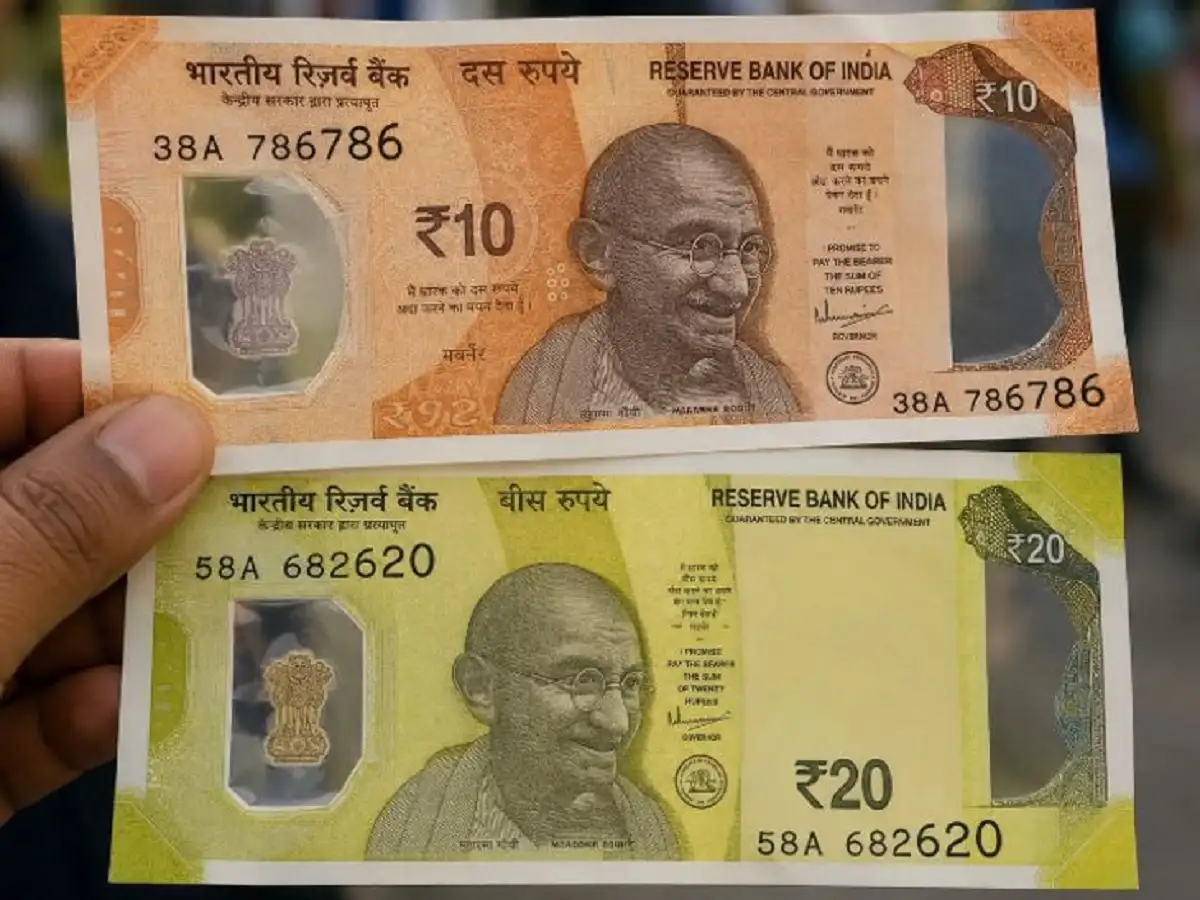
Plastic Currency Update: India could soon take a major step toward introducing polymer banknotes as the Reserve Bank of India (RBI) prepares to conduct field trials of ₹10 and ₹20 plastic currency notes. The Central Government has approved the RBI's proposal to test polymer-based banknotes in real-world conditions before deciding whether they should be introduced on a larger scale across the country.
The proposed pilot aims to evaluate the durability, usability, and public acceptance of polymer notes while the existing paper currency will continue to remain legal tender.
Government Approves RBI's Polymer Note Proposal
The Union Government has given its approval to the RBI's proposal for conducting field trials of polymer currency notes.
Minister of State for Finance Pankaj Chaudhary informed the Lok Sabha that the approval was granted following recommendations made by the RBI's Central Board of Directors. The proposal was submitted under Section 25 of the Reserve Bank of India Act, 1934.
The objective of the pilot project is to assess whether polymer banknotes are suitable for large-scale circulation under Indian conditions before taking any policy decision regarding nationwide implementation.
Large-Scale Trial Planned Across India
As part of the pilot project, the RBI plans to introduce a significant number of polymer notes into circulation.
The proposed trial includes:
- 1 billion ₹10 polymer notes
- 1 billion ₹20 polymer notes
These notes will be distributed across different regions of the country to evaluate their performance in varied climatic conditions and day-to-day usage.
The widespread rollout during the testing phase is expected to provide valuable data on how the new notes perform in real-life situations.
What Will the Field Trial Evaluate?
The pilot project is designed to study multiple aspects of polymer banknotes before any final decision is made.
Key areas of evaluation include:
- Durability compared with conventional paper currency.
- Performance in different weather conditions across India.
- Ease of handling during everyday transactions.
- Public acceptance and user feedback.
- Suitability for long-term circulation.
- Resistance to wear and tear from frequent use.
After reviewing the results of the field trial, the RBI will determine whether polymer notes should be introduced nationwide.
Existing Paper Notes Will Continue to Remain Valid
The Finance Ministry has clarified that there is no proposal to withdraw the existing ₹10 and ₹20 paper notes at this stage.
During the pilot phase:
- Paper and polymer notes will circulate simultaneously.
- Existing currency notes will remain legal tender.
- There will be no immediate replacement of paper notes.
- Any future transition will depend entirely on the outcome of the field trial.
This means consumers will be able to use both types of notes without any disruption if the pilot moves forward.
Why Is RBI Considering Polymer Currency?
Many countries have already adopted polymer banknotes because they generally last longer than traditional paper notes.
Since lower-denomination notes such as ₹10 and ₹20 change hands frequently, they tend to wear out quickly. Polymer notes could help reduce replacement frequency and improve the overall lifespan of currency.
Potential advantages include:
- Longer durability than paper notes.
- Better resistance to moisture, dirt, and frequent handling.
- Lower printing and replacement costs over time.
- Reduced environmental impact due to fewer discarded notes.
- Improved quality for high-circulation denominations.
If the pilot proves successful, polymer notes could help improve the efficiency of India's currency management system.
Advanced Security Features Expected
Polymer banknotes are also known for offering stronger protection against counterfeiting.
Some of the security features expected to be included are:
- Transparent security windows.
- Advanced security threads.
- Enhanced anti-counterfeiting technology.
- Improved protection against forgery attempts.
These features are designed to make fake currency more difficult to produce while allowing the public to verify genuine notes more easily.
What Happens Next?
The RBI will closely monitor the performance of the polymer notes throughout the trial period. Feedback from banks, businesses, consumers, and currency management agencies will play an important role in determining the future of the project.
Only after a detailed assessment of the pilot results will the central bank decide whether polymer banknotes should become a permanent part of India's currency system.
Final Take
India is moving a step closer to testing ₹10 and ₹20 polymer banknotes, with the Central Government approving the RBI's proposal for nationwide field trials. The pilot will examine the durability, security, public acceptance, and overall performance of plastic currency before any large-scale rollout is considered. Meanwhile, existing paper notes will continue to remain fully valid, and no decision has been taken to replace them at this stage.