ASTROLOGY
Navratri 2026: Ashtami and Navami on October 19? Check Kanya Pujan Date, Shubh Muhurat and Puja Timings
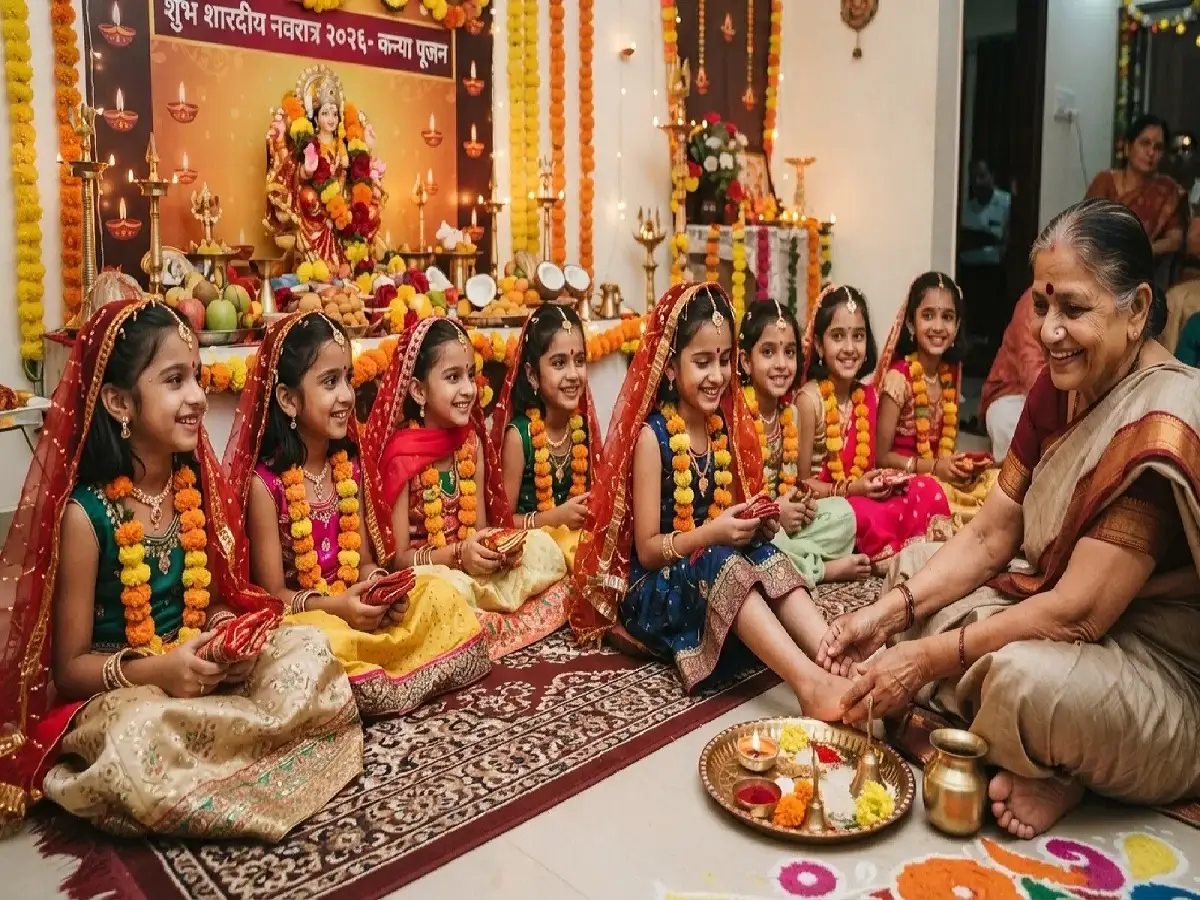
Shardiya Navratri 2026: The nine-day celebration dedicated to Goddess Durga holds immense religious significance for millions of devotees across India. During this festival, worshippers offer prayers to the nine divine forms of Maa Durga, observe fasting rituals, and seek blessings for happiness, prosperity, good health, and family well-being.
Among the most important occasions of Navratri are Maha Ashtami and Maha Navami, when devotees perform special worship ceremonies, havan, and Kanya Pujan, also known as Kanjak Puja.
This year, the timing of these two important lunar dates has created questions among devotees about the correct day for performing their religious rituals.
According to the Panchang timings mentioned in the report, Ashtami Tithi will continue until the morning of October 19, 2026, while Navami Tithi will begin later that same day. Consequently, some families may observe rituals associated with both occasions on October 19, depending on their religious customs.
Here is a detailed explanation of the reported dates, auspicious timings, and traditional practices associated with Ashtami and Navami celebrations.
Navratri 2026: Important Dates and Ashtami-Navami Tithi Timings
According to the calendar details attributed to Drik Panchang in the report, the relevant lunar dates extend from October 18 to October 20.
| Religious Occasion | Date and Time |
|---|---|
| Shardiya Navratri Begins | October 11, 2026 |
| Ashtami Tithi Begins | October 18, 2026, at 8:27 AM |
| Ashtami Tithi Ends | October 19, 2026, at 10:51 AM |
| Navami Tithi Begins | October 19, 2026, at 10:51 AM |
| Navami Tithi Ends | October 20, 2026, at 12:50 PM |
These timings are reproduced from the supplied report and have not been independently verified. Devotees should confirm the dates and appropriate worship periods through a reliable Panchang for their location.
Why Are Ashtami and Navami Being Associated With October 19?
The Hindu religious calendar follows lunar calculations, meaning that a Tithi does not necessarily begin or end at midnight.
Unlike the conventional calendar, where a new day begins at 12 AM, Hindu festivals are often determined by the lunar Tithi prevailing at sunrise. This principle is commonly called Udaya Tithi.
Maha Ashtami represents the eighth lunar day, while Maha Navami corresponds to the ninth lunar day of Navratri.
As per the reported calculations, Ashtami continues into the morning of October 19 before Navami begins at 10:51 AM.
This transition means both lunar dates occur during different portions of the same civil day. However, that does not automatically mean every religious tradition will observe both festivals on October 19.
The actual observance depends on sunrise-based rules, regional customs, and the particular Panchang followed by a family or temple.
Kanya Pujan 2026: Auspicious Time for Maha Ashtami
Kanya Pujan is one of the most cherished traditions of Navratri, particularly in northern India.
During this ceremony, young girls are respectfully welcomed and worshipped as symbolic representations of the divine feminine energy associated with Goddess Durga.
Families traditionally prepare special food, offer prayers, and present gifts to the girls as part of the ceremony.
According to the timings provided in the report, the suggested period for Ashtami Kanya Pujan on October 19 is:
Reported Kanya Pujan Muhurat: 8:29 AM to 10:16 AM
This period falls before the reported conclusion of Ashtami Tithi at 10:51 AM.
However, the exact auspicious period may vary according to geographical location and local religious calculations. Families should therefore verify the timing before arranging their worship.
Maha Navami 2026: When Should Devotees Perform Kanjak Puja?
While many households conduct Kanya Pujan on Ashtami, others follow the tradition of worshipping young girls on Maha Navami.
According to the supplied calendar information, Navami Tithi begins at 10:51 AM on October 19 and continues until 12:50 PM on October 20.
Families observing Navami-based Kanya Pujan may plan their ceremonies according to the applicable religious calendar.
It is important to understand that the beginning of Navami Tithi does not automatically make every subsequent hour suitable for worship.
The appropriate Muhurat should be determined using the local Panchang and the family's customary practices.
Devotees may also consult their family priest or temple authorities when deciding whether to conduct Kanya Pujan on October 19 or October 20.
How Is Kanya Pujan Traditionally Performed During Navratri?
Kanya Pujan is associated with devotion, gratitude, and respect for Goddess Durga.
Although rituals differ between regions and families, the ceremony generally involves welcoming young girls into the home and treating them as honoured guests.
The girls are offered a clean and comfortable place to sit. In some traditions, their feet are ceremonially washed before a tilak is applied to their foreheads.
Devotees then offer prayers and serve a traditional meal, commonly consisting of puri, kala chana, and halwa.
Some families also invite a young boy, traditionally referred to as Langur or Bhairav, as part of their customary observance.
At the conclusion of the ceremony, the children may receive gifts, fruits, clothes, or other offerings.
The underlying purpose of this ritual is to express reverence for the divine feminine and seek blessings for the household.
Is Kanya Pujan Better on Ashtami or Navami?
There is no single date followed universally by every Hindu household for Kanya Pujan.
In several families, the ceremony is traditionally performed on Maha Ashtami. Others prefer Maha Navami, particularly when completing their nine-day fasting and worship observances.
Regional practices also influence the selection of the date.
For example, religious customs in northern India may differ from those observed in eastern or southern parts of the country.
Therefore, devotees should give importance to their established family traditions while confirming the relevant Tithi and auspicious period.
What Should Devotees Check Before Planning Navratri Puja?
Before finalising arrangements for Maha Ashtami, Maha Navami, or Kanya Pujan, devotees should confirm the lunar calendar timings applicable to their city.
Sunrise calculations and location-specific Panchang conventions can affect festival observances.
Those planning a havan, special temple visit, or Kanjak ceremony should also ensure that the selected timing aligns with their religious customs.
In conclusion, the reported Panchang schedule places the transition from Ashtami to Navami on October 19, 2026, at 10:51 AM. This may allow some devotees to perform rituals associated with both lunar dates on the same calendar day.
However, the correct day for Kanya Pujan depends on whether a family follows Ashtami or Navami traditions, along with local Panchang calculations. Confirming these details in advance can help devotees celebrate Shardiya Navratri with clarity and devotion.