Business
ITR Filing 2026: New Tax Rules for F&O Traders Explained, Here's How to Calculate Your Turnover Correctly
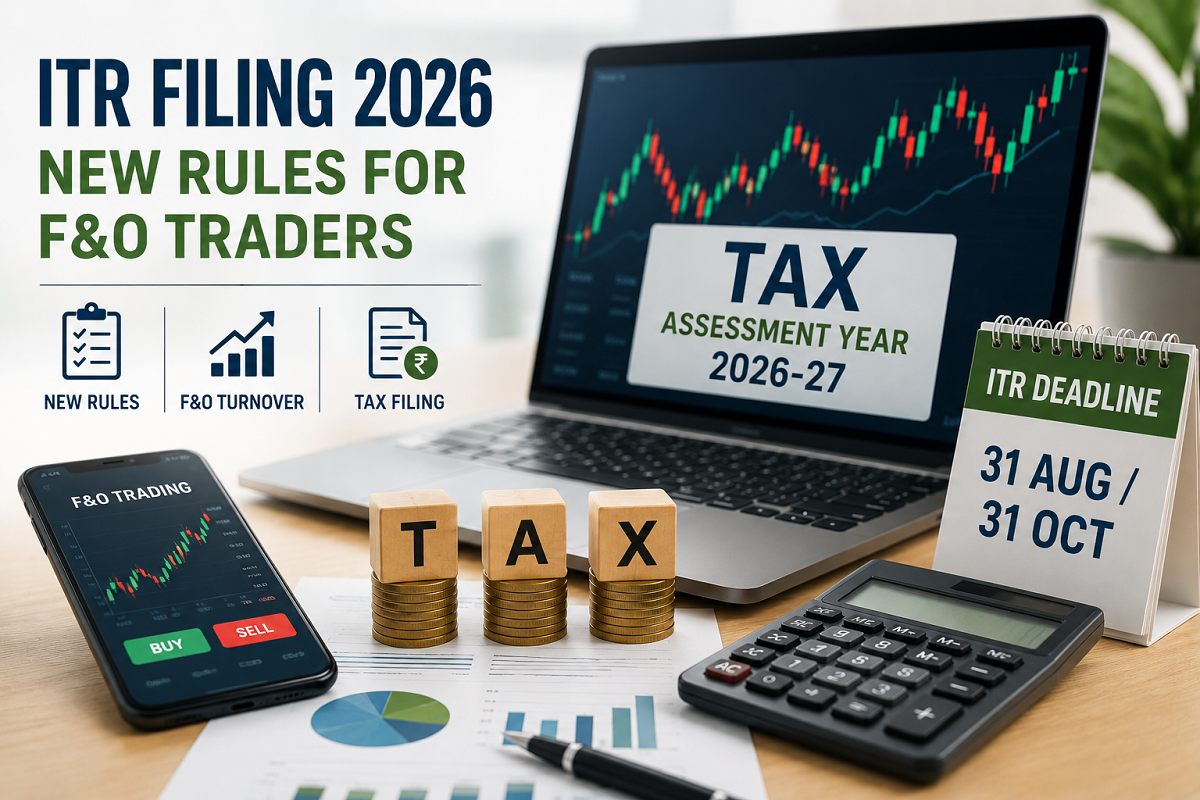
Income Tax Return 2026: Derivatives Traders Must Report F&O Turnover Separately; Know the Latest Filing Rules
If you actively trade in Futures and Options (F&O), filing your Income Tax Return (ITR) for Assessment Year 2026-27 may require extra attention this year. The Income Tax Department has introduced important reporting changes for derivatives traders, making it essential to disclose F&O turnover and profits or losses from derivative transactions separately in the ITR forms.
Whether you trade full-time or invest in F&O alongside your regular job, understanding these revised reporting requirements can help you avoid filing mistakes and determine whether a tax audit is applicable.
Here's a detailed look at the latest rules, turnover calculation methods, tax audit requirements, and key points every F&O trader should know before filing an income tax return.
Separate Disclosure of F&O Trading Details Now Required
Under the revised ITR framework for AY 2026-27, taxpayers involved in derivative trading are required to provide separate information regarding their F&O business activity.
This includes:
- Total F&O turnover
- Profit earned from derivative trades
- Loss incurred during trading
- Business income classification
The additional reporting aims to improve transparency and help tax authorities assess business income from derivatives more accurately.
F&O Income Is Treated as Business Income
One of the most important tax rules for derivatives trading is that income from Futures and Options is generally treated as non-speculative business income under the Income Tax Act.
This means that even salaried individuals who trade in F&O part-time must report such earnings under the head:
"Profits and Gains from Business or Profession (PGBP)."
The salary income and F&O business income remain separate for tax reporting purposes, although both are included while computing the total taxable income.
How Is F&O Turnover Calculated?
Unlike regular business sales, F&O turnover is not calculated on the total value of contracts traded.
Although the Income Tax Act does not prescribe a direct formula, tax professionals generally follow the guidance issued by the Institute of Chartered Accountants of India (ICAI) while calculating turnover for tax purposes.
1. Add Absolute Profit and Loss
For every completed trade, both profit and loss are considered on an absolute basis.
For example:
- Trade 1 Profit: ₹5,000
- Trade 2 Loss: ₹3,000
Your turnover will be:
₹5,000 + ₹3,000 = ₹8,000
Losses are added as positive figures while calculating turnover.
2. Option Premium Received
If you sell options (Call or Put), the premium received may also form part of turnover where applicable.
However, if the premium has already been included while calculating trading profit or loss, it should not be counted again.
3. Open Positions
Positions that remain open on 31 March are generally considered in the financial year in which they are eventually squared off or settled.
4. Reverse Trades
Any differences arising from reverse transactions are also included while arriving at the total turnover.
Why Turnover Calculation Matters
Correct turnover calculation is extremely important because it determines whether your accounts require a tax audit under the applicable provisions of the Income Tax Act.
Incorrect turnover reporting may lead to:
- Wrong ITR filing
- Audit-related issues
- Notices from the Income Tax Department
- Difficulty in carrying forward business losses
Therefore, traders are advised to maintain proper trade statements, broker reports, and profit-loss summaries throughout the financial year.
ITR Due Dates for F&O Traders
The deadline for filing your return depends on whether a tax audit is applicable.
If Tax Audit Is Not Required
Taxpayers whose turnover remains within the prescribed limits and who are not liable for audit can file their ITR by:
31 August
If Tax Audit Is Applicable
If turnover crosses the applicable audit threshold or audit provisions become applicable under the Income Tax Act, the filing deadline extends to:
31 October
Taxpayers should verify audit applicability before selecting the appropriate ITR filing schedule.
Frequently Asked Questions
Can I Carry Forward F&O Losses?
Yes, but only if you file your Income Tax Return before the prescribed due date.
Even if your total income remains below the taxable limit, timely filing is necessary if you wish to carry forward eligible business losses for adjustment against future profits.
Does F&O Income Get Added to Salary Income?
Salary income and F&O income are taxed under different heads.
Salary continues to be taxed under "Income from Salary," while derivative trading income is reported under "Business Income." Both are ultimately combined to calculate your total taxable income.
Maintain Proper Records Before Filing
Before submitting your return, traders should ensure they have:
- Annual broker P&L statement
- Trade ledger
- Contract notes
- Bank statements
- Expense records related to trading
- Turnover calculation sheet
Keeping these documents ready can simplify return filing and help during tax assessment if required.
Final Word
The revised ITR reporting requirements for AY 2026-27 make accurate disclosure of F&O trading activity more important than ever. Proper turnover calculation, correct business income reporting, and timely filing can help traders remain compliant with tax regulations while avoiding unnecessary complications.
Since tax provisions may vary depending on an individual's trading pattern, turnover, and overall income, consulting a qualified tax professional before filing the return can help ensure accurate compliance.
Disclaimer: This article is intended for informational purposes only and should not be considered tax, legal, or financial advice. Tax laws may change, and individual circumstances differ. Taxpayers should consult a qualified Chartered Accountant or tax advisor before filing their Income Tax Return.