Business
India LPG Imports 2026: UAE Overtakes US as Biggest Cooking Gas Supplier, Shipments Jump 182% in September
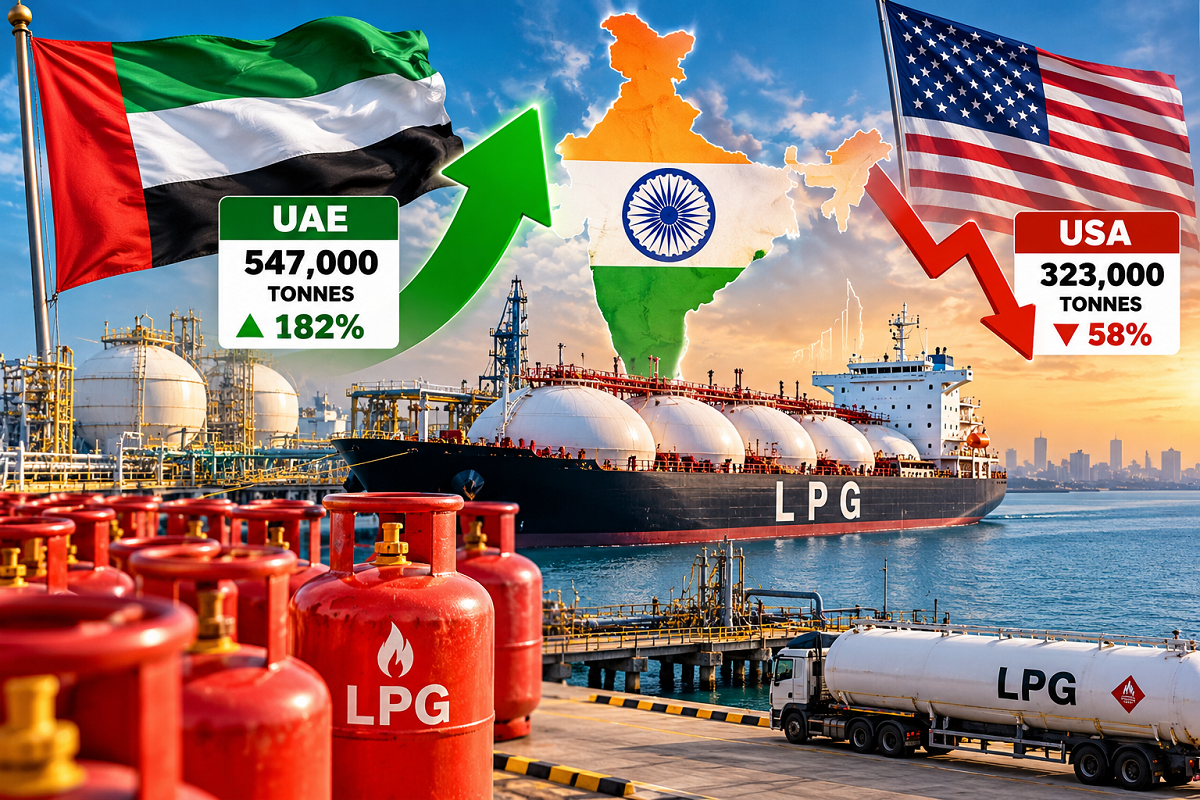
India LPG Supply Update: The United Arab Emirates (UAE) emerged as India's largest supplier of liquefied petroleum gas (LPG) in September 2026, overtaking the United States after six months of American dominance in the Indian import market. The development reflects a significant change in India's cooking gas supply network as shipments from Gulf countries recover following earlier disruptions.
According to shipping intelligence data from Kpler cited in the report, the UAE accounted for approximately 39% of India's total LPG imports during September, compared with just 13% in August.
Meanwhile, the United States slipped to second place as its shipments to India declined sharply.
The shift comes at a time when India continues to rely heavily on imported LPG to meet household and commercial demand. Changes in international supply routes, shipping costs and geopolitical conditions remain important factors for the country's energy security.
UAE LPG Shipments to India Rise Sharply in September 2026
The most notable development in September was the substantial increase in LPG shipments from the UAE.
According to the reported figures, India imported approximately 547,000 tonnes of LPG from the UAE during September, compared with around 193,000 tonnes in August.
This represents an increase of approximately 182% on a month-on-month basis.
The sharp rise helped the UAE regain a leading position among India's LPG suppliers.
In contrast, shipments from the United States fell by approximately 58%, bringing American supplies down to around 323,000 tonnes.
Consequently, the US share of India's total LPG imports declined from approximately 53% in August to 23% in September.
The figures highlight how quickly the composition of India's energy imports can change depending on international market conditions.
India LPG Imports: Country-Wise Supply Figures for September 2026
Several countries contributed to India's LPG requirements during September, although shipment volumes varied considerably.
| Supplying Country | LPG Imports in September 2026 | Monthly Change |
|---|---|---|
| United Arab Emirates | 547,000 tonnes | Up 182% |
| United States | 323,000 tonnes | Down 58% |
| Kuwait | 132,544 tonnes | Up 15.6% |
| Qatar | 115,340 tonnes | Up 76% |
| Iran | 89,000 tonnes | Not specified |
| Algeria | 24,000 tonnes | Not specified |
| Oman | 23,000 tonnes | Not specified |
| Republic of the Congo | 23,000 tonnes | Not specified |
| Brunei | 4,000 tonnes | Not specified |
The supplied data also indicates that India did not import LPG from Saudi Arabia during September.
These figures demonstrate the growing contribution of Gulf suppliers, particularly the UAE, Kuwait and Qatar, to India's LPG import basket.
India's Total LPG Imports Decline Despite Higher Gulf Shipments
Although shipments from several Middle Eastern countries increased, India's overall LPG imports declined during September.
The country reportedly imported approximately 1.39 million tonnes of LPG, representing a month-on-month decrease of around 4%.
This suggests that increased supplies from the UAE and other Gulf countries were accompanied by reduced imports from certain alternative sources, particularly the United States.
The change in supplier rankings does not necessarily indicate a corresponding increase in India's overall cooking gas consumption.
Instead, it reflects a redistribution of import volumes among different supplying nations.
Import levels can fluctuate because of cargo scheduling, commercial contracts, domestic demand, inventory requirements and international shipping conditions.
Why Has the UAE Replaced the United States as India's Leading LPG Supplier?
The recovery of LPG shipments from the Gulf region appears to be an important factor behind the UAE's rise.
Earlier disruptions around the Strait of Hormuz, linked to geopolitical tensions in West Asia, reportedly affected energy shipments from the region.
During that period, India increased its reliance on LPG cargoes from the United States to maintain supply availability.
However, as shipments from Gulf suppliers improved, the UAE was able to increase its deliveries substantially.
Its geographical proximity to India is also relevant because transportation distances from the Gulf are generally shorter than those from the United States.
Nevertheless, actual shipping costs depend on several factors, including freight rates, vessel availability, insurance premiums and maritime security conditions.
The September data indicates a major change in sourcing patterns, although it does not establish whether the UAE will retain the top position in subsequent months.
Why Is the Strait of Hormuz Important for India's LPG Supply?
The Strait of Hormuz is one of the world's most strategically important maritime passages for energy transportation.
Located between Iran and Oman, it connects the Persian Gulf with the Gulf of Oman and international shipping routes.
Large quantities of oil and petroleum products move through this region.
For India, which imports substantial volumes of LPG from Gulf countries, disruptions around the strait can create challenges for energy procurement and transportation.
Security concerns may lead to higher insurance premiums, changes in vessel routes and increased freight expenses.
Even when cargo movements improve, shipping companies may continue to account for regional security risks when determining transportation costs.
This is one reason India has an interest in maintaining multiple sources of LPG supply.
India Depends on Imports for Around 60% of Its LPG Requirements
India is one of the world's major LPG-consuming countries, with cooking gas widely used in households, restaurants and commercial establishments.
According to the figures cited in the original report, the country imports approximately 60% of its LPG requirements.
This significant dependence on overseas suppliers makes international energy market developments particularly important.
Domestic LPG consumption is supported by extensive distribution networks, including connections provided through government initiatives such as the Pradhan Mantri Ujjwala Yojana.
However, India's domestic LPG production does not fully meet demand, making imports necessary.
Historically, Gulf countries have played a major role in meeting this requirement because of their established energy infrastructure and relatively convenient shipping routes to India.
The recent increase in UAE shipments highlights the continuing importance of this relationship.
Will India Continue Buying LPG From the United States?
The decline in American LPG shipments during September does not necessarily mean India will stop purchasing cooking gas from the United States.
India has been seeking to diversify its energy import sources to reduce excessive dependence on any single country or geographical region.
The United States remains an important potential supplier, particularly when commercial conditions make American cargoes competitive.
At the same time, supplies from the UAE, Qatar, Kuwait and other countries provide additional procurement options.
Maintaining a diversified import portfolio can help India respond to temporary supply disruptions and changing international prices.
However, the balance between suppliers will continue to depend on contractual arrangements, market availability and transportation economics.
Will Changes in LPG Imports Affect Domestic Cylinder Prices?
The change in India's largest LPG supplier does not automatically mean that household cooking gas cylinder prices will increase or decrease.
Retail LPG prices are influenced by several factors, including international benchmark prices, procurement costs, exchange rates, transportation expenses and government pricing decisions.
A shift toward geographically closer suppliers could affect freight costs, but it does not guarantee cheaper cylinders for consumers.
Similarly, a decline in imports from one country does not necessarily indicate an LPG shortage if alternative suppliers can meet demand.
Consumers should therefore rely on official oil marketing company announcements for confirmed changes in domestic LPG cylinder prices.
What Does This Development Mean for India's Energy Security?
The UAE's emergence as India's leading LPG supplier in September demonstrates the flexibility of the country's international energy procurement network.
While American shipments declined considerably, increased supplies from Gulf countries helped reshape the import mix.
However, India's continued dependence on overseas LPG means that geopolitical tensions, shipping disruptions and international market fluctuations remain important concerns.
Diversifying supply sources, maintaining reliable commercial relationships and managing transportation risks will continue to be central considerations.
Conclusion
September 2026 marked a significant shift in India's LPG import pattern, with the UAE overtaking the United States to become the country's largest cooking gas supplier.
Reported UAE shipments increased by approximately 182% to 547,000 tonnes, while American supplies fell to around 323,000 tonnes.
Despite the increase in Gulf shipments, India's total LPG imports declined by approximately 4% to 1.39 million tonnes.
The development highlights the renewed importance of Middle Eastern suppliers while reinforcing India's need to maintain a diversified and dependable LPG procurement strategy.
Note: Import volumes and percentage changes in this article are based on the Kpler data cited in the supplied report. Figures are approximate and may be subject to revisions.