Business
ATM Withdrawal Charges 2026: Using Another Bank's ATM? Check Free Limits and ₹23 Transaction Fee
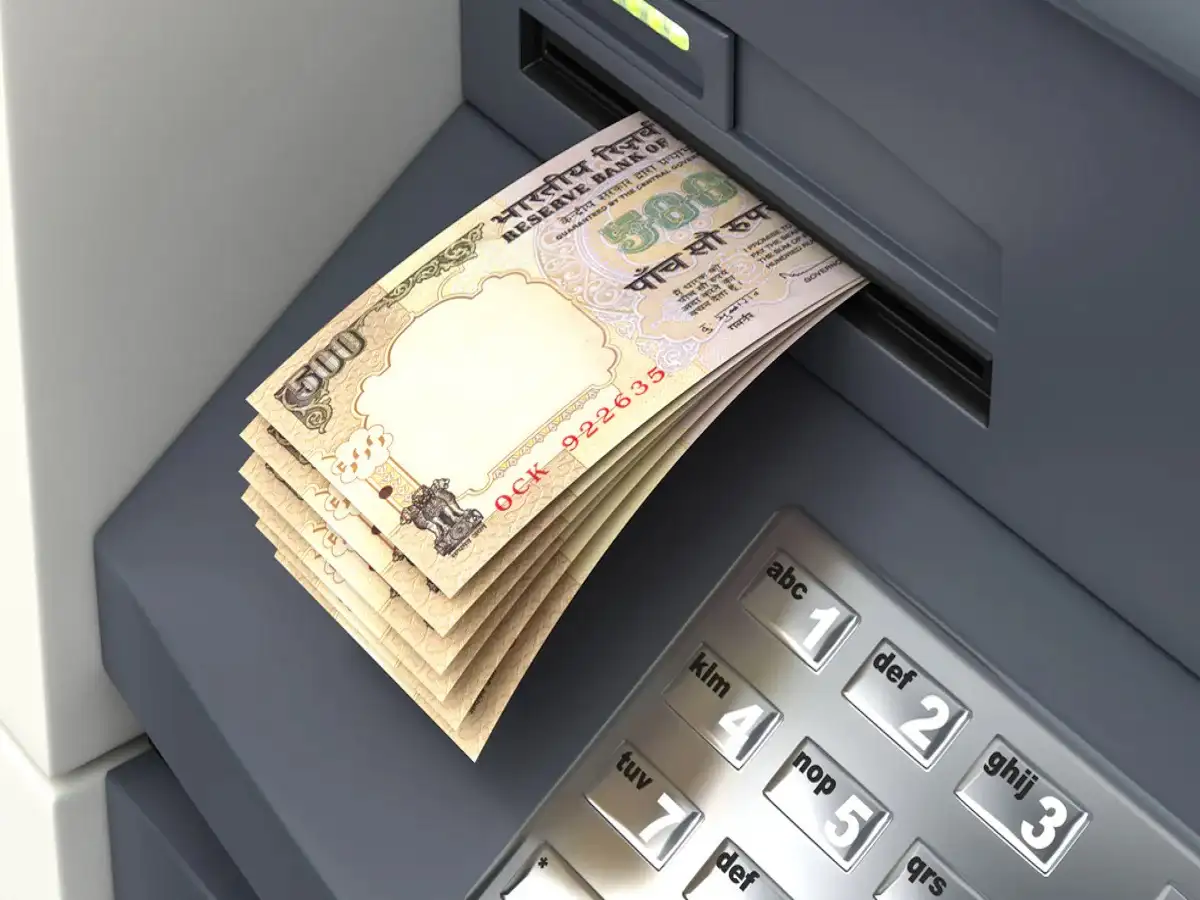
ATM Withdrawal Charges 2026: Digital payments have transformed banking in India, allowing customers to transfer money, pay bills and shop online without carrying cash. However, ATMs remain essential whenever people need physical currency for everyday expenses, emergencies or transactions where digital payments are unavailable.
Many customers use ATMs operated by banks other than the one where they maintain their accounts. While this facility offers convenience, withdrawing cash repeatedly from another bank's ATM can result in additional charges.
The Reserve Bank of India (RBI) has established rules governing free ATM transactions and the maximum fees banks can charge once customers exceed their monthly limits.
Under the revised rules effective from May 1, 2025, banks can charge up to ₹23 per transaction, excluding applicable taxes, after the prescribed free transaction limit is exhausted.
Here is a detailed explanation of the ATM withdrawal rules, free transaction limits in metro and non-metro cities, and ways to avoid unnecessary banking charges.
How Many Free Transactions Are Allowed at Other Banks' ATMs?
Customers can use ATMs belonging to other banks without paying additional charges for a specified number of transactions every month.
The number of free transactions depends on whether the ATM is located in a metro or non-metro city.
Under the RBI framework, customers are generally entitled to:
- Metro cities: Three free transactions per month at other banks' ATMs.
- Non-metro cities: Five free transactions per month at other banks' ATMs.
These limits cover eligible financial and non-financial transactions.
The metro classification for this purpose covers six cities: Mumbai, New Delhi, Chennai, Kolkata, Bengaluru and Hyderabad.
Other locations generally fall under the non-metro category.
For example, if a customer uses another bank's ATM in Delhi, the standard free limit is three transactions per month.
However, if the same customer uses another bank's ATM in Jaipur, the standard limit is five free transactions.
Some banks may provide additional free transactions depending on the customer's account type or banking relationship.
ATM Charges After Free Limit: How Much Will You Pay?
Once the monthly free transaction allowance is exhausted, banks may charge customers for subsequent ATM transactions.
The RBI revised the maximum permissible charge with effect from May 1, 2025.
Under the revised framework, banks can charge a maximum of ₹23 per transaction, excluding applicable taxes.
Previously, the maximum charge was ₹21 per transaction.
This means customers who frequently withdraw money from other banks' ATMs may face higher banking expenses.
For example, if a bank charges the maximum ₹23 and 18% GST applies, the total charge would be approximately ₹27.14 for one additional transaction.
The following table illustrates the potential cost.
| Additional ATM Transactions | Charges Before GST | Approximate Charges Including 18% GST |
|---|---|---|
| 1 | ₹23 | ₹27.14 |
| 2 | ₹46 | ₹54.28 |
| 3 | ₹69 | ₹81.42 |
| 4 | ₹92 | ₹108.56 |
| 5 | ₹115 | ₹135.70 |
These are illustrative calculations based on the maximum permissible transaction charge.
The actual amount deducted may depend on the customer's bank, account category and applicable tax treatment.
Does Checking Your ATM Balance Count as a Transaction?
Many customers believe ATM charges apply only when cash is withdrawn.
However, this is not always correct.
Certain non-financial services performed at another bank's ATM may also count toward the monthly free transaction allowance.
These can include balance enquiries and requests for mini statements.
For example, suppose a customer uses another bank's ATM three times in a metro city.
The first visit is for a cash withdrawal, the second is for a balance enquiry and the third is for another withdrawal.
These activities may together exhaust the customer's three free transactions for that month.
A subsequent eligible transaction could therefore attract charges.
To avoid using the free allowance unnecessarily, customers can check their account balances through mobile banking applications, internet banking or other bank-supported digital services.
Are Transactions Free at Your Own Bank's ATM?
Using an ATM operated by your own bank generally provides a separate free transaction allowance.
Under the standard RBI framework, savings bank account holders are generally entitled to at least five free transactions per month at their own bank's ATMs, irrespective of location.
These may include eligible financial and non-financial transactions.
However, banks can offer more generous benefits depending on the account category.
For example, some premium savings accounts, salary accounts or special banking packages may provide additional free ATM transactions.
Customers should check their bank's official schedule of charges to understand the benefits available with their accounts.
ATM Free Transaction Limits 2026: Quick Comparison
| ATM Category | Standard Monthly Free Transactions |
|---|---|
| Own bank's ATM | At least 5 |
| Other bank's ATM in metro cities | 3 |
| Other bank's ATM in non-metro cities | 5 |
| Transactions beyond free limit | Up to ₹23 each, excluding taxes |
The actual number of free transactions may be higher for certain account categories.
The standard limits should not automatically be assumed to apply identically to every type of banking account.
What Happens If an ATM Transaction Fails?
Sometimes an ATM transaction fails because of a technical issue, connectivity problem or insufficient cash inside the machine.
If money is debited from the customer's account but cash is not dispensed, the bank is required to follow the applicable RBI rules for failed ATM transactions.
Under the established RBI framework, failed ATM cash withdrawal transactions involving an account debit must generally be reversed within five calendar days of the transaction.
If the bank fails to complete the reversal within the prescribed period, compensation of ₹100 per day may become payable for the delay, subject to the applicable rules.
Customers should preserve transaction details and contact their bank if a failed withdrawal is not resolved within the prescribed period.
How Can You Avoid Extra ATM Withdrawal Charges?
ATM charges may appear small individually, but repeated fees can add up over time.
Customers can reduce these expenses by planning their cash requirements and monitoring their monthly transaction usage.
Using their own bank's ATM whenever practical can help them benefit from the separate free transaction allowance.
It may also be useful to withdraw an appropriate amount of cash in fewer visits rather than making several small withdrawals.
However, customers should avoid carrying unnecessarily large amounts of cash because of security risks.
For routine balance enquiries, mobile banking and internet banking are generally more convenient alternatives.
Account holders should also review SMS alerts and bank statements to identify any unexpected ATM-related deductions.
Do All Bank Customers Pay the Same ATM Charges?
Not necessarily.
ATM charges can vary depending on the account category, bank policies and applicable regulatory provisions.
Certain account types may receive additional free transactions or special benefits.
For example, Basic Savings Bank Deposit Account holders are subject to specific banking service requirements, and customers should check the conditions applicable to their accounts.
Similarly, premium banking customers may receive additional ATM transaction benefits.
Therefore, the maximum RBI-permitted charge should not be confused with a compulsory fee charged by every bank in every situation.
Final Takeaway
Using another bank's ATM is convenient, but customers should understand the monthly free transaction limits to avoid unnecessary charges.
Under the standard rules, customers generally receive three free transactions at other banks' ATMs in metro cities and five in non-metro locations.
After the free allowance is exhausted, banks may charge up to ₹23 per transaction, excluding applicable taxes.
Balance enquiries and other eligible non-financial ATM activities may also count toward the free transaction limit.
Customers who regularly need cash should monitor their ATM usage, check their bank's applicable charges and use digital banking services for routine account enquiries.
Disclaimer: This article provides general information about ATM transaction charges. Actual fees and free transaction benefits may vary according to the bank, account type and applicable regulatory conditions. Customers should refer to their bank's latest official schedule of charges.