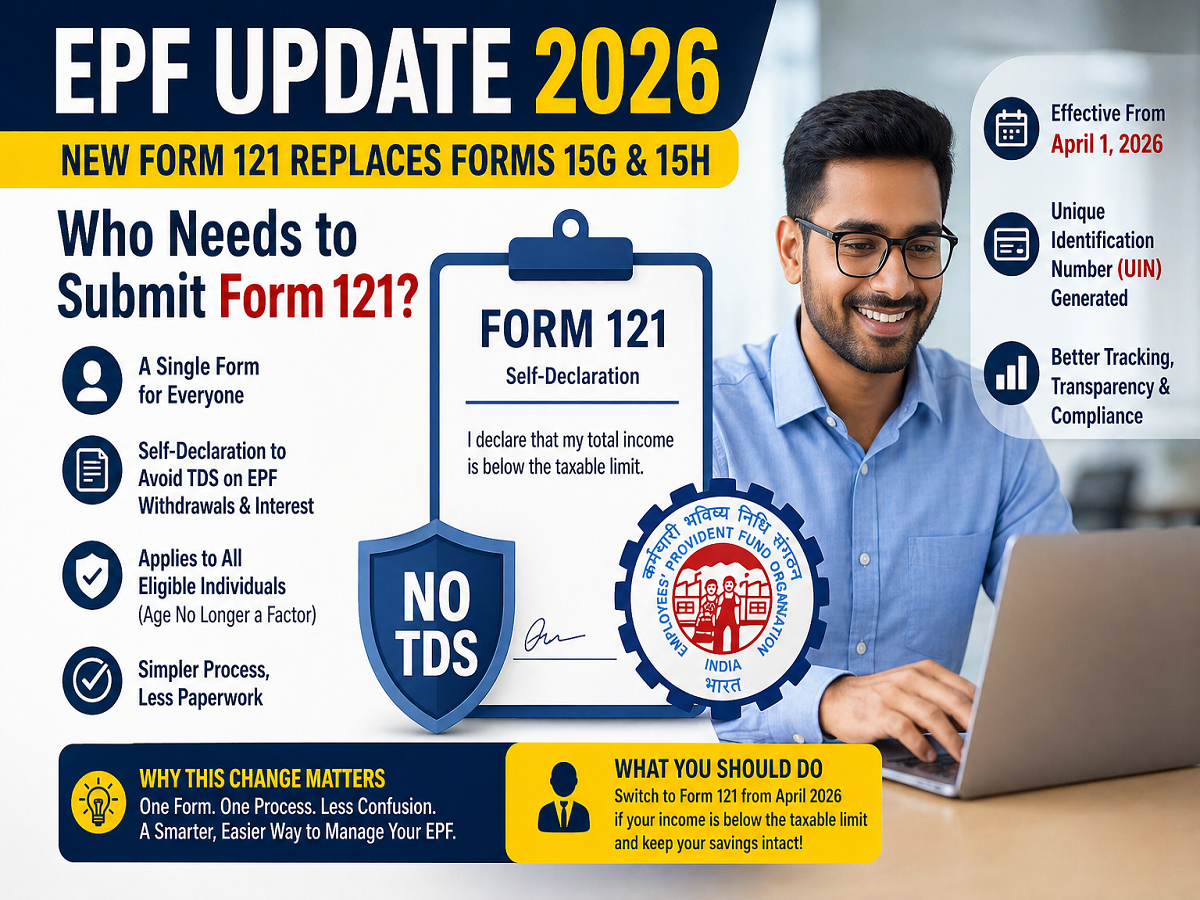
India’s provident fund system is set for a major upgrade. Starting April 1, 2026, the Employees' Provident Fund Organisation (EPFO) will introduce Form 121, replacing the widely used Forms 15G and 15H. This change comes under the new Income Tax framework and aims to simplify tax-related declarations for millions of EPF subscribers.
Here’s everything you need to know about who should submit Form 121, how it works, and why this shift is important.
What is Changing in EPF Rules?
Until now, EPF members had to submit different forms to avoid TDS (Tax Deducted at Source):
- Form 15G for individuals below 60 years
- Form 15H for senior citizens
This dual system often created confusion and extra paperwork. With the introduction of Form 121, both these forms will be replaced by a single, unified declaration.
What is Form 121?
Form 121 is a self-declaration form that confirms your total annual income is below the taxable limit. Once submitted:
- EPFO or banks will not deduct TDS on eligible EPF withdrawals or interest
- Your income status is officially recorded under the new system
This makes it especially useful for individuals who fall below the tax bracket and want to avoid unnecessary tax deductions.
Who Needs to Submit Form 121?
You should submit Form 121 if:
- Your total annual income is below the taxable threshold
- You are withdrawing EPF funds or earning interest on them
- You want to avoid TDS deductions legally
Unlike earlier rules, age no longer matters—both senior citizens and younger individuals will use the same form.
How the New System Works
Once you submit Form 121:
- A Unique Identification Number (UIN) is generated
- This UIN includes details like the financial year, institution code (TAN), and a serial number
- Authorities can track and verify your declaration easily
This system improves accuracy and reduces duplication or errors.
What About Forms 15G and 15H?
After April 1, 2026:
- You can still submit Forms 15G or 15H temporarily
- However, they will not fully align with the new system
- Eventually, switching to Form 121 will be necessary for proper compliance
So, it’s better to adopt the new format early to avoid issues later.
Why This Change is Important
The introduction of Form 121 is part of a broader effort to modernize India’s tax compliance system. Key benefits include:
- Simplified process with one form instead of two
- Reduced confusion for taxpayers
- Better transparency through UIN tracking
- Faster processing for institutions and users
For EPF members, this means less paperwork and more clarity.
What EPF Members Should Do Now
If you are an EPF subscriber, here’s what you should keep in mind:
- Stay updated about Form 121 implementation
- Be ready to switch from Forms 15G/15H
- Submit the form if your income is below the taxable limit
- Ensure timely filing to avoid unnecessary TDS
Final Takeaway
The introduction of Form 121 by the Employees' Provident Fund Organisation marks a significant step toward simplifying tax procedures for EPF users.
With one unified form replacing multiple declarations, the process becomes easier, faster, and more transparent. If you fall below the taxable income limit, submitting Form 121 on time can help you protect your savings and avoid unnecessary tax deductions.