ASTROLOGY
Diwali Safety Tips 2026: Avoid These Firecracker Mistakes to Protect Your Family From Burns and Accidents
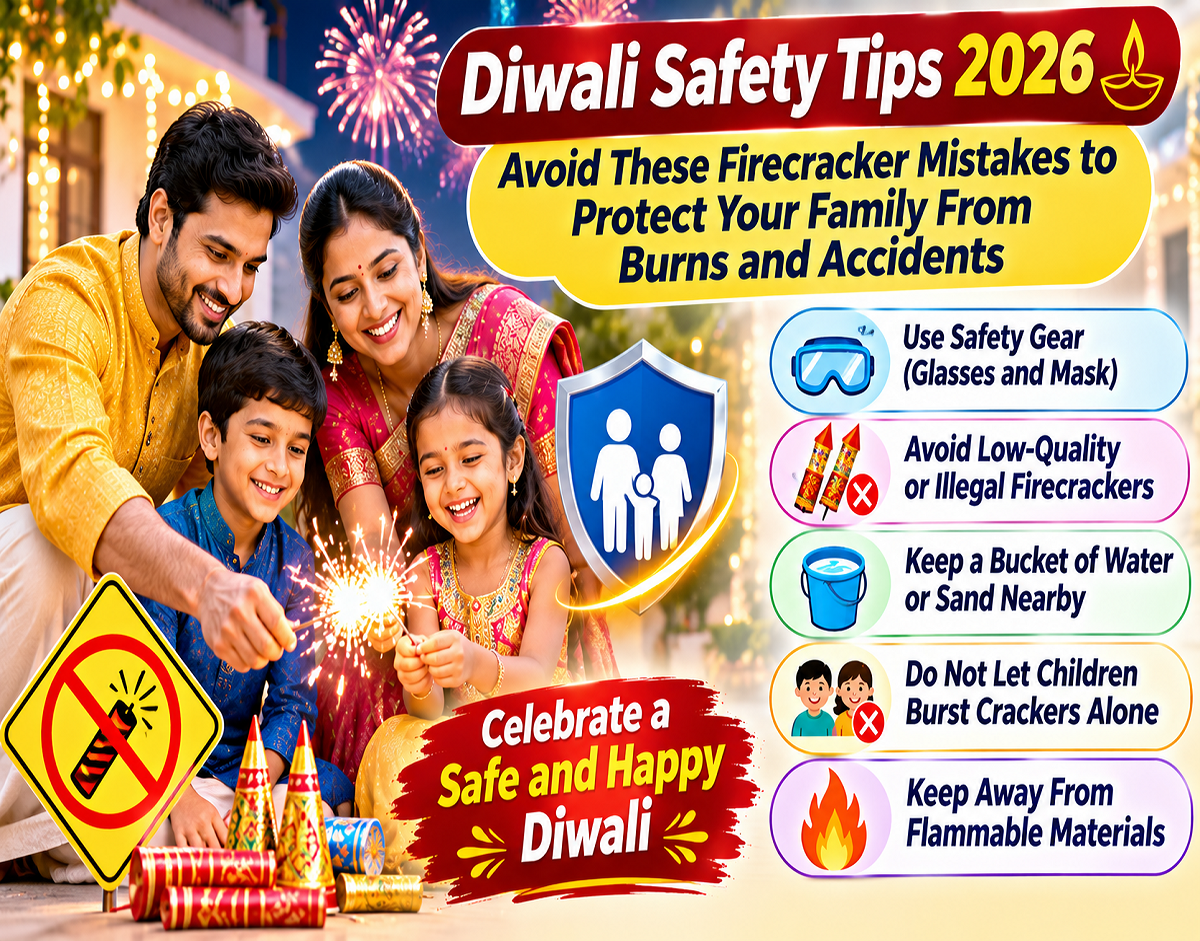
Diwali Safety Tips 2026: Diwali is a festival of lights, happiness and family celebrations. Homes are decorated with colourful lights, traditional diyas, candles and rangoli, while many people celebrate with sweets, gifts and fireworks. However, even a small mistake while handling firecrackers or decorative lights can lead to serious injuries, burns or fire-related accidents.
As families prepare for Diwali 2026, following basic safety precautions becomes especially important. Children, elderly people and pets may be particularly vulnerable to accidents, loud noises and smoke during festive celebrations.
From selecting appropriate firecrackers to placing oil lamps safely and handling minor burns, a few preventive measures can significantly reduce the risk of emergencies.
The Petroleum and Explosives Safety Organisation (PESO) provides safety guidance for handling fireworks. Citizens should also follow applicable local restrictions on the sale, possession and use of firecrackers.
Here are the important precautions everyone should know before celebrating Diwali.
Diwali Firecracker Safety Rules 2026: Important Precautions
Firecrackers can cause burns, eye injuries and accidental fires when handled carelessly. Therefore, people should exercise caution and avoid unsafe practices.
Before using any fireworks, carefully read the safety instructions printed on the packaging.
Consumers should purchase only legally permitted fireworks from authorised sellers and avoid products with damaged packaging or unclear instructions.
Important firecracker safety precautions include:
- Choose an open space: Use fireworks only in a legally permitted, spacious outdoor area away from buildings, vehicles, trees and flammable materials.
- Light one firecracker at a time: Avoid lighting multiple fireworks simultaneously.
- Maintain a safe distance: Move away immediately after lighting a firecracker and keep spectators at the distance specified on its packaging.
- Supervise children: Never allow children to handle fireworks without responsible adult supervision. Young children should not ignite fireworks.
- Keep emergency supplies nearby: Maintain access to water, sand and an appropriate fire extinguisher.
- Wear suitable clothing: Avoid loose-fitting and highly flammable synthetic garments.
- Never relight failed fireworks: Do not approach, inspect or attempt to ignite a firecracker that has failed to function.
- Dispose of used fireworks carefully: Allow them to cool completely before handling and follow safe disposal instructions.
People should never throw fireworks towards others or use them inside homes, enclosed spaces or crowded areas.
Never Make These Common Firecracker Mistakes
Some dangerous practices can turn festive celebrations into emergencies.
Holding a firecracker while lighting it is particularly risky because it can explode unexpectedly.
People should also avoid placing fireworks inside bottles, metal containers or other objects that may break or scatter dangerous fragments.
Another serious mistake is attempting to relight a firecracker that did not ignite properly.
Such fireworks may still contain an active ignition mechanism and could explode unexpectedly.
Firecrackers should never be carried in pockets or stored near flames, heaters or electrical equipment.
Individuals should also avoid using fireworks after consuming alcohol or other substances that impair judgement.
Following these precautions can help prevent injuries and property damage.
Diwali 2026: Safety Tips for Diyas, Candles and Decorative Lights
Traditional diyas and candles are an important part of Diwali celebrations, but they also require careful handling.
Oil lamps should always be placed on stable, non-flammable surfaces.
Avoid positioning diyas near curtains, paper decorations, furniture, clothing or other materials that could catch fire.
When decorating balconies or entrances, ensure that lamps cannot be knocked over by children, pets or strong winds.
Do not place burning candles near electrical wires or decorative lighting arrangements.
Before going to bed or leaving the house, extinguish all unattended diyas, candles and incense sticks.
Electrical Lighting Safety
Many households use LED strings and decorative lights during Diwali.
Before installation, inspect the wires, plugs and connections for visible damage.
Avoid using decorative lights with exposed wiring, broken insulation or loose electrical connections.
Do not overload sockets by connecting several high-power appliances or lighting systems to a single outlet.
Outdoor decorations should use electrical products suitable for outdoor conditions.
Damaged lighting equipment should be replaced rather than repaired temporarily with unsafe wiring arrangements.
What to Do If Someone Gets Burned by a Firecracker
Immediate and appropriate first aid can help reduce the severity of a burn injury.
If someone suffers a burn, follow these basic steps:
- Move the person away from the fire or source of heat.
- Cool the affected area under cool, gently running water for 20 minutes.
- Remove rings, watches or tight accessories near the affected area before swelling develops, provided they are not stuck to the skin.
- Cover the burn loosely with a clean, non-stick dressing or suitable clean covering.
- Seek medical assistance if the injury is serious or involves sensitive areas.
Never apply ice, toothpaste, ghee, butter, oil or household creams directly to a fresh burn.
These substances may worsen tissue damage, interfere with treatment or increase the risk of complications.
Do not burst blisters or pull away clothing stuck to burned skin.
Burns involving the face, hands, feet, genitals or major joints, as well as large, deep or electrical burns, require prompt medical evaluation.
Firecracker Eye Injury: What Should You Do Immediately?
Fireworks can cause serious eye injuries, including damage from sparks, hot particles and flying fragments.
If a spark or chemical irritant enters the eye without an obvious penetrating injury, gently rinsing with clean water may be appropriate.
However, if an explosion causes an eye injury, there is bleeding, severe pain, reduced vision or a suspected embedded object, do not rub, press or rinse the injured eye.
Instead, protect it from pressure using a rigid shield if available and seek emergency medical care immediately.
Never attempt to remove an object embedded in the eye.
Eye injuries caused by fireworks should be assessed promptly by a medical professional because serious damage may not always be immediately visible.
How to Protect Children During Diwali Celebrations
Children are often excited about fireworks, decorative lights and festive activities.
However, their curiosity can expose them to unnecessary risks.
Parents and guardians should establish clear safety rules before celebrations begin.
Young children should remain away from fireworks and ignition materials.
Even sparklers can become extremely hot and cause serious burns.
Children should not be allowed to pick up used fireworks or investigate firecrackers that failed to ignite.
Adults should also ensure that fireworks are stored securely and remain inaccessible to children.
Families can consider safer activities such as rangoli making, decorating homes and participating in traditional prayers.
Diwali Pet Safety Tips: Protect Animals From Loud Firecracker Noise
Fireworks can be distressing for pets because of their sudden loud sounds, flashes and smoke.
Dogs, cats and other animals may become frightened, restless or disoriented during celebrations.
Pet owners should prepare a quiet indoor space where animals can remain comfortable.
Keep doors, windows and gates securely closed to prevent frightened pets from escaping.
Avoid taking animals near fireworks displays.
Providing familiar bedding and maintaining a calm environment may help reduce their anxiety.
If an animal experiences severe distress, owners should consult a veterinarian for appropriate advice.
Medication should never be administered without professional guidance.
Firecracker Restrictions in 2026: Check Local Rules Before Celebrating
Firecracker regulations can differ across Indian states and cities.
Some locations may impose restrictions on certain types of fireworks, permitted hours, sales or designated areas.
Residents should check the latest directions issued by their state government, local administration and pollution-control authorities before purchasing or using fireworks.
Products described as green crackers may also be subject to specific legal requirements and restrictions.
Consumers should not assume that every type of firecracker is permitted simply because it is available for sale.
Following local rules is essential for public safety and environmental protection.
Diwali Emergency Preparedness: Keep These Essentials Ready
Families should make basic emergency preparations before beginning their celebrations.
A first-aid kit, clean water, emergency contact numbers and suitable fire-safety equipment should be readily accessible.
Everyone in the household should know how to leave the premises safely if a fire occurs.
If clothing catches fire, the affected person should stop, drop and roll to help extinguish the flames.
In case of a serious fire, evacuate immediately and contact emergency services rather than attempting to control a dangerous blaze.
In India, 112 is the national emergency response number.
Quick action and appropriate first aid can make a significant difference during an emergency.
Celebrate Diwali 2026 Safely and Responsibly
Diwali is an occasion to celebrate light, happiness and togetherness. However, festive enjoyment should never come at the cost of personal safety or the well-being of others.
Simple precautions such as keeping fireworks away from children, maintaining a safe distance, avoiding damaged electrical decorations and placing diyas carefully can reduce the chances of accidents.
Families should also consider the needs of elderly people, neighbours, pets and individuals affected by smoke or loud noise.
Choosing celebrations that minimise fire hazards, noise and pollution can help make Diwali more enjoyable for everyone.
The most important Diwali safety rule is simple: celebrate responsibly, follow local regulations and never ignore basic fire precautions.