Business
Ayushman Bharat 2026: MP Proposes ₹10 Lakh Health Cover and Heart, Liver, Lung Transplant Benefits
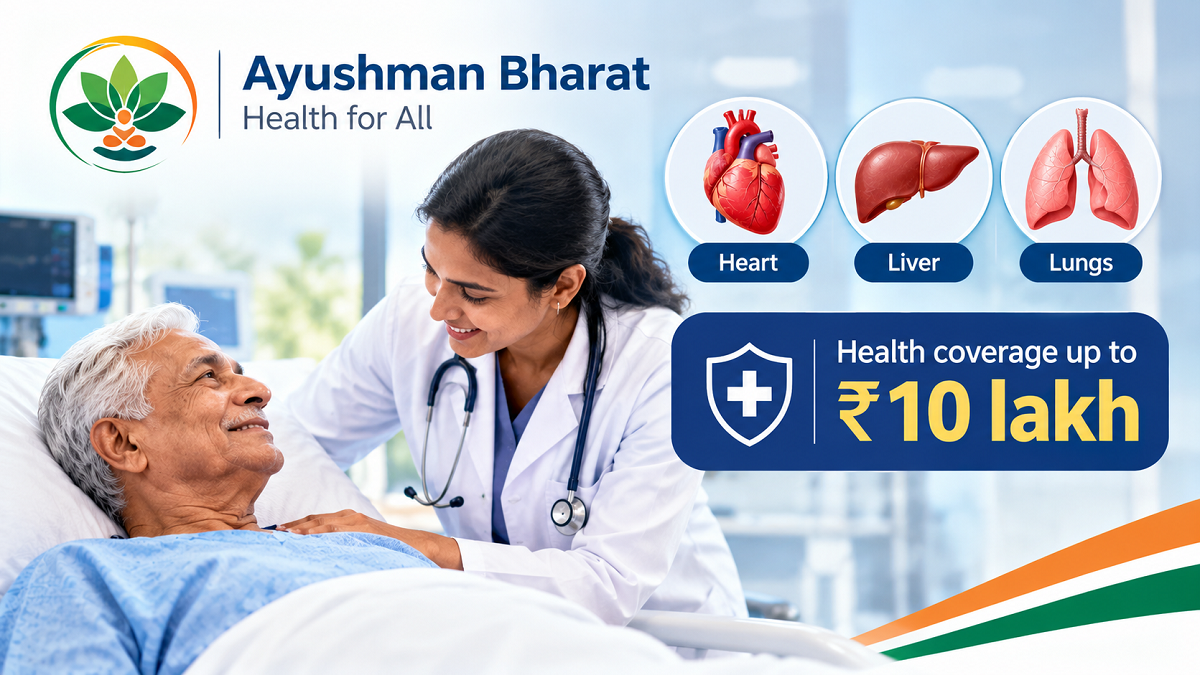
Ayushman Bharat Yojana 2026: The Madhya Pradesh government is reportedly considering a major expansion of its Ayushman Bharat Niramayam health insurance programme to provide financial assistance for expensive organ transplant procedures. The proposed changes could bring heart, liver and lung transplants within the scheme's treatment packages while potentially increasing the annual health coverage limit from ₹5 lakh to ₹10 lakh.
The development could offer significant relief to economically vulnerable families who struggle to afford advanced medical treatment. Organ transplantation often involves substantial expenses, including surgery, hospitalisation, intensive care, medicines and long-term follow-up treatment.
According to a report published on October 21, 2026, medical experts are examining the costs associated with these procedures and preparing recommendations for possible treatment packages.
However, the changes remain proposals under consideration. The reported ₹10 lakh coverage and additional transplant benefits should not be treated as officially available until the government approves and implements the revised scheme.
Ayushman Bharat Niramayam Scheme: What Changes Are Being Considered?
Madhya Pradesh implements the Ayushman Bharat Pradhan Mantri Jan Arogya Yojana (AB PM-JAY) through its state health assurance framework, commonly referred to as Ayushman Bharat Niramayam.
The programme aims to reduce the financial burden of eligible families requiring hospital treatment.
Under the existing PM-JAY framework, eligible households generally receive health coverage of up to ₹5 lakh per family per year for approved secondary and tertiary hospitalisation services.
The proposed expansion in Madhya Pradesh could introduce additional benefits for patients requiring complex organ transplantation.
Key Highlights of the Reported Proposal
| Proposed Change | Details |
|---|---|
| Existing general coverage | ₹5 lakh per eligible family per year |
| Proposed coverage | Up to ₹10 lakh annually |
| Additional procedures under consideration | Heart, liver and lung transplants |
| Expert assessment | Medical specialists, reportedly including AIIMS experts |
| Potential package components | Surgery, tests, ICU, medicines and post-transplant care |
| Implementation status | Under consideration; final approval awaited |
The final benefits, eligibility conditions and treatment package rates will depend on government decisions and official notifications.
Heart, Liver and Lung Transplants May Receive Financial Support
One of the most significant aspects of the proposal is the possible inclusion of three major transplant procedures.
Heart transplantation is performed for selected patients with severe heart failure when other treatment options are no longer sufficient.
Liver transplantation may be necessary for patients with advanced liver disease or certain other serious medical conditions.
Lung transplantation can be considered for carefully selected patients with advanced lung disease who meet transplant eligibility requirements.
These procedures require specialised medical teams, advanced hospital infrastructure and extensive clinical monitoring.
The proposed expansion could make treatment more accessible to eligible patients if the government introduces approved packages and participating hospitals are equipped to provide the services.
However, transplant eligibility is determined by medical assessment, organ availability and applicable clinical and legal requirements. Insurance coverage alone does not guarantee that a transplant can be performed.
Why Is Organ Transplant Treatment So Expensive?
Organ transplantation is among the most complex categories of medical treatment.
Expenses may begin long before surgery, with patients requiring specialist consultations, diagnostic tests and assessments to determine whether transplantation is appropriate.
The procedure itself involves specialised surgeons, anaesthesia teams, intensive care facilities and advanced medical equipment.
After surgery, patients often require close monitoring and medicines to reduce the risk of organ rejection.
These costs can create a major financial challenge for families, especially when treatment is needed urgently.
The October 21 report provides the following indicative estimates for transplant treatment in private hospitals.
| Organ Transplant | Reported Estimated Cost |
|---|---|
| Kidney transplant | ₹15 lakh–₹20 lakh |
| Liver transplant | ₹30 lakh–₹35 lakh |
| Heart transplant | ₹40 lakh–₹50 lakh |
| Lung transplant | ₹60 lakh–₹70 lakh |
These are broad estimates quoted in the source report, not standard or officially approved treatment prices.
Actual costs can vary substantially depending on the hospital, patient condition, procedure, complications and duration of care. Some procedures may cost less or more than the amounts listed.
Will the Proposed ₹10 Lakh Cover Pay the Entire Transplant Bill?
An increase in the annual coverage ceiling could reduce the financial burden on eligible patients, but it would not necessarily cover every expense associated with an organ transplant.
For example, if a treatment costs ₹30 lakh and the approved insurance package covers only ₹10 lakh, a substantial funding gap could remain unless additional government assistance or other financial support is available.
The actual amount payable under the scheme would depend on the approved package rate, coverage rules and hospital arrangements.
The government would also need to clarify whether the proposed ₹10 lakh limit applies to all covered treatments or whether certain transplant procedures would receive separate financial provisions.
Until official guidelines are released, patients should not assume that every transplant-related expense will be reimbursed.
Expert Committee Reportedly Reviewing Treatment Package Costs
The source report states that a committee of doctors and medical experts, including specialists associated with AIIMS, is examining the financial requirements of transplant procedures.
The committee is reportedly assessing the costs of surgery and associated hospital services to help determine suitable package rates.
A comprehensive transplant package may need to account for several stages of treatment, including pre-operative investigations, hospital admission, surgery, intensive care and post-operative monitoring.
Medicines and follow-up care are particularly important because transplant recipients may require long-term medical supervision.
The precise services included in any future package will depend on the government's final approval.
AIIMS Bhopal May Support Organ Donation Training
Alongside the proposed insurance expansion, Madhya Pradesh is reportedly planning measures to strengthen its organ donation and transplantation infrastructure.
According to the report, AIIMS Bhopal is expected to play a role in training healthcare professionals associated with government medical colleges.
The proposed training would focus on important aspects of organ donation and transplantation coordination.
These include identifying potential donors, understanding brain-stem death certification procedures, communicating with families and coordinating the preservation and transportation of donated organs.
Strengthening these capabilities could help hospitals manage complex donation and transplant processes more effectively.
Why Are Brain-Stem Death Certification and Donor Counselling Important?
Organ donation requires strict medical, ethical and legal safeguards.
In India, deceased organ donation must follow the applicable provisions of the Transplantation of Human Organs and Tissues Act and associated rules.
Brain-stem death certification is a formal medical process conducted according to prescribed legal requirements.
Healthcare professionals must also communicate sensitively with families and explain the donation process clearly.
Proper counselling helps families understand the medical circumstances, legal requirements and available choices.
Training healthcare workers in these areas is an important part of developing a responsible and transparent organ donation system.
What Is a Green Corridor for Organ Transportation?
A green corridor is a coordinated transport arrangement designed to move donated organs between locations as efficiently as possible.
Organ transplantation is time-sensitive because donated organs remain suitable for transplantation only for limited periods under appropriate preservation conditions.
Hospitals, transport teams and traffic authorities may coordinate to reduce delays when moving organs from a donor hospital to a transplant centre.
The proposed training initiative reportedly includes coordination related to organ preservation and green corridor arrangements.
Such infrastructure can support transplantation services, although it does not eliminate the need for donor-recipient matching, clinical assessment and regulatory compliance.
Who Could Benefit From the Proposed Expansion?
If approved, the expanded coverage could potentially help eligible Ayushman Bharat beneficiaries in Madhya Pradesh who require one of the newly covered procedures.
However, patients would still need to satisfy the scheme's eligibility requirements and the medical criteria for transplantation.
The procedure would also need to be available through an authorised hospital operating under the applicable programme arrangements.
Beneficiaries should confirm whether a specific hospital is empanelled and whether the required procedure is included in the approved treatment packages.
It is important to remember that the reported proposal is specific to Madhya Pradesh and should not be interpreted as a nationwide increase in PM-JAY coverage.
How to Check Ayushman Bharat Eligibility and Hospital Coverage
Residents can use official Ayushman Bharat resources to obtain information about beneficiary eligibility and available services.
The National Health Authority provides information through its official website at nha.gov.in.
Beneficiaries can also visit the official Ayushman Bharat beneficiary portal for applicable beneficiary services.
Patients considering specialised treatment should contact an authorised Ayushman Bharat help desk at an empanelled hospital.
They should verify the current treatment package, pre-authorisation requirements and any expenses that may fall outside the scheme before proceeding.
For transplant-related care, medical decisions should always be made in consultation with qualified specialists.
Has the ₹10 Lakh Ayushman Bharat Coverage Been Implemented?
Based on the supplied October 21, 2026 report, Madhya Pradesh is considering the expansion rather than announcing that all proposed benefits have already become operational.
The report does not provide a confirmed implementation date or a final government notification establishing the revised coverage.
Therefore, eligible families should continue to rely on the currently applicable scheme benefits until the state government formally announces any changes.
Patients should also avoid assuming that heart, liver and lung transplants are automatically covered under a new package without checking the latest official list of approved procedures.
Final Word
Madhya Pradesh's reported plan to expand Ayushman Bharat Niramayam could represent an important development in financial support for patients requiring complex medical treatment.
The proposal includes the possible introduction of heart, liver and lung transplant packages, along with an increase in annual health coverage from ₹5 lakh to ₹10 lakh.
The state is also reportedly exploring measures to strengthen organ donation infrastructure and provide specialised training to healthcare professionals.
If approved and effectively implemented, these initiatives could improve access to advanced treatment for eligible families.
However, the final coverage amount, transplant package rates, eligibility conditions and implementation timeline will depend on official government decisions.
Editorial note: The proposed ₹10 lakh coverage, inclusion of heart, liver and lung transplants, and AIIMS Bhopal training arrangements are based on the supplied October 21, 2026 report. They have not been independently verified through a current Madhya Pradesh government notification. The transplant cost ranges are indicative estimates and should not be interpreted as official scheme package rates.