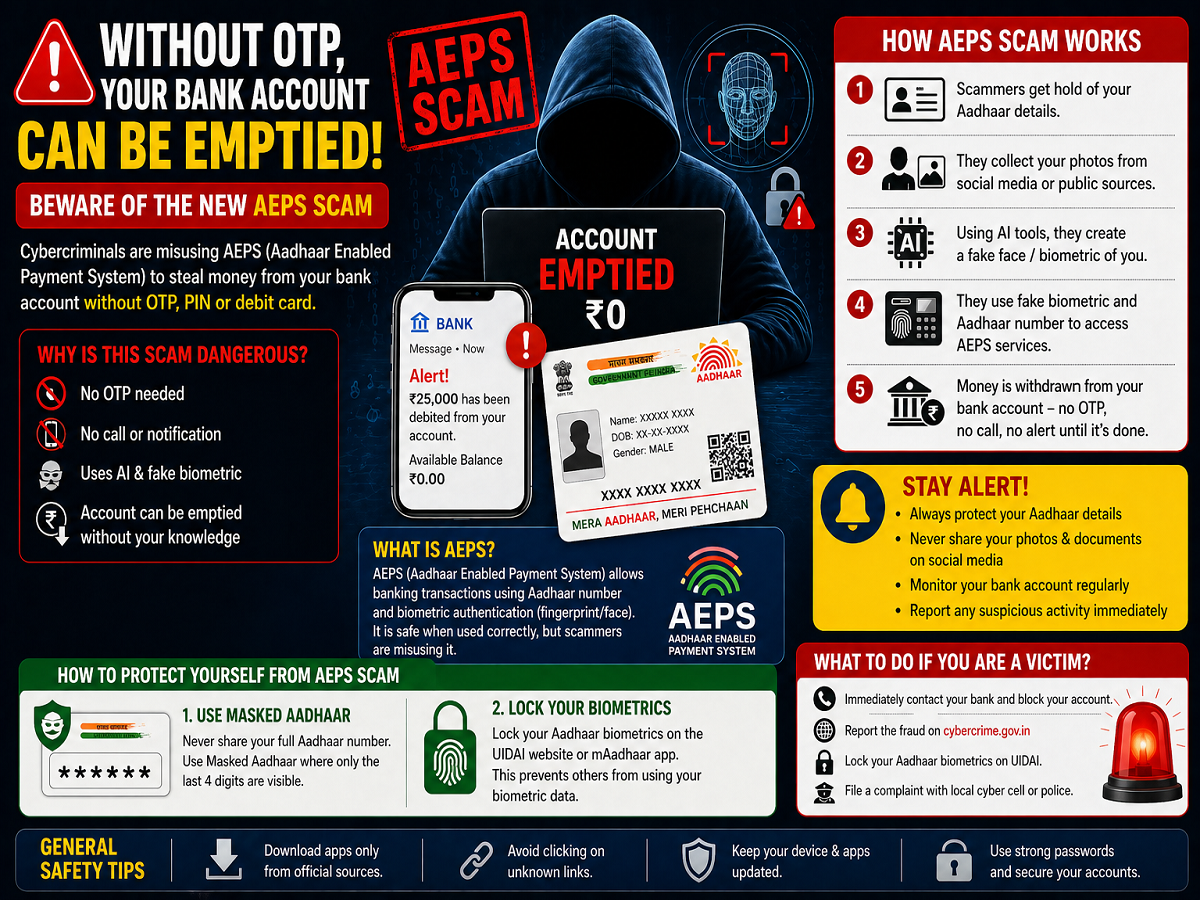
A new and alarming cyber fraud is emerging in India, where victims are losing money from their bank accounts without sharing any OTP or card details. Authorities, including the Indian Cyber Crime Coordination Centre, have flagged a rising number of cases linked to misuse of the Aadhaar Enabled Payment System (AEPS).
This scam marks a worrying shift in cybercrime tactics, as fraudsters are now bypassing traditional security layers and exploiting biometric systems to carry out unauthorized transactions.
What Is AEPS and Why It’s Being Misused?
AEPS (Aadhaar Enabled Payment System) is a banking service that allows users to perform transactions using their Aadhaar number and biometric authentication, such as fingerprints or facial recognition.
It is widely used for financial inclusion, especially in rural areas, as it eliminates the need for debit cards or internet banking. However, this convenience is now being exploited by cybercriminals.
How the AEPS Scam Works
Unlike traditional scams that rely on OTPs or phishing calls, this method is more advanced and harder to detect. Here’s how fraudsters execute it:
- Step 1: Collect Aadhaar Details
Scammers obtain your Aadhaar number through leaked data, fake forms, or careless sharing. - Step 2: Gather Your Photo
They collect your images from social media platforms or other public sources. - Step 3: Create Fake Biometric Identity
Using AI tools, criminals generate a fake facial profile or biometric data based on your photo. - Step 4: Perform Unauthorized Transactions
With Aadhaar details and fake biometrics, they use AEPS systems to withdraw money from your bank account—without needing OTP or your direct involvement.
In most cases, victims only realize the fraud after receiving a transaction alert from their bank.
Why This Scam Is Dangerous
This new fraud method is particularly concerning because:
- It does not require OTP or PIN
- It does not involve direct interaction with the victim
- It uses advanced AI and biometric spoofing
- It can drain accounts quickly without warning
As biometric systems become more common, such risks are expected to increase.
How to Protect Yourself from AEPS Fraud
To stay safe from this evolving scam, follow these essential precautions:
1. Use Masked Aadhaar Instead of Full Aadhaar
Always avoid sharing your complete Aadhaar number. Use a masked Aadhaar, where only the last four digits are visible.
2. Lock Your Biometrics
You can secure your biometric data by locking it through UIDAI services. This prevents unauthorized access to your fingerprint and facial data.
3. Avoid Sharing Aadhaar Publicly
Never upload or share your Aadhaar details on social media or unverified platforms.
4. Monitor Your Bank Transactions Regularly
Keep a close eye on SMS alerts and bank statements to detect any suspicious activity early.
5. Enable Alerts and Security Features
Activate all available banking alerts and security settings for added protection.
What to Do If You Become a Victim
If you suspect unauthorized transactions:
- Immediately contact your bank and block your account
- File a complaint on the official cybercrime portal (cybercrime.gov.in)
- Inform UIDAI and lock your Aadhaar biometrics
- Report the incident to local authorities if needed
Quick action can help minimize financial loss and prevent further misuse.
Final Thoughts
The rise of AEPS-related fraud highlights the need for greater awareness and caution in the digital age. While systems like Aadhaar and AEPS offer convenience, they must be used responsibly.
Cybercriminals are constantly evolving their methods—but with the right knowledge and precautions, you can stay one step ahead and keep your money and identity secure.