NEWS
PM Jan Dhan Yojana ₹50,000 to ₹2 Lakh Cash Claim Is Fake: Here's What the Scheme Actually Offers
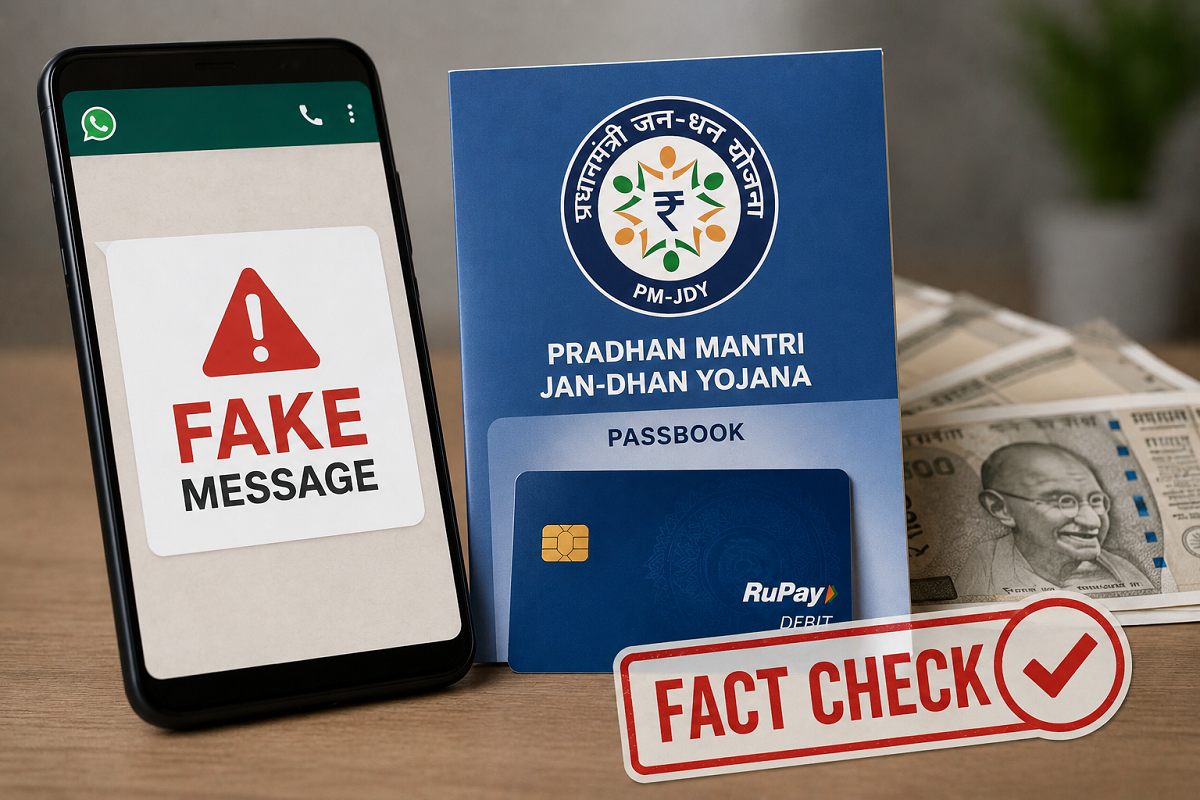
A viral WhatsApp message claims beneficiaries can receive financial assistance of up to ₹2 lakh under PM Jan Dhan Yojana. PIB Fact Check has clarified that the claim is false.
A misleading message related to the Pradhan Mantri Jan Dhan Yojana (PMJDY) is circulating widely on WhatsApp and social media platforms, claiming that fresh registrations have started for the scheme in 2026. The viral post further alleges that Indian citizens between the ages of 13 and 65 are eligible to receive financial assistance ranging from ₹50,000 to ₹2 lakh based on their age.
However, the claim is completely false. The Press Information Bureau's (PIB) Fact Check unit has officially dismissed the viral message, warning people not to trust or share such misinformation. Authorities have urged citizens to rely only on official government sources for information related to welfare schemes.
What Does the Viral Message Claim?
According to the fake message, online applications for the Pradhan Mantri Jan Dhan Yojana have been reopened, and eligible applicants can receive direct financial assistance between ₹50,000 and ₹2,00,000.
The message encourages users to click on links or submit personal information to claim the supposed benefit. Such claims have been widely shared across messaging platforms, creating confusion among people looking for government financial assistance.
PIB Fact Check Calls the Claim False
PIB Fact Check has clearly stated that no such scheme offering direct cash assistance under PM Jan Dhan Yojana exists.
The government has not announced any new application drive promising cash payments based on age. Therefore, citizens are advised not to believe or circulate such messages.
Instead of providing direct financial grants of ₹50,000 or ₹2 lakh, the Jan Dhan Yojana primarily focuses on providing access to banking services for financially underserved sections of society.
What Benefits Does PM Jan Dhan Yojana Actually Offer?
Launched in 2014, the Pradhan Mantri Jan Dhan Yojana was introduced to expand financial inclusion by enabling every eligible citizen to open a basic savings bank account, including zero-balance accounts.
Some of the key benefits available under the scheme include:
- Zero-balance savings bank account facility.
- RuPay Debit Card for eligible account holders.
- Overdraft facility of up to ₹10,000 for eligible beneficiaries, subject to the scheme's conditions.
- Accident insurance cover of up to ₹2 lakh linked to the RuPay Debit Card, provided the prescribed eligibility criteria and usage conditions are fulfilled.
- Additional financial services that help people become part of the formal banking system.
It is important to understand that the ₹2 lakh benefit often mentioned under PMJDY refers to accident insurance coverage—not a direct cash payment distributed by the government.
How to Stay Safe from Such Fraudulent Messages
Cyber fraudsters frequently misuse the names of popular government schemes to trick people into revealing personal and financial information. To stay protected, experts recommend following these precautions:
- Avoid clicking on unknown or suspicious links shared through WhatsApp, SMS or social media.
- Never share Aadhaar details, bank account information, OTPs or passwords through unofficial websites or messages.
- Do not download APK files or applications sent through unknown sources, as they may contain malware.
- Verify every government-related announcement through official government portals before taking any action.
- Be cautious of messages promising instant financial rewards or guaranteed government payments.
Verify Government Schemes Through Official Sources
Before applying for any government scheme, citizens should always confirm the information through official government websites or verified government communication channels. Relying on social media forwards without verification can expose users to financial fraud and identity theft.
The recent viral PM Jan Dhan message serves as another reminder that false claims often spread quickly online. Staying informed through trusted sources and avoiding suspicious links remains the best way to protect your personal information and finances.