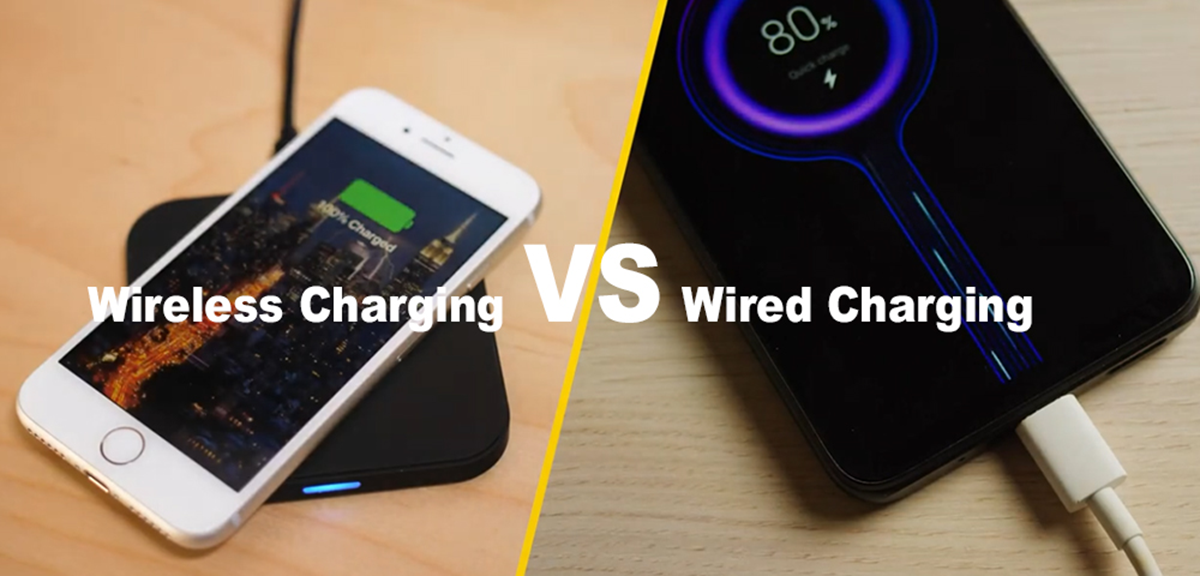
Wired or wireless charging: which method is safer for your phone's battery? Learn the pros and cons of both, and the full truth about their impact on battery health.
(Which is safer for the phone's battery between wired and wireless charging?)
Nowadays, users have two major options for charging their smartphones: wired charging and wireless charging. Wireless charging seems convenient, while wired charging has long been considered a reliable option. But the question is, which of the two is better for the health of a phone's battery? The answer depends not only on charging speed, but also on how hot the phone gets and how long the battery can maintain a high charge level.
What is special about wired charging?
Wired charging involves transmitting power directly between the charger and the phone via a cable. Its biggest advantage is that energy loss is minimal, and with a good-quality charger, the phone can be charged faster. Many smartphones today support 67W, 80W, 100W, or even faster charging. However, more power doesn't always mean better for the battery. Overcharging can cause the phone to heat up, and persistently high temperatures can drain battery power.
Where is the problem with wireless charging?
Wireless charging transfers power between the phone and the charging pad through electromagnetic induction. It eliminates the need for cables, making it very convenient. However, one drawback is heat. Some of the energy can be converted into heat during charging.
Heat can build up if the phone and charging pad are not properly aligned. This is why the phone's temperature can rise more during wireless charging than during wired charging under certain conditions.
How much does heat affect battery health?
Extreme temperatures are not ideal for the lithium-ion batteries used in smartphones. Prolonged exposure to high heat can gradually reduce battery capacity. Therefore, when choosing a charging technology, it's not enough to focus solely on how fast the phone charges.
If your phone repeatedly overheats during wireless charging, prolonged daily use can impact battery life. However, with high-quality wired charging, heat control is much easier.
Which charging is better?
Wired charging can generally be a better option when battery health is a priority, especially if the phone's temperature is controlled while charging. Wireless charging, on the other hand, offers a significant advantage in terms of convenience and is ideal for occasional use or when you're keeping your phone at your desk.
However, the real difference lies more in usage than charging technology. Preventing overheating, avoiding faulty or counterfeit chargers, and avoiding prolonged periods of 100 percent charge are all crucial for battery health.