NEWS
Why Do Most Plane Accidents Happen During Takeoff and Landing? The Critical Moments When Small Errors Turn Deadly
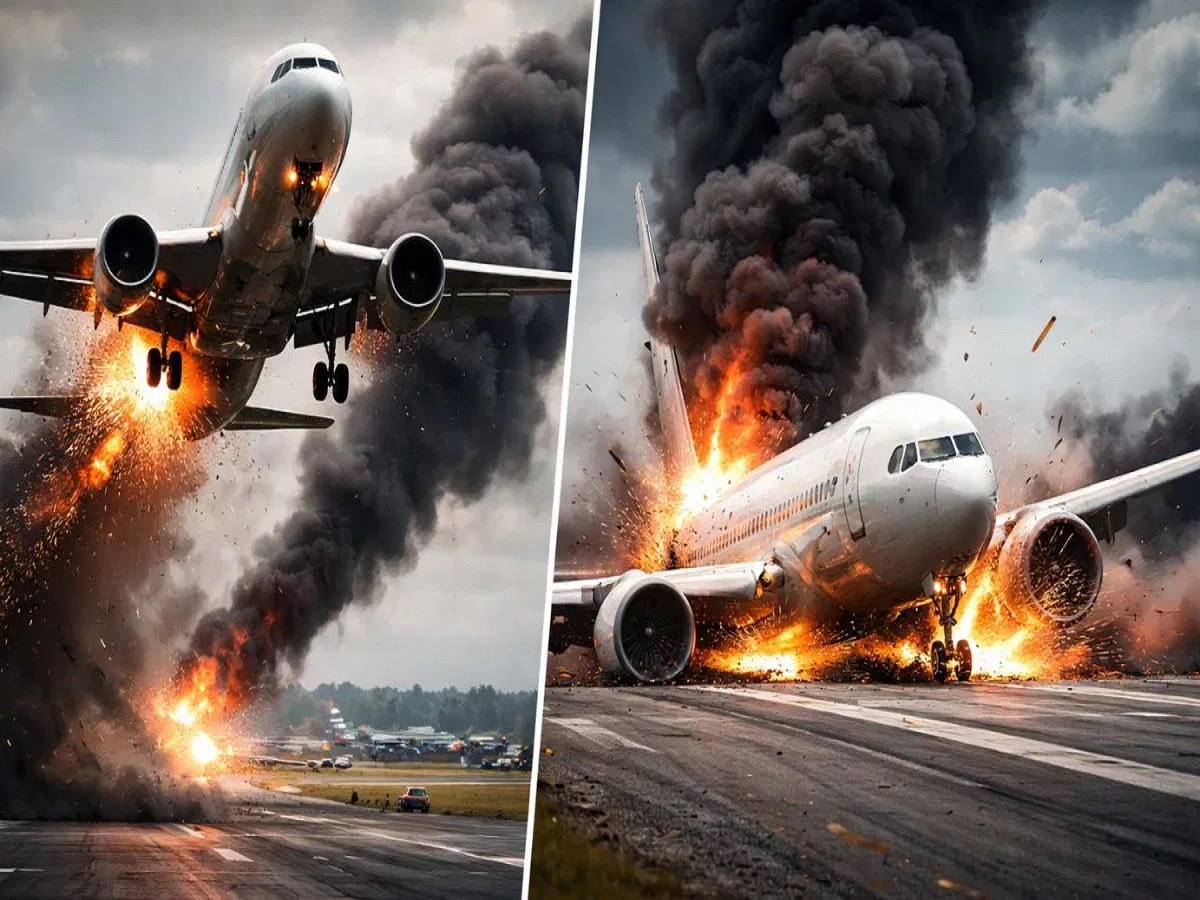
Whenever a major aircraft accident occurs, one question inevitably follows: why do so many plane crashes happen during takeoff or landing? This question becomes even more pressing when incidents occur during routine phases of a flight, despite strict safety checks and advanced technology. Aviation experts and global data consistently show that the beginning and end of a flight are the most dangerous stages, even though they occupy only a small portion of total flying time.
Understanding the reasons behind this pattern helps explain why aviation treats these moments with extreme caution and why even a minor lapse can have serious consequences.
What Do Global Aviation Statistics Say?
According to data shared by international aviation bodies such as the International Air Transport Association (IATA), more than half of all aircraft accidents occur during landing, while takeoff-related incidents rank second. Takeoff accidents account for a smaller but still significant percentage compared to cruising-phase incidents.
This may seem surprising because modern aircraft undergo extensive technical inspections before every flight. However, statistics clearly show that accidents are far more likely when the aircraft is close to the ground rather than cruising at high altitude.
Why Takeoff and Landing Are the Riskiest Phases
The most important reason lies in aviation physics. During takeoff and landing, an aircraft operates at low altitude and relatively low speed—a condition often referred to in aviation as “low and slow.” At this stage, pilots have very little margin for error.
If a technical problem, weather disturbance, bird strike, or sudden loss of lift occurs, there is often no time or space to correct the situation. In contrast, when an aircraft is cruising at around 35,000 to 36,000 feet, pilots have more time, altitude, and options to handle emergencies.
Even in extreme scenarios, such as engine failure at cruising altitude, a plane does not drop straight down. Instead, it can glide. On average, an aircraft can travel nearly 10 miles forward while descending about one mile, giving pilots several minutes to plan an emergency landing. That buffer simply does not exist during takeoff or final approach.
Engine Stress Is Highest During Takeoff
Takeoff is the phase when aircraft engines operate under maximum stress. Lifting a plane weighing several hundred tonnes against gravity requires enormous thrust. This is why the chances of engine-related issues are comparatively higher during takeoff than at cruising altitude.
One of the most common external threats during takeoff is bird strikes. Large birds entering the engine can cause serious damage, sometimes leading to engine shutdowns at the most critical moment—just seconds after the plane leaves the runway.
Sudden changes in wind direction or speed, especially wind shear, can also disrupt lift during initial climb. If this happens close to the ground, pilots may not have enough time to recover safely.
Landing: The Most Technically Demanding Task
While takeoff stresses the aircraft, landing puts maximum pressure on the pilot. Aviation professionals widely agree that landing is the most complex and skill-intensive part of any flight.
During landing, pilots must simultaneously manage aircraft speed, angle, descent rate, wind conditions, runway length, aircraft weight, and visibility. All of these factors can change within seconds. Even a small misjudgment can lead to hard landings, runway overruns, or loss of control.
This is why pilot-error-related incidents are more commonly associated with the landing phase. Fatigue, poor weather, limited visibility, or unexpected runway conditions can further increase the risk.
Why Pre-Flight Checks Cannot Prevent Everything
Many people wonder how accidents can still happen shortly after takeoff when aircraft pass multiple safety inspections. The answer lies in the nature of aviation risks. Some problems simply cannot be detected on the ground.
Certain technical faults only appear once the aircraft is airborne. Sensors may send incorrect data, automated systems may respond inaccurately, or environmental conditions may change suddenly. These unexpected factors, combined with low altitude, can quickly turn a manageable issue into a dangerous situation.
The Harsh Reality of Aviation Safety
Modern aviation is safer than ever, but it is not forgiving of human or technical error during critical phases. Takeoff and landing demand absolute precision, teamwork, and situational awareness. When everything goes right, these phases feel routine. When something goes wrong, the consequences can escalate rapidly.
The few seconds when a pilot commits to takeoff or aligns the aircraft with the runway for landing are not ordinary moments—they are the most sensitive points of the entire journey.
Final Takeaway
Most plane accidents occur during takeoff and landing not because aircraft are unsafe, but because these phases allow no room for delay or correction. Low altitude, high engine load, weather challenges, and human decision-making all converge at once.
This is why aviation places extraordinary emphasis on training, checklists, and discipline during these moments. For passengers, it is also a reminder that those seemingly routine phases of a flight are when pilots are working at their absolute peak—because even a small mistake can become life-threatening.