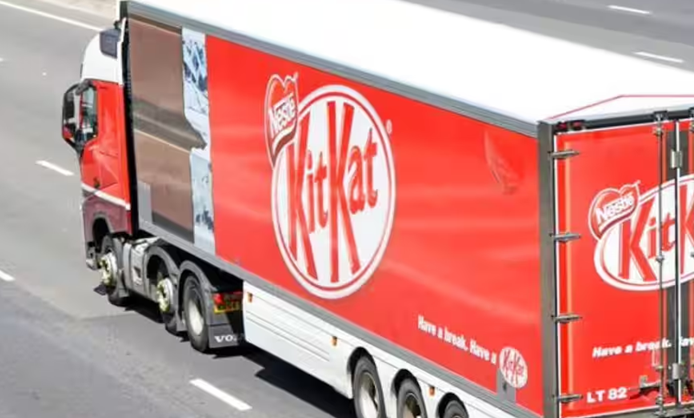
KitKat Heist: A truck carrying 12 tons of KitKat chocolates left a factory in central Italy and was destined for Poland. It suddenly disappeared midway. The matter is currently under investigation.

Criminals escape with a truck loaded with 12 tonnes of KitKat in Europe
KitKat Heist: Today's world is such that incidents of theft, robbery, and looting are read and heard about daily. Somewhere money is being looted, somewhere expensive gold and silver jewellery is being stolen. But have you ever heard of a chocolate theft? Hardly anyone has ever heard of such a story before. A similar case has come to light from Europe. There, about 12 tons (approximately 4,13,793 bars) of Nestle's famous chocolate brand KitKat were stolen.
The truck disappeared midway
Recently, a truck loaded with 12 tons of KitKat chocolate left a factory in central Italy, bound for Poland. It also included chocolate from the company's new 'Formula One (F1)' range. The truck, carrying this priceless consignment of chocolate, suddenly disappeared midway.
Nestle told AFP that a truck carrying 413,793 units of its new chocolate range was stolen during transport in Europe. Nestle, in a playful nod to its slogan "Have a break," said the thieves took the incident seriously and went on a break with more than 12 tons of chocolate. The company also jokingly praised the thieves' "excellent taste." The truck and its contents are still missing, and an investigation is underway with local authorities and supply partners.
Each packet of the stolen chocolates has a unique batch code. This makes them vulnerable to scanning and tracking if sold illegally in the market. The company has assured that this large-scale theft of chocolate will not impact supply.
Why did the thieves steal the chocolate?
- Liquidity – Compared to electronics or luxury goods, chocolates and confectionery are much easier to sell on the "black market" or at small local grocery stores. They don't have a serial number that can be tracked.
- High demand – Brands like KitKat are always in high demand in Italy. 12 tons of chocolate would cost thousands of euros, making it a lucrative deal.
- Gray Market and Small Retailers - Thieves often don't sell these chocolates to large supermarkets because they require invoices. Instead, they
target small grocery stores or shops. They lure shopkeepers with steep discounts (such as 40-50 percent off market prices). Shopkeepers also maximize their profits by purchasing goods without bills. - Repackaging - If the goods are marked with a specific shipment or lot number, allowing police to identify them, criminals open the larger boxes and replace them with smaller, unmarked packages. Sometimes, they erase the expiration date or batch number and attach new stickers, making it impossible to identify the goods as belonging to the same stolen truck.
- Street vendors and weekly markets – Open-air markets are held in Italy and many parts of Europe. Transactions are conducted in cash. Thieves sell these chocolates to street vendors or hawkers, where customers are simply interested in getting the goods at a low price, without any regard for their origin.
- Digital Black Markets – These days, thieves use encrypted platforms like Telegram or the dark web. They post advertisements for wholesale deals. Payments are often taken in cryptocurrency to avoid tracking the money transactions.