NEWS
SIM Card Rules 2026: How Many Mobile Numbers Can You Keep in Your Name? Know the Limit and How to Check
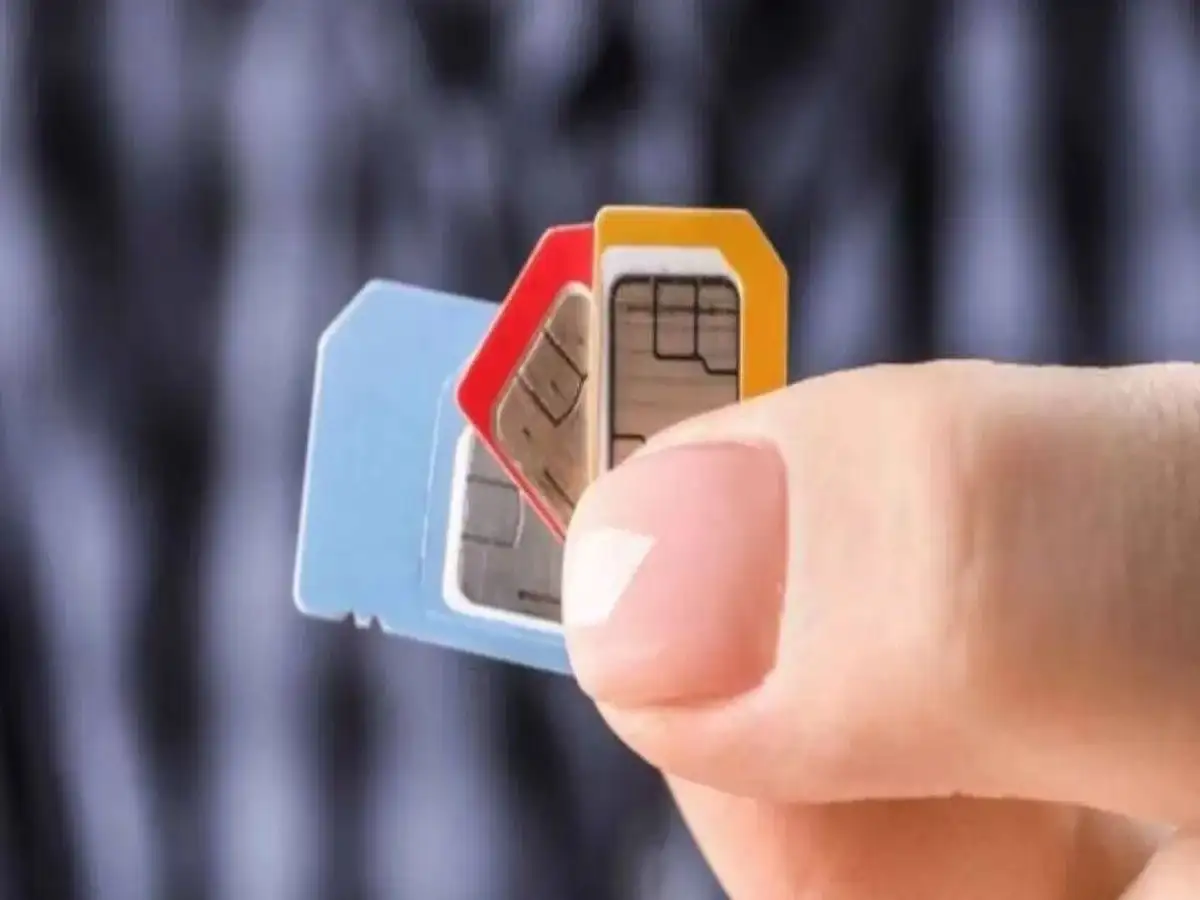
SIM Card Rules 2026: Mobile numbers are now connected to banking, UPI, Aadhaar-linked services, social media and numerous online accounts. That makes it important to know exactly how many SIM cards have been issued using your identity. Having multiple SIMs is not automatically a problem, but connections beyond the government-prescribed limit can lead to verification or disconnection.
Under India's telecom rules, there is a maximum number of mobile connections that an individual can obtain in their name. Therefore, people who have taken several connections over the years—or suspect that an unknown number may have been issued using their identity—should periodically check their records.
How Many SIM Cards Can One Person Have?
According to the Department of Telecommunications (DoT), an individual can generally have up to nine mobile connections in their name across all telecom service providers.
There is a lower limit in certain regions. In Jammu & Kashmir, Assam and the North Eastern Licensed Service Areas, the maximum is six connections.
Importantly, the limit is not calculated separately for every telecom operator.
For example, if a person has connections from Reliance Jio, Bharti Airtel, Vi and BSNL, all eligible connections issued in that person's name count towards the applicable overall limit.
Having Two or Three SIM Cards Is Not Illegal
The rule should not be misunderstood to mean that keeping more than one SIM card is prohibited.
A person can legally have multiple connections for personal or other legitimate purposes as long as the applicable limit and subscriber-verification requirements are followed.
The issue arises when connections exceed the prescribed limit or when numbers have been obtained fraudulently using someone else's identity.
Why Is the Government Tightening SIM Verification?
Telecom connections can be misused for cybercrime, financial fraud, spam, impersonation and other illegal activities. Fraudsters sometimes obtain SIM cards using forged documents or someone else's identity.
To address these risks, DoT has strengthened mechanisms for identifying suspicious and fraudulent mobile connections.
One important initiative is the Digital Intelligence Platform (DIP), which facilitates information sharing among telecom service providers, law-enforcement agencies, banks and other stakeholders for detecting misuse of telecom resources.
This makes it easier for authorities and service providers to identify suspicious connections and take appropriate action.
What Happens If the SIM Limit Is Exceeded?
If authorities identify mobile connections exceeding the permitted limit, those connections can be subjected to verification.
Users may be asked to identify which numbers they want to retain. Connections that are not required or fail verification can subsequently be disconnected in accordance with applicable procedures.
The important point is that the prescribed limit applies to connections issued in a person's name—not merely the number of physical SIM cards currently inside their phone.
An old connection that you no longer use could therefore still matter if it remains active in telecom records.
How to Check How Many SIM Cards Are Registered in Your Name
The government provides a straightforward way to check mobile connections issued against your identity.
Users can access the official Sanchar Saathi portal and use its mobile-connection verification facility.
After authenticating with your mobile number and OTP, you can review the connections associated with your identity.
This is particularly useful for people who have changed operators or numbers several times over the years and no longer remember all their previous connections.
Found an Unknown Number? Report It
Checking your registered numbers is useful even if you personally use only one or two SIM cards.
Suppose the portal displays a mobile connection that you never obtained. This could indicate that your identity was used without your knowledge.
Sanchar Saathi provides options to flag connections that are not yours or are not required, allowing the matter to be processed for appropriate action.
Do not ignore an unfamiliar number simply because it is not currently causing a visible problem. A mobile connection issued in your name could potentially be misused while still being associated with your identity.
Unused SIM Cards Should Also Be Reviewed
Many people accumulate mobile numbers over time. One number may have been purchased for work, another for internet access and another while living in a different city.
Later, those numbers may simply be forgotten.
If you have connections that are no longer needed, consider formally closing them through the concerned telecom operator rather than merely removing the SIM card from your phone.
Removing a SIM from a handset does not itself mean that the telecom connection has been terminated.
Sanchar Saathi Offers More Than SIM Verification
The government's Sanchar Saathi platform provides several telecom-safety services beyond checking connections.
It can help users report suspected fraudulent communications and provides facilities related to lost or stolen mobile devices.
For example, the CEIR facility can be used to report and block a lost or stolen handset using its IMEI-related information, subject to the required process.
These tools have become increasingly relevant as mobile phones are now closely linked with a person's financial and digital identity.
Be Careful With SIM-Related Fraud Messages
Stricter telecom verification rules also create an opportunity for scammers.
A fraudster may call or message claiming that your SIM will be disconnected immediately unless you complete KYC, install an app, share an OTP or make a payment.
Do not act on such unsolicited instructions.
Never disclose OTPs, banking passwords, UPI PINs or other confidential credentials to someone claiming to be a telecom official. Instead, independently contact your telecom operator through its official customer-support channels or use the government's official Sanchar Saathi platform.
What Should You Do If You Have Several SIM Cards?
There is no need to panic simply because you have multiple mobile numbers. Instead, check which connections are actually registered in your name.
Make sure every listed number belongs to you and is still required. If you discover an unknown or unnecessary connection, report it through the appropriate official channel.
It is also advisable to periodically repeat this check, particularly if you have frequently changed numbers or telecom operators.
SIM Rules Are Ultimately About Protecting Your Identity
The limit on mobile connections is intended to reduce fraudulent issuance and misuse of telecom resources. For most users, the key precaution is simple: know which mobile numbers are registered against your identity.
In most parts of India, an individual can have up to nine mobile connections, while the applicable limit is six in Jammu & Kashmir, Assam and the North Eastern Licensed Service Areas.
Rather than relying on viral messages about SIM cancellation dates, users should verify their connection status through official government or telecom-provider channels. A quick check on Sanchar Saathi can help identify an unknown SIM before it becomes a larger security problem.