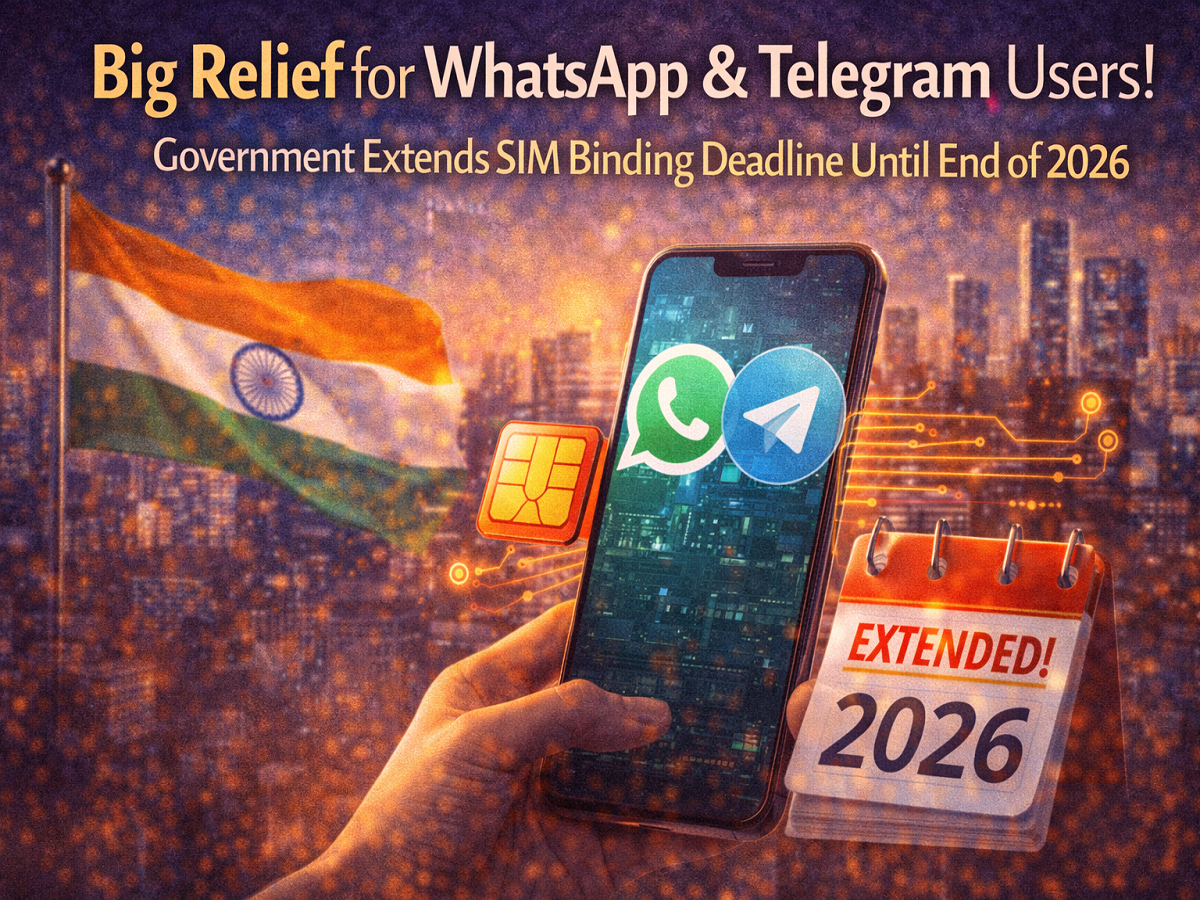
In a major relief for millions of messaging app users, the Government of India has extended the deadline for implementing SIM binding rules. The move directly impacts users of popular platforms like WhatsApp and Telegram, giving both companies and users more time to adapt to the new system.
The decision, taken by the Department of Telecommunications (DoT), pushes the compliance timeline to the end of 2026. This extension comes after several tech companies highlighted technical challenges in implementing the rule within the earlier deadline.
What Is SIM Binding and Why It Matters
SIM binding is a new security measure aimed at strengthening digital safety. Under this rule, messaging apps will be tied directly to the SIM card used during registration.
In simple terms:
- Your account will work only on the device that has the registered SIM
- If the SIM is removed, changed, or becomes inactive, the app will automatically log you out
This system is designed to prevent unauthorized access and reduce misuse of messaging platforms.
Why the Deadline Was Extended
Initially, companies were given around 90 days to implement SIM binding after the rule was announced in November last year. However, several stakeholders—including tech giants like Apple and Google—requested additional time.
These companies cited multiple technical challenges:
- Compatibility issues across devices and operating systems
- Limitations within ecosystems like iOS
- Need for backend system upgrades
Even Meta Platforms, which owns WhatsApp, is reportedly in discussions with the government to ensure smooth implementation.
Considering these concerns, the government decided to extend the timeline, allowing companies to develop and test secure solutions without disrupting user experience.
Why SIM Binding Was Introduced
The primary goal of SIM binding is to curb rising cyber fraud and strengthen telecom security.
Authorities observed that many apps allowed access even without an active SIM in the device. This loophole made it easier for fraudsters—often operating from outside the country—to misuse accounts and carry out scams.
By linking accounts strictly to active SIM cards, the government aims to:
- Enhance user identity verification
- Reduce fake accounts and fraud
- Improve traceability in cybercrime cases
What This Means for Users
For now, users can continue using messaging apps as usual without any immediate changes.
The extension ensures:
- No sudden disruptions in app usage
- More time for companies to roll out stable updates
- A smoother transition once the rule is implemented
However, once SIM binding becomes mandatory, users may need to ensure that:
- Their registered mobile number remains active
- The SIM is present in the device where the app is used
Industry Impact and What to Expect Next
The decision is expected to benefit both users and tech companies. It provides breathing room for developers to address technical challenges while ensuring that security remains a priority.
In the coming months, users may start seeing gradual updates related to SIM-based authentication. Companies are likely to introduce new features and system checks to align with the upcoming regulation.
Final Thoughts
The extension of the SIM binding deadline is a balanced move that supports innovation while prioritizing user security. As cyber threats continue to evolve, such measures are becoming essential to protect digital communication platforms.
For users, the key takeaway is simple: stay informed, keep your mobile number active, and be prepared for upcoming changes that aim to make your online experience safer.