TRAVEL
Road Safety Tips: Simple Driving Habits That Can Help Prevent Accidents and Keep Every Journey Safer
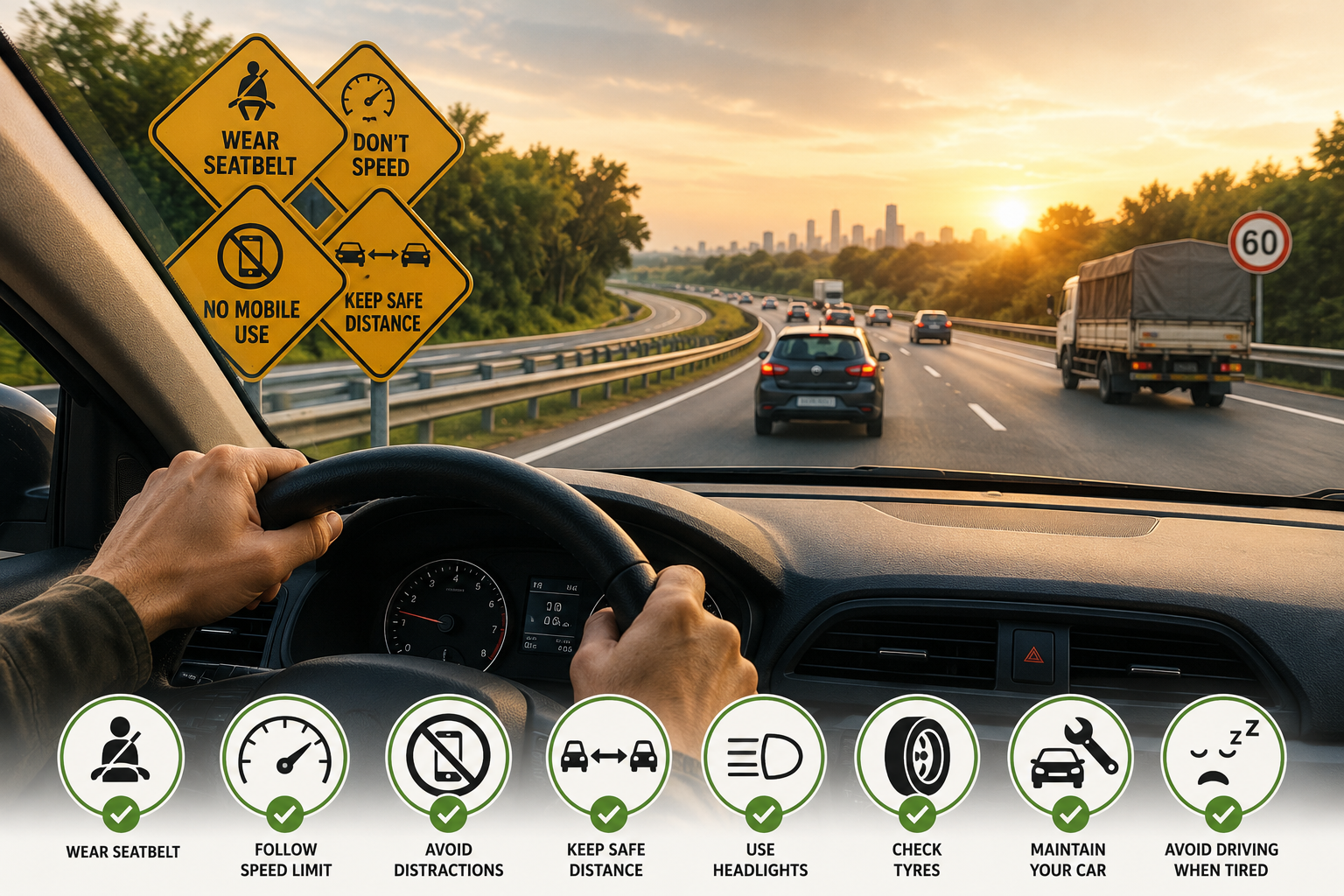
Safe driving is not only about knowing how to control a vehicle. What drivers do every few seconds—checking mirrors, maintaining distance, using indicators and staying focused—can have a major impact on road safety.
Many dangerous situations do not begin with a mechanical failure or an extraordinary event. They can develop from everyday behaviours such as checking a phone, driving too fast for the conditions, changing lanes without warning or following another vehicle too closely.
The good news is that safer driving does not require complicated techniques. Developing a few consistent habits can reduce unnecessary risks and help protect drivers, passengers, pedestrians, cyclists and other road users.
Here are some simple road safety practices that should become part of every journey.
Wear Your Seat Belt Even on Short Trips
Putting on a seat belt should be one of the first things you do after entering a car.
The habit should not be limited to the driver or front-seat passenger. Rear-seat occupants should also wear their seat belts properly.
A common mistake is assuming that seat belts are necessary only on highways or long journeys. However, an accident can occur even during a short trip close to home.
Before moving the vehicle, make sure everyone is properly secured. Children should use an appropriate child restraint system based on applicable safety requirements rather than being carried unsecured inside the vehicle.
Keep Your Phone Away While Driving
Mobile-phone distraction has become a major road safety concern. Reading a message, checking a notification or searching for something on the screen can take a driver's eyes and attention away from traffic.
Even a few seconds of distraction can be dangerous because the vehicle continues moving during that time.
If navigation is required, enter the destination and set the route before beginning the journey. Voice guidance can reduce the need to repeatedly look at the screen, but the driver must still remain focused on the road.
If an urgent call or message needs attention, stop the vehicle at a safe and legally permitted location before using the phone.
Follow Speed Limits but Also Read the Road Conditions
Speed limits establish the maximum permitted speed for particular roads or stretches, but safe driving also requires adjusting speed to actual conditions.
A speed that may be reasonable on a dry, clear road can become dangerous during heavy rain, fog, poor visibility, congestion or at night.
Potholes, construction zones, sharp turns and busy residential areas may also require drivers to slow down considerably.
The objective should not simply be to remain below the legal speed limit. Drivers should maintain a speed at which they can safely respond to changing traffic and road conditions.
Maintain Enough Distance From the Vehicle Ahead
Driving too close to another vehicle leaves less time to react if the vehicle ahead brakes suddenly.
Maintaining a safe following distance gives the driver additional time to identify a hazard, apply the brakes and bring the vehicle under control.
The required distance can increase significantly in rain, fog or other conditions that reduce tyre grip and visibility.
Large vehicles such as trucks and buses also require additional consideration. Staying too close can restrict your view of the road ahead and may place your vehicle in areas that are difficult for the larger vehicle's driver to see.
Use Indicators Before Turning or Changing Lanes
Indicators are one of the simplest ways drivers communicate with each other.
Use the appropriate indicator before changing lanes, taking a turn or making another manoeuvre that requires signalling. The signal should be given early enough for other road users to understand what you intend to do.
Turning on an indicator does not automatically give a driver the right to change lanes. Mirrors and blind spots should still be checked, and the manoeuvre should be completed only when there is sufficient space.
Sudden lane changes without signalling can leave nearby drivers with very little time to respond.
Check Mirrors Regularly
Safe drivers need to know not only what is happening ahead but also what is happening beside and behind their vehicle.
Check the rear-view and side mirrors regularly, particularly before slowing significantly, changing lanes or turning.
Blind spots deserve additional attention because motorcycles, bicycles and even cars can sometimes remain outside the normal mirror view.
A quick blind-spot check before changing lanes can prevent a dangerous side collision.
Respect Traffic Signals and Road Signs
Traffic lights and road signs are designed to organize movement and reduce conflicts between different road users.
Avoid accelerating simply to cross an intersection before the signal changes. Similarly, do not start moving before the signal permits you to proceed.
Stop signs, no-entry signs, one-way restrictions, pedestrian crossings and lane markings should not be treated as optional instructions.
Drivers should also be particularly careful at intersections where another road user's actions may be unpredictable.
Give Pedestrians and Cyclists Enough Space
Road safety is not limited to protecting people inside motor vehicles.
Pedestrians, cyclists and two-wheeler riders are more vulnerable because they do not have the same physical protection as occupants of a car.
Slow down near schools, residential areas, markets, bus stops and pedestrian crossings. Be prepared for someone to enter the road unexpectedly, particularly children.
When approaching cyclists or two-wheelers, avoid passing unnecessarily close to them. Give them adequate space and remember that they may need to move sideways suddenly to avoid potholes or other obstacles.
Avoid Driving When Tired
Fatigue can reduce concentration, slow reaction times and affect decision-making.
Long-distance drivers should take regular breaks rather than continuing to drive when they are struggling to remain alert.
If you feel extremely sleepy, simply opening a window, increasing the music volume or drinking coffee should not be treated as a reliable substitute for rest.
Stop somewhere safe and rest before continuing the journey.
Stay Calm Instead of Responding to Aggressive Drivers
Road rage can turn a manageable traffic situation into a dangerous one.
If another driver behaves aggressively, avoid racing, blocking the vehicle, making confrontational gestures or deliberately preventing them from passing.
Keep your attention on driving safely and create distance from the situation whenever possible.
Reaching your destination a few minutes later is far better than becoming involved in a collision or confrontation.
Small Driving Habits Can Make a Major Difference
Road safety is built through repetition. Wearing a seat belt, putting the phone away, maintaining a safe distance, signalling correctly and slowing down when conditions deteriorate may seem like small actions, but together they create a much safer driving environment.
Drivers should also remember that they share the road with people who may be more vulnerable, including pedestrians, children, cyclists and two-wheeler riders.
Ultimately, responsible driving is not about reaching a destination as quickly as possible. It is about reaching it safely while allowing everyone else on the road the same opportunity to get home safely.