NEWS
Phone Battery Tips: Does the 20-80 Charging Rule Really Extend Battery Life? Here’s What You Should Know
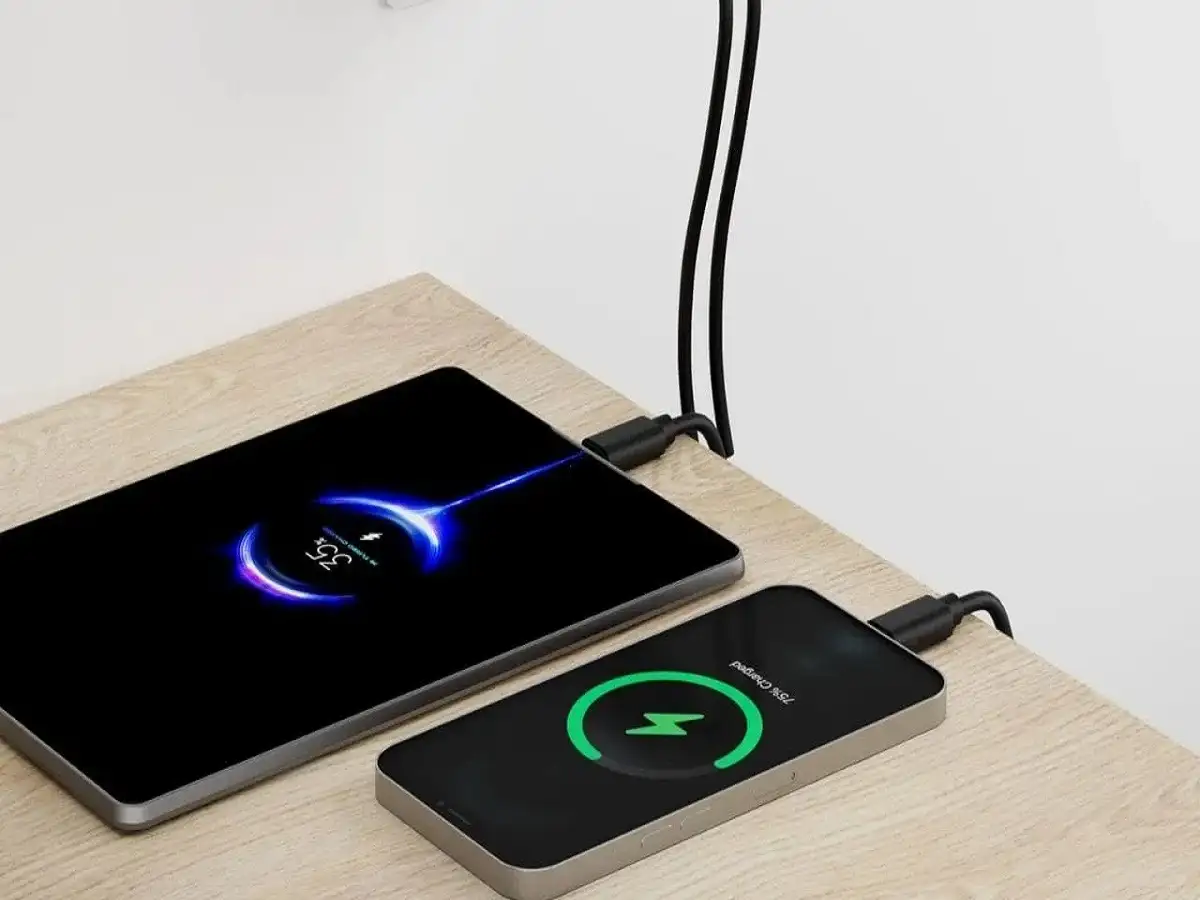
Smartphones have become essential for communication, work, banking, navigation, entertainment and countless everyday activities. But as phones become more powerful, battery life remains a concern for many users. One charging habit frequently recommended online is the so-called 20-80 battery rule.
The idea is straightforward: connect your phone to a charger when the battery level approaches 20% and unplug it once it reaches around 80%. Supporters believe avoiding extremely low and very high charge levels can reduce stress on lithium-ion batteries and potentially slow their long-term degradation.
But does everyone need to stop charging at 80%? Will charging a smartphone to 100% quickly ruin its battery? The reality is more nuanced.
What Does Charging a Phone Only to 80% Mean?
Suppose your smartphone has a 5,000mAh battery. In simplified terms, limiting the charge to 80% means starting the day with roughly 4,000mAh of the rated capacity available rather than using the entire charge range.
For someone whose phone easily lasts all day at 80%, this may not be a major inconvenience. The user gets enough battery for normal activities while reducing the amount of time the battery spends at a very high state of charge.
The situation can be different for heavy smartphone users.
If you regularly use navigation, gaming, video streaming, mobile data, photography or other power-intensive applications, deliberately giving up the final 20% may mean having to recharge the phone again before the day ends.
Therefore, the usefulness of an 80% charging limit depends considerably on how you use your smartphone.
Will the 20-80 Rule Prevent Battery Ageing?
No charging method can keep a smartphone battery in perfect condition forever.
Modern smartphones generally use lithium-ion or related battery technology, and these batteries naturally deteriorate as they age. Chemical changes take place inside the battery over time, gradually reducing the amount of energy it can store.
How a device is charged and used can influence the rate of degradation, but stopping at exactly 80% does not make the battery immune to ageing.
Battery health is also influenced by factors such as temperature, charging cycles, usage patterns and how long the battery remains at extreme charge levels.
The 20-80 guideline should therefore be viewed as a battery-care strategy rather than an absolute rule every smartphone owner must follow.
What Happens to Your Phone Battery After a Few Years?
A brand-new smartphone typically delivers its best battery performance because the battery is close to its original usable capacity.
As months and years pass, its maximum capacity gradually declines. A phone that once comfortably lasted from morning until night may eventually require an afternoon recharge even when your usage pattern has not changed significantly.
This is where an 80% charging limit can become less practical.
For example, imagine that an ageing battery can no longer hold as much energy as it could when new. If you then choose to use only up to 80% of that already-reduced capacity, the amount of energy available between charges becomes even smaller.
Users may consequently have to decide between prioritising maximum daily runtime and taking a more conservative approach to long-term battery health.
Does Stopping Charging at 80% Damage Phone Software?
Charging only to 80% does not directly damage your smartphone's operating system or software.
The battery percentage displayed on the screen is an estimate calculated by the device's battery-management system. It uses information about factors such as charge level, voltage and battery condition to determine the percentage shown to the user.
As a battery ages, its characteristics change. Occasionally, there may be minor differences between the displayed percentage and the battery's actual remaining usable energy.
This should not be confused with software damage caused by an 80% charging limit.
In other words, regularly unplugging a smartphone at 80% will not, by itself, harm the phone's software.
Why Is the 20-80 Battery Rule So Popular?
The principle behind the 20-80 guideline is primarily about avoiding prolonged exposure to extreme states of charge.
Rather than repeatedly allowing a battery to become nearly empty or leaving it sitting fully charged for extended periods, users may choose to operate within a more moderate range whenever practical.
That does not mean reaching 100% occasionally is something to fear. There are situations where having the maximum available battery capacity is far more useful.
For example, charging to 100% before a long journey, a busy workday or a period when a charger will not be available may make more sense than strictly maintaining an 80% limit.
Your Smartphone May Already Have Battery Protection Features
Phone manufacturers increasingly provide software features designed to manage charging automatically.
Depending on the smartphone brand and model, these may be called Optimized Charging, Adaptive Charging, Battery Protection, Charging Limit or something similar.
Some systems learn when a user normally plugs in and unplugs the phone. The device can then adjust how quickly or when it completes the final portion of charging so that the battery does not remain fully charged for unnecessarily long periods.
Other smartphones provide an option that allows users to set a maximum charging limit.
If such a feature is available on your device, enabling it can be a convenient alternative to manually checking the battery percentage every time you charge.
Heat Can Be Just as Important as Charging Percentage
Another important aspect of battery care is temperature.
Smartphone batteries do not respond well to excessive heat. Heavy gaming, demanding applications, direct sunlight or other heat-producing conditions while charging can increase battery temperature.
Users concerned about long-term battery health should therefore pay attention not only to whether their phone reaches 80% or 100%, but also to how hot the device becomes during charging and everyday use.
Keeping the phone reasonably cool and using appropriate charging equipment can be a more practical battery-care habit than constantly worrying about a specific percentage.
Should You Follow the 20-80 Charging Rule?
There is no single charging routine that is ideal for every smartphone user.
If 80% comfortably provides enough battery life for your normal day, using a charging limit can be a sensible option. If you regularly need maximum battery endurance, however, charging beyond 80% may be more practical.
The important point is that the 20-80 approach is not a magical formula that prevents battery deterioration. Smartphone batteries naturally lose capacity with age regardless of how carefully they are treated.
Instead of obsessing over exact numbers, users can focus on sensible charging habits, avoiding excessive heat and making use of the built-in battery protection or optimized charging features available on their phones.