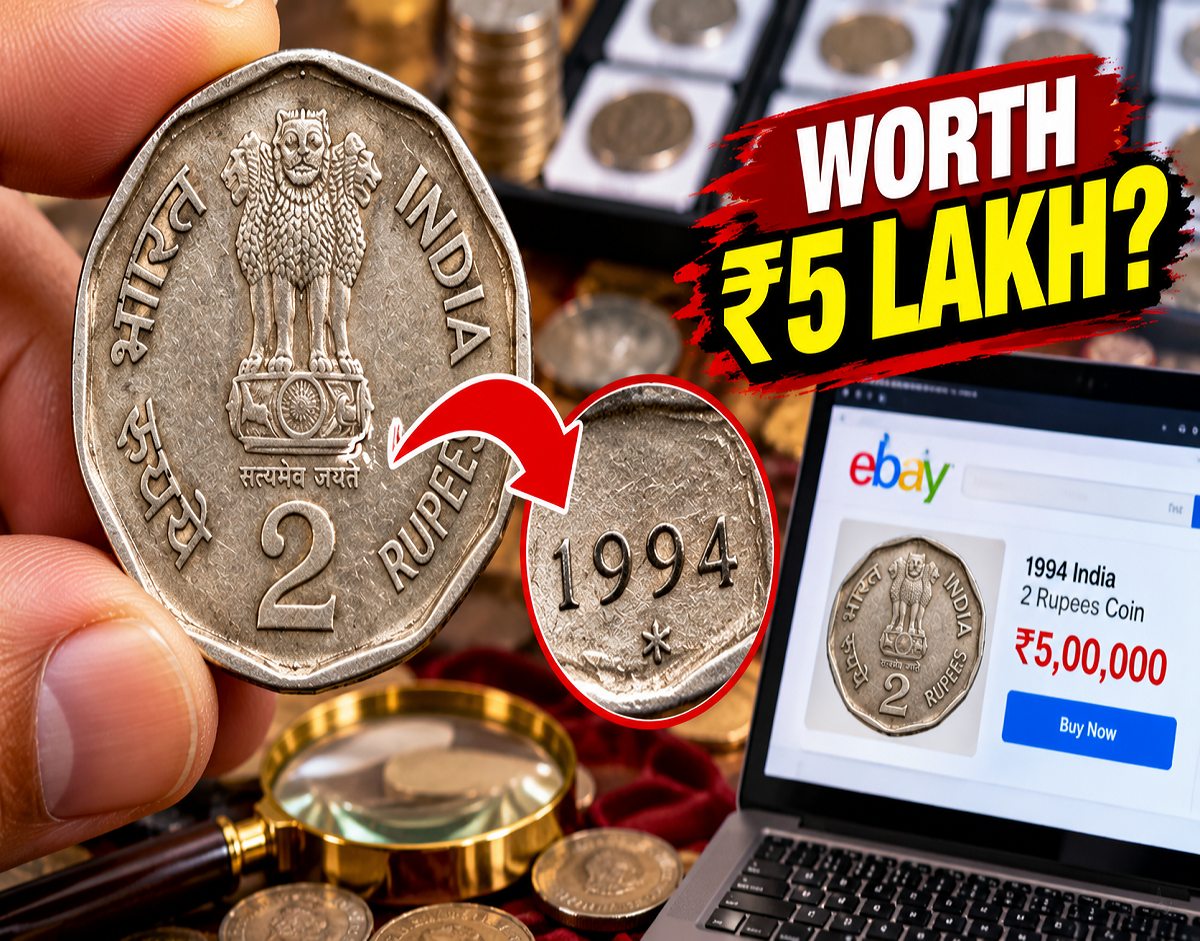
Old 2 Rupee Coin Value 2026: Do you have an old ₹2 coin lying in your wallet, cupboard or coin collection? Before spending it, you may want to examine its year and design. Online advertisements have claimed that certain old ₹2 coins, particularly those issued in 1994, could attract offers as high as ₹5 lakh. However, these extraordinary prices are not guaranteed, and the actual value of a collectible coin depends on its rarity, condition and genuine demand among buyers.
Old ₹2 Coin: Can a Small Coin Really Be Worth ₹5 Lakh?
Old Indian coins have become a popular topic on social media, with several advertisements claiming that ordinary-looking currency can be sold for surprisingly high amounts.
One such claim concerns a ₹2 coin dated 1994, which has reportedly been advertised for as much as ₹5 lakh on online classified platforms.
This has encouraged many people to examine their old coin collections in the hope of discovering something valuable.
However, there is an important difference between the price requested by a seller and the amount a buyer actually pays.
A coin listed online for ₹5 lakh does not necessarily have a market value of ₹5 lakh.
Without verified auction results or reliable evidence of completed transactions, such claims should be considered unconfirmed.
While genuinely rare coins can attract significant collector interest, most old coins do not automatically become valuable simply because they are several decades old.
Which 1994 ₹2 Coin Is Being Advertised for ₹5 Lakh?
The coin highlighted in the report is a ₹2 coin issued in 1994.
According to the original claim, the coin features a distinctive design associated with the Indian national flag.
Some online advertisements have reportedly attached an asking price of up to ₹5 lakh to coins described in this way.
However, the design description and the claimed valuation require independent authentication.
Anyone who owns a ₹2 coin from 1994 should examine its date, design, mint markings and physical condition before making assumptions about its collectible value.
It is also important to understand that coins produced in the same year can differ in their collectible appeal depending on the specific issue and verified characteristics.
There is no established evidence in the supplied report that an ordinary 1994 ₹2 coin can reliably be sold for ₹5 lakh.
Collectors generally rely on authenticated specimens, specialist assessments and completed sale records when determining realistic values.
Why Do Some Old Indian Coins Sell for High Prices?
The collection and study of coins, banknotes and related currency items is known as numismatics.
People who specialize in collecting or studying these items are called numismatists.
For collectors, coins can represent historical events, changing designs, minting techniques and important periods in a country's economic development.
Several factors can influence the collectible value of an old coin.
1. Rarity of the Coin
Coins produced in limited quantities or belonging to uncommon varieties may attract greater collector interest.
However, determining rarity requires more than checking the year printed on a coin.
The number originally minted, the number surviving and the availability of similar examples can all influence demand.
2. Historical Significance
Certain coins are associated with important historical occasions, commemorative issues or changes in currency design.
Such characteristics may increase their appeal among specialist collectors.
However, historical importance does not automatically translate into a high resale price.
3. Condition and Preservation
Collectors often pay close attention to the physical condition of a coin.
Coins with minimal wear, clear designs and well-preserved surfaces may be more desirable than heavily damaged examples.
Cleaning or polishing an old coin can sometimes reduce its collectible value, so owners should avoid altering its original surface.
4. Minting Errors
Genuine minting mistakes can occasionally make a coin unusual.
Examples may include off-centre strikes, certain die errors or other authenticated production abnormalities.
However, scratches, damage and ordinary wear should not be mistaken for rare minting errors.
5. Demand Among Collectors
Even an uncommon coin needs interested buyers to achieve a premium selling price.
Collector demand can vary considerably depending on the coin's type, condition and market trends.
How to Identify a Potentially Collectible ₹2 Coin
If you have an old ₹2 coin, a careful examination can help you gather the information needed for further research.
Start by checking the year of issue and the designs appearing on both sides.
Next, look for any mint marks or other distinguishing characteristics.
Inspect the coin's condition without attempting to clean or modify it.
If the coin appears unusual, compare it with authenticated examples from reliable numismatic references.
For potentially valuable specimens, an experienced coin dealer or numismatic specialist may be able to provide a professional opinion.
Remember that a coin's appearance alone may not be enough to establish authenticity or rarity.
Where Can You Sell Old ₹2 Coins Online?
People interested in selling collectible coins may explore established numismatic dealers, specialist auction houses or online marketplaces that permit such transactions.
The original report mentions classified platforms such as OLX and Quikr.
However, sellers should verify whether a particular website currently allows listings for Indian coins and whether the proposed transaction complies with applicable laws and platform policies.
Online classified advertisements can help sellers identify interested buyers, but they do not provide a guarantee of payment or an accurate valuation.
For coins believed to be rare, specialist numismatic marketplaces may offer more relevant information than general classified websites.
How to Sell an Old ₹2 Coin Online: Step-by-Step Process
Anyone considering selling an old coin should follow a careful and transparent approach.
Step 1: Examine the Coin
Check the year, design, mint mark and condition of your ₹2 coin.
Make a note of any unusual characteristics that may require expert verification.
Step 2: Research Its Market Value
Compare the coin with similar examples sold through reputable dealers or established auction platforms.
Focus on completed sales wherever possible rather than unusually high asking prices.
Step 3: Select a Reputable Selling Platform
Choose a marketplace that permits collectible coin transactions.
Review its seller policies, payment arrangements and buyer protection procedures.
Step 4: Take Clear Photographs
Photograph both sides of the coin in good lighting.
Avoid editing the images in a way that misrepresents the coin's actual condition.
Step 5: Prepare an Accurate Description
Include the coin's denomination, year, visible design, condition and other verifiable details.
Do not describe the coin as extremely rare or worth ₹5 lakh unless reliable evidence supports that claim.
Step 6: Review Buyer Offers Carefully
If a potential buyer contacts you, discuss the price, payment method and delivery arrangements.
Verify the buyer's credibility before agreeing to a transaction.
Step 7: Confirm Payment Securely
Do not hand over or ship the coin based only on a payment screenshot or an unverified message.
Ensure that the agreed payment has been received through a reliable method.
Beware of Fake Buyers Offering Lakhs for Old Coins
Fraud involving old currency has become an important concern for people exploring online collectible markets.
Scammers may promise unusually large payments for common coins and then demand advance charges.
These payments may be described as registration fees, processing charges, verification costs or taxes.
Some fraudsters also misuse the name or logo of the Reserve Bank of India to make their offers appear legitimate.
The RBI has warned that it does not buy or sell old banknotes and coins through such arrangements and does not authorize individuals to collect commissions or fees on its behalf for these transactions.
Sellers should never share their UPI PIN, banking password or OTP with unknown buyers.
Receiving money through UPI does not require entering a UPI PIN to authorize an outgoing payment.
If someone asks for money before purchasing your coin, treat the request with caution.
Is Every 1994 ₹2 Coin Rare?
No. A coin does not automatically become rare because it was issued in 1994.
The value of a particular coin depends on its verified variety, production characteristics, preservation and collector demand.
Two coins bearing the same denomination and year may attract different levels of interest if one has an authenticated unusual feature.
However, the presence of a distinctive design or an old date is not sufficient evidence that a coin is worth several lakh rupees.
Before paying for an appraisal or listing a coin at an extraordinary price, owners should seek credible information about comparable specimens.
Old ₹2 Coin Price in 2026: What Should Owners Remember?
The reported ₹5 lakh valuation of a 1994 ₹2 coin has attracted attention, but it remains an online asking-price claim rather than a verified market rate.
Some genuinely scarce Indian coins may command premiums among collectors, but there is no guarantee that an ordinary old ₹2 coin will generate a substantial return.
Anyone interested in selling old currency should examine the coin carefully, research authenticated examples and choose reputable transaction channels.
The most important rule is simple: do not confuse an advertised price with a confirmed sale, and never pay advance fees to strangers promising unusually high returns for old coins.
Disclaimer: This article is intended for general information. The ₹5 lakh figure refers to an unverified online asking-price claim and should not be interpreted as the established value of a 1994 ₹2 coin. Collectible prices vary according to authenticity, condition, rarity and demand. Sellers should verify applicable legal requirements and marketplace policies before conducting transactions.