Buying a smartphone through monthly instalments has become increasingly common in India, particularly as flagship and premium devices can cost as much as—or even more than—a person's monthly salary. EMI financing allows buyers to spread the cost over several months instead of paying the entire amount upfront.
But what happens when a borrower stops paying those instalments?
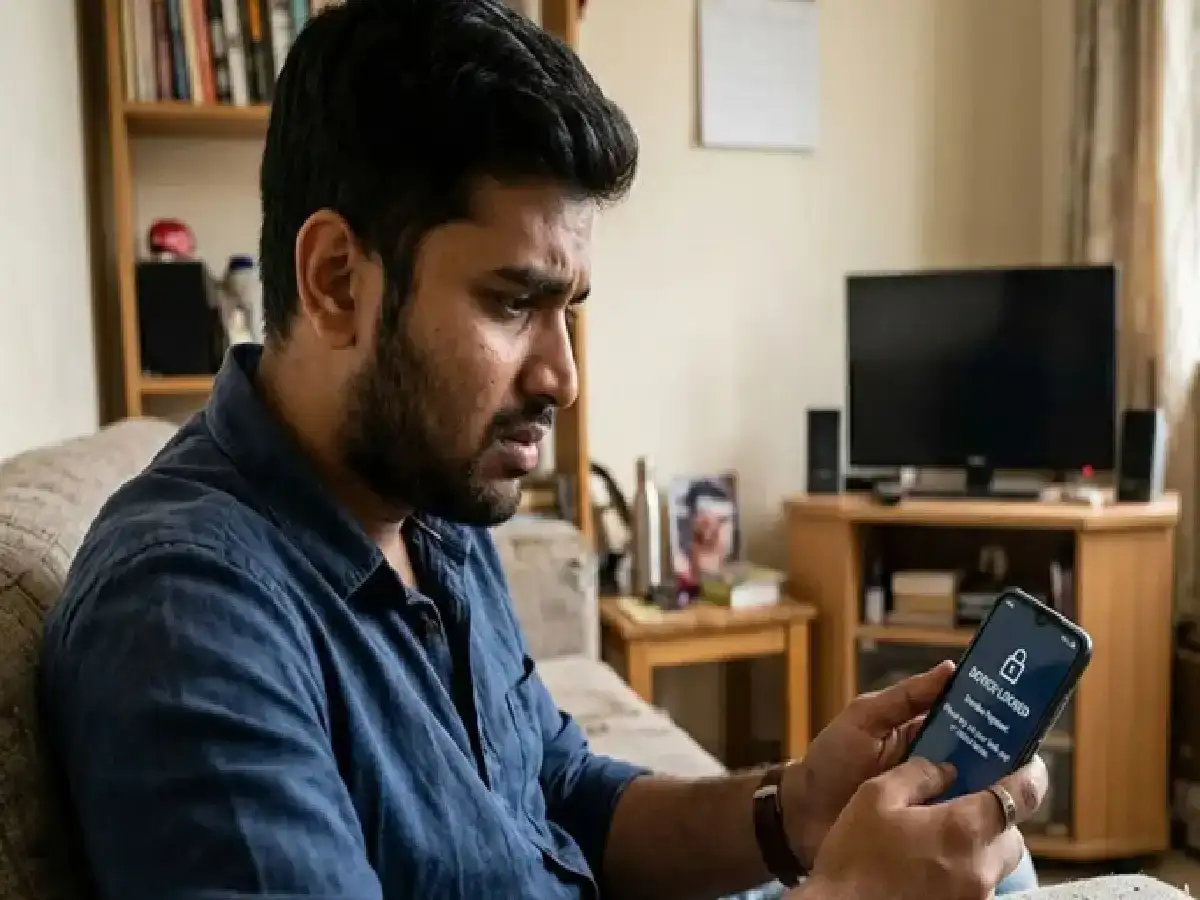
Under a revised regulatory framework attributed to the Reserve Bank of India (RBI), lenders financing smartphones and certain other electronic devices could be permitted to restrict some functions of a financed device when repayments remain overdue for a specified period.
This does not mean your smartphone can be instantly locked the moment you miss one EMI. The framework includes waiting periods, notice requirements, safeguards for essential communication and restrictions on access to personal data.
The revised framework is expected to take effect from January 1, 2027, instead of the earlier October 1, 2026 timeline mentioned in the report.
Here's what borrowers should understand.
Will Your Phone Be Locked Immediately After Missing an EMI?
No. A missed EMI would not automatically result in an immediate device lock under the framework described in the report.
Lenders would have to follow a defined process before imposing restrictions on a financed smartphone, tablet or laptop.
According to the reported provisions, action related to device restrictions could begin only after the payment has remained overdue for at least 30 days.
A lender would also be required to issue a formal notice to the borrower before restricting eligible functions.
Therefore, consumers should not interpret the new framework as allowing lenders to remotely disable a smartphone immediately after a single delayed payment.
What Could Happen After 30 Days of Non-Payment?
The extent of restrictions could depend on how long the loan payment remains overdue.
If the repayment delay falls between 30 and 60 days, lenders may be permitted to progressively restrict certain functions of the financed device, subject to the framework's conditions.
However, essential communication services would receive protection.
For example, outgoing calling would not be permitted to be blocked during the initial restriction stage described in the report.
More extensive restrictions could potentially be applied when the repayment delay exceeds 60 days, provided such action is permitted under the applicable loan agreement and complies with regulatory requirements.
This makes the terms of the financing agreement particularly important. Consumers should read the loan documentation carefully before purchasing a smartphone or another electronic device on EMI.
Essential Communication Services Would Remain Protected
One of the most important elements of the framework is the protection of essential communication.
Even where restrictions are permitted, lenders would not be allowed to indiscriminately shut down every function of the device.
According to the reported rules, incoming calls, SMS services and emergency SOS functionality would have to remain accessible.
The framework is also intended to prevent restrictions from leaving borrowers unable to use a device for essential livelihood or work-related requirements.
These safeguards recognise that smartphones are no longer used only for entertainment. They are also important for employment, banking, communication, education, navigation and accessing emergency assistance.
Lenders Cannot Access Your Photos, Messages or Contacts
Remote restriction technology naturally raises questions about privacy. If a lender can control certain functions of a financed smartphone, does that mean it can also access everything stored on the device?
The answer under the reported framework is no.
Lenders and third-party service providers using device-restriction technology would not be permitted to access a borrower's personal information stored on the device.
Protected information would include sensitive data such as contacts, text messages, call records, photographs and location history.
Any restriction mechanism should be limited to authorised device functions rather than being used as a tool to monitor borrowers or collect their personal information.
Certification Requirements for Device-Locking Technology
The framework also reportedly establishes requirements for the technology used to impose device restrictions.
Where certification is available, lenders and third-party providers deploying such systems may need appropriate certification from the original device manufacturer or relevant operating-system platform.
This requirement is intended to reduce the risk of lenders using unverified software capable of compromising device security or consumer privacy.
For borrowers, this means device restriction should operate through authorised mechanisms rather than giving a lender unrestricted access to the smartphone.
What Happens After You Clear the Outstanding Payment?
The framework also establishes a timeline for restoring device functionality once overdue payments have been cleared.
According to the report, restrictions imposed on a financed device would have to be removed within one hour after the outstanding dues are paid.
This requirement is important because a borrower who has settled the overdue amount should not remain unnecessarily locked out of permitted device functions.
Lenders could face financial consequences if they fail to restore access within the prescribed timeframe.
Borrowers Could Get Compensation for Wrongful Restrictions
The reported framework also provides a compensation mechanism where lenders improperly restrict a device or fail to restore its functionality on time.
If a restriction is imposed incorrectly, or access is not restored within the required period after payment, the lender may have to compensate the borrower.
The compensation has been stated as ₹250 for every hour of delay.
However, the total compensation would be capped and could not exceed the original loan amount associated with the financed device.
This provision creates an additional accountability mechanism for lenders using remote device-restriction technology.
What Should Smartphone Buyers Do Before Taking an EMI Loan?
Anyone purchasing a smartphone, tablet or laptop through financing should carefully review the loan agreement instead of focusing only on the monthly EMI amount.
Check whether the agreement includes provisions related to remote device restrictions, what circumstances could trigger them and what rights you have if a restriction is imposed incorrectly.
Borrowers should also contact their lender as soon as possible if they anticipate difficulty making a repayment. Ignoring notices can make resolving the issue more complicated.
Most importantly, don't assume that missing one EMI will automatically turn your smartphone into an unusable device.
Under the framework described in the report, restrictions would be subject to waiting periods, prior notice, privacy safeguards and protections for essential communication. With the revised rules expected to apply from January 1, 2027, borrowers financing electronic devices should pay closer attention to both repayment terms and the device-control clauses contained in their loan agreements.